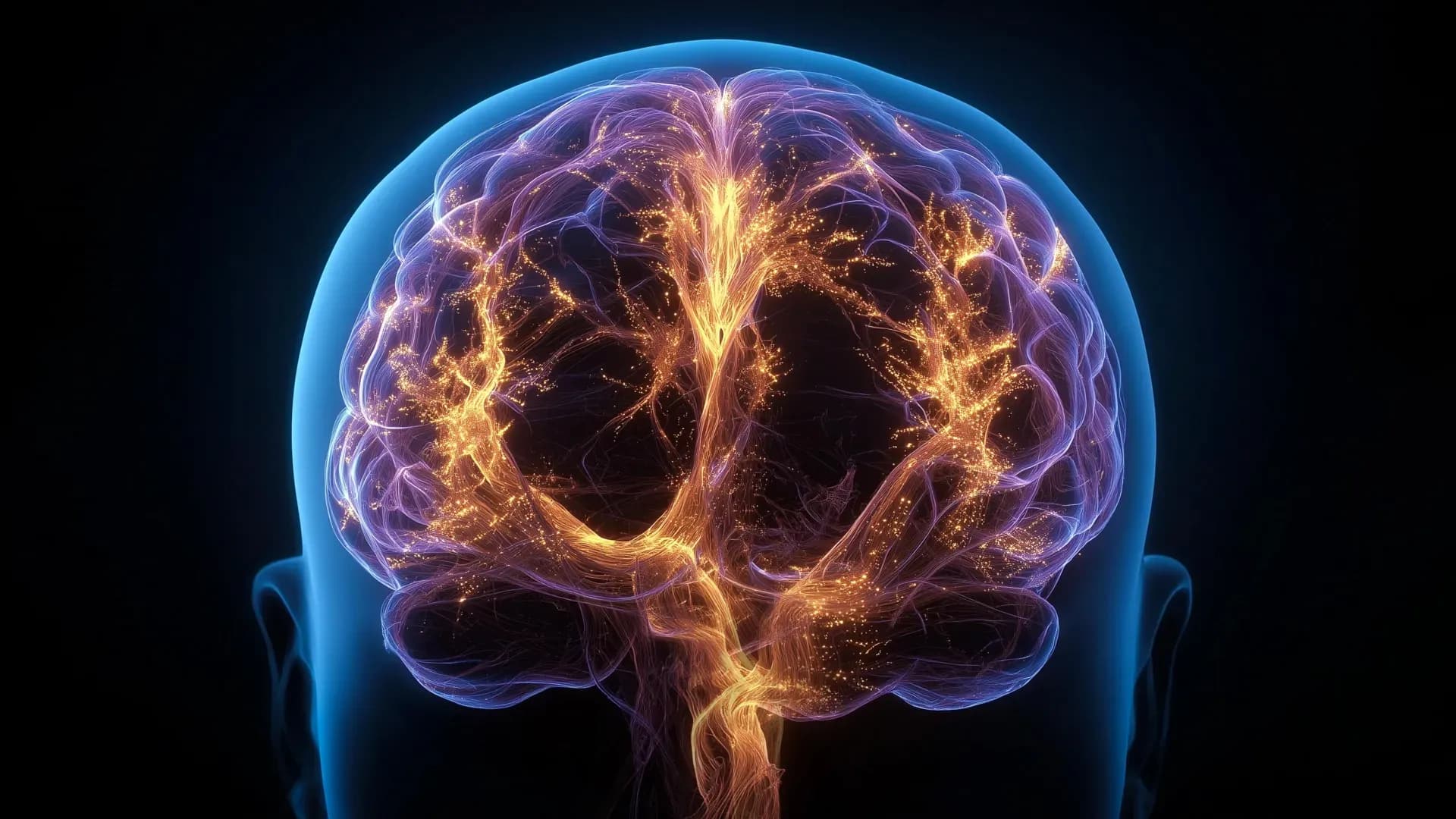
MRI Scans Expose a Startling Brain Difference in People With Psychopathic Traits
Researchers discovered that a key brain region tied to reward and impulse control is significantly larger in people with psychopathic traits — and the implications are profound.

What's Going On Inside a Psychopath's Brain?
For decades, scientists have tried to understand what separates individuals with psychopathic traits from the general population. Now, cutting-edge brain imaging technology is offering some of the clearest answers yet — and what researchers found buried deep inside the brain is both surprising and scientifically significant.
A team of neuroscientists from Nanyang Technological University Singapore (NTU Singapore), the University of Pennsylvania, and California State University has discovered that a specific brain structure is measurably larger in people who display psychopathic traits. Their findings, published in the Journal of Psychiatric Research, suggest that biology — not just environment — plays a meaningful role in shaping antisocial behavior.
The Striatum: A Brain Region Under the Spotlight
The brain structure at the center of this research is called the striatum — a region nestled deep within the forebrain that governs an impressive range of functions, including movement planning, decision-making, motivation, and the brain's response to rewards and reinforcement.
Using magnetic resonance imaging (MRI) scans alongside detailed psychological assessments, the researchers analyzed the brains of 120 participants based in the United States. Each individual was also evaluated using the Psychopathy Checklist — Revised, a gold-standard psychological tool designed to quantify psychopathic traits.
The results were striking: on average, the striatum was approximately 10 percent larger in individuals with psychopathic traits compared to those in the control group. That volumetric difference correlated strongly with hallmark psychopathic behaviors — specifically, a heightened need for stimulation, thrill-seeking tendencies, and impulsive decision-making.
In fact, stimulation-seeking and impulsivity together accounted for nearly 49.4 percent of the statistical relationship between striatal volume and psychopathy scores — a substantial portion of the connection.
More Than Just Antisocial Behavior
Psychopathy is commonly understood as a personality pattern marked by self-centeredness, lack of empathy, minimal remorse for harmful actions, and — in some individuals — an elevated risk of criminal conduct. It's worth noting, however, that not everyone with psychopathic traits engages in criminal behavior, and not every criminal is a psychopath.
What this study adds is a biological dimension to that picture. Assistant Professor Olivia Choy, a neurocriminologist from NTU's School of Social Sciences and co-author of the study, explained the significance of the findings:
"Our study's results help advance our knowledge about what underlies antisocial behavior such as psychopathy. We find that in addition to social environmental influences, it is important to consider that there can be differences in biology — in this case, the size of brain structures — between antisocial and non-antisocial individuals."
Earlier research had already hinted that the striatum may be unusually active in people with psychopathic traits. This new study goes further by demonstrating that the physical size of the region also differs — adding another layer of evidence that psychopathy has neurological roots.
The Reward Circuit and Risk-Taking
The striatum is part of a larger system known as the basal ganglia — a cluster of neuron groupings deep in the brain that receives input from the cerebral cortex. The cerebral cortex handles higher-order thinking, social behavior, and the filtering of sensory information. The basal ganglia, including the striatum, help translate that input into motivation and action.
Over the past two decades, researchers have come to appreciate that the striatum's role extends well beyond physical movement. It appears to be involved in social behavior and may contribute to difficulties in social functioning when it develops abnormally.
Professor Adrian Raine, from the Departments of Criminology, Psychiatry, and Psychology at the University of Pennsylvania, offered further insight into what these findings mean developmentally:
"Because biological traits, such as the size of one's striatum, can be inherited from parent to child, these findings give added support to neurodevelopmental perspectives of psychopathy — that the brains of these offenders do not develop normally throughout childhood and adolescence."
In typical human development, the striatum naturally shrinks as a child grows into adulthood. An enlarged striatum in adults with psychopathic traits may therefore reflect a disruption in this normal developmental process — a brain that, in a sense, didn't follow the expected trajectory.
Studying Psychopathy Beyond Prison Walls
One of the most noteworthy aspects of this research was its focus on community participants rather than incarcerated populations. Much of the existing psychopathy research has been conducted within prison settings, which naturally skews the data toward the most extreme cases.
By recruiting participants from the broader public, the research team was able to examine psychopathic traits across a wider spectrum of individuals — including those who may function in everyday society without ever having a run-in with the law.
Professor Robert Schug from California State University, Long Beach, highlighted this methodological strength:
"The use of the Psychopathy Checklist — Revised in a community sample remains a novel scientific approach: helping us understand psychopathic traits in individuals who are not in jails and prisons, but rather in those who walk among us each day."
A First for Female Participants
The study also included 12 female participants — and for the first time, researchers observed a link between psychopathy and an enlarged striatum in adult women, not just men. The female sample size was small, so these findings require further validation, but they open an important door: the same neurological pattern associated with psychopathy may not be exclusive to one gender.
Brain Development, Genetics, and Environment: A Complex Interaction
The researchers were careful not to reduce psychopathy to a single cause. While the enlarged striatum is a compelling biological marker, Asst Prof Choy emphasized that the full picture is considerably more complex:
"A better understanding of the striatum's development is still needed. Many factors are likely involved in why one individual is more likely to have psychopathic traits than another. Psychopathy can be linked to a structural abnormality in the brain that may be developmental in nature. At the same time, it is important to acknowledge that the environment can also have effects on the structure of the striatum."
Prof Raine echoed this nuance while underlining the significance of the neurobiological discovery:
"We have always known that psychopaths go to extreme lengths to seek out rewards, including criminal activities that involve property, sex, and drugs. We are now finding out a neurobiological underpinning of this impulsive and stimulating behavior in the form of enlargement to the striatum, a key brain area involved in rewards."
What Newer Research Reveals: A Wider Brain Network
The 2022 striatum study opened a significant chapter in psychopathy research, and scientists have continued building on it. More recent investigations suggest that the neurological story is even broader than a single brain region.
Reduced Volume in Multiple Brain Regions
A 2025 study published in European Archives of Psychiatry and Clinical Neuroscience examined 39 adult men diagnosed with psychopathy and found that antisocial lifestyle traits were associated with reduced volumes in several brain areas — including portions of the basal ganglia, thalamus, basal forebrain, pons, cerebellum, orbitofrontal cortex, dorsolateral-frontal cortex, and insular cortex. These findings point to disruptions in the frontal-subcortical circuits responsible for behavioral regulation.
A Network-Level View of Psychopathy
A separate 2025 analysis published in Neuroscience and Biobehavioral Reviews reviewed 38 functional neuroimaging studies of psychopathy. While individual studies often highlighted different brain locations, the collective data pointed toward a shared functional brain network — one involving the default mode network and key subcortical regions. The authors concluded that psychopathy may be more accurately understood as a network-level phenomenon rather than a problem localized to any single brain structure.
Taken together, these findings add important nuance to the original striatum discovery. The enlarged striatum remains a critical clue — particularly given its role in reward-processing, stimulation-seeking, and impulsivity — but psychopathy appears to reflect a broader pattern of brain differences spanning motivation, emotional processing, impulse control, and social cognition.
Why This Research Matters
Associate Professor Andrea Glenn from the Department of Psychology at the University of Alabama, who was not involved in the original 2022 study, underscored its scientific value:
"By replicating and extending prior work, this study increases our confidence that psychopathy is associated with structural differences in the striatum, a brain region that is important in a variety of processes important for cognitive and social functioning. Future studies will be needed to understand the factors that may contribute to these structural differences."
Ultimately, understanding the biological underpinnings of psychopathy could have far-reaching implications — from refining diagnostic frameworks to informing prevention strategies, treatment approaches, and criminal justice policy. Scientists are still working to untangle how genetics, early development, lived experiences, and environment interact to shape the brain systems involved in reward-seeking and antisocial behavior. But with each scan, the picture is becoming clearer.

