Mourne Mountains Wildfires Could Leave Lasting Damage for Centuries, Experts Warn
Repeated wildfires in Northern Ireland's Mourne Mountains are devastating rare habitats, with experts warning recovery could take centuries or longer.

Mourne Mountains Wildfires Could Leave Lasting Damage for Centuries, Experts Warn
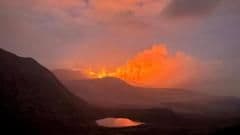
More than seven square miles of the Mourne Mountains in Northern Ireland have been reduced to charred wasteland in just one week, as firefighters continue battling a series of devastating wildfires. While the scorched landscape speaks for itself, conservation scientists are warning that the true cost of these fires extends far beyond what the eye can see — and that full ecological recovery could take not years, but centuries.
'Death by a Thousand Cuts'
Dr Neil Reid, a conservation expert at Queen's University Belfast, described the cumulative toll of recurring fires as nothing short of catastrophic for the region's fragile ecosystems.
"If it keeps happening year after year, it's death by a thousand cuts," he warned. "It's attrition, and you're just losing all these peatland specialists."
The Mournes span approximately 57,000 hectares of diverse terrain, including peatland, heathland, gorse, and forest — stretching from Slieve Donard, Northern Ireland's highest peak, all the way to the County Down coastline. While human communities have coexisted with this landscape for millennia, deliberate fire-setting in recent years has caused irreversible harm on a massive scale. Northern Ireland's Agriculture and Environment Minister, Andrew Muir, has publicly condemned the practice as "rural arson."
Hidden Damage Beneath the Surface
Dr Reid highlighted that while the heathland may appear to bounce back visually after a fire, the damage beneath the surface tells a very different story.
"It looks like it's recovered — the heather's back again — but underneath, we've lost the peatland specialists that depend on wet conditions," he explained. "Fire fundamentally alters the structure and chemical composition of the peat itself, making it no longer suitable for those specialist plant communities."
Peat accumulates at an extraordinarily slow rate — just one to two millimetres per year. When fires burn through several centimetres of peat, they effectively erase decades, centuries, or even millennia of natural build-up. According to Dr Reid, restoring what has been lost could realistically take just as long.
Over a Thousand Hectares Lost in a Single Week
James Fisher, Lead Ranger for the National Trust — one of the largest landowners in the Mournes — described the scale of destruction as staggering.
"We saw over a thousand hectares burned in just the last week," he said. "The big hit is always to biodiversity, as established rare habitats are completely wiped out."
Fisher noted that despite making up less than 1% of Northern Ireland's total land area, the Mournes contain over 50% of the region's heathland communities. The loss of these habitats, therefore, has a disproportionately large impact on Northern Ireland's biodiversity as a whole.
Recovery Takes Decades — If It Comes at All
Following a series of major wildfires in 2021, the National Trust launched an intensive monitoring programme to track the recovery of burned heathland. The results were sobering: three years on, the invertebrate population in affected areas remained 90% lower than pre-fire levels.
"So many plants and animals depend on invertebrate communities," Fisher noted. "They're going to be hugely impacted by that reduction in numbers. It will take a substantial amount of time before those species and communities recover."
The Mournes hold dual designations as both an Area of Outstanding Natural Beauty and an Area of Special Scientific Interest. Fisher stressed that these designations must be backed by meaningful protection.
"If this continues, the very features the area is designated for simply won't be there anymore."
'A Moonscape Where Life Once Thrived'
Nigel McKinney of The Mourne Heritage Trust painted a grim picture of what the landscape looks like in the immediate aftermath of the fires.
"Every living thing on there is burned. Calling it a black desert would actually be too generous — there's more life in a desert than in an incinerated landscape. It's like a moonscape, and it's a very large area," he said.
McKinney expressed deep concern about the long-term consequences for wildlife.
"Our uplands are a reservoir of rare species — plants, insects, birds, and other animals. If that's all incinerated, the impact is immense."
A Critical Moment for Conservation
The fires ravaging the Mourne Mountains represent more than an environmental emergency — they signal a critical turning point for conservation policy in Northern Ireland. With each passing fire season, irreplaceable ecosystems are being stripped away, and the window for meaningful recovery grows narrower. Experts are united in their call for urgent intervention before the Mournes lose the very qualities that make them one of the most ecologically significant landscapes on the island of Ireland.