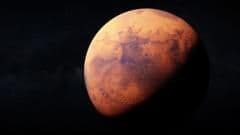
Moon First, Mars Next: Why NASA's Artemis Mission Is More Important Than Ever
NASA is gearing up to send astronauts back to the Moon — but this time, the stakes go far beyond national pride. Here's why the mission truly matters.
Moon First, Mars Next: Why NASA's Artemis Mission Is More Important Than Ever
NASA is preparing to launch one of its most ambitious human spaceflight missions in decades. The Artemis II mission will carry four astronauts on a journey around the Moon — a bold step that sets the stage for a lunar landing, a permanent Moon base, and ultimately, a crewed mission to Mars.
The Artemis programme has consumed years of development, engaged thousands of skilled professionals, and accumulated an estimated price tag of $93 billion. For some, the question is obvious: why go back?
Haven't We Already Done This?
More than half a century ago, NASA's Apollo programme accomplished the extraordinary — landing humans on the Moon for the first time and returning a total of six successful missions to the lunar surface. It seemed like the Moon had been thoroughly explored and filed away in history books.
But the Moon is anything but a finished chapter. Scientists and space agencies around the world are increasingly recognising it as a place of enormous strategic and scientific value.
The Moon Is Richer Than It Looks
At first glance, the lunar surface appears little more than a barren, dust-covered rock. In reality, it harbours a wealth of valuable resources.
"The Moon contains many of the same elements found here on Earth," explains Professor Sara Russell, a planetary scientist at the Natural History Museum. "Rare earth elements, which are extremely scarce on our planet, may exist in concentrations on the Moon that could make extraction viable."
Beyond rare earth materials, the Moon holds significant deposits of metals such as iron and titanium, along with helium — an element with wide-ranging applications in superconductors and medical technology.
Water: The Moon's Most Valuable Resource
Perhaps the most surprising — and most critical — resource on the Moon is water. Locked within certain minerals and concentrated in ice form near the lunar poles, water exists in far greater quantities than previously understood.
Permanently shadowed craters near the poles act as natural cold traps, allowing ice to accumulate over billions of years. This water is not just a curiosity — it is a lifeline.
For any sustained human presence on the Moon, water is indispensable. It provides drinking water, can be split into hydrogen and oxygen to supply breathable air for astronauts, and can even be converted into rocket fuel — making it a potential launching pad for deeper space exploration.
A New Space Race: The US vs. China
The original Apollo missions were fuelled by Cold War rivalry with the Soviet Union. Today, a new geopolitical competition is shaping space exploration — this time with China.
China's space programme has advanced rapidly, successfully deploying robots and rovers to the lunar surface. The country has publicly stated its intention to land astronauts on the Moon by 2030.
While national prestige remains a factor, the real prize is far more tangible: access to the Moon's most resource-rich territories. Both the United States and China are targeting the same prime lunar real estate — particularly the poles, where water ice and other resources are most abundant.
Legal Grey Areas in Space
The United Nations Outer Space Treaty of 1967 prohibits any nation from claiming ownership of the Moon. However, the rules surrounding resource extraction are considerably murkier.
"You cannot legally own a piece of the Moon, but you can operate on it without interference," says Dr Helen Sharman, the first British person to travel to space. "The critical goal right now is to establish your presence. You may not own the land, but you can use it — and once you're there, you can hold that position indefinitely."
The Moon as a Stepping Stone to Mars
NASA's long-term vision extends well beyond the Moon. The agency has set its sights on sending humans to Mars by the 2030s — an extraordinarily ambitious goal that demands solving some of the most complex engineering and biological challenges in the history of spaceflight.
The Moon provides the ideal environment to test those solutions.
"Establishing a sustained human presence on the Moon is significantly safer, more affordable, and more practical than attempting the same on Mars," says Libby Jackson, head of space at the Science Museum. "It serves as the perfect proving ground for learning how to live and work on another world."
Testing Critical Technologies Close to Home
A Moon base would allow NASA to refine the systems astronauts will depend on for survival: life support technology, power generation, habitat construction capable of withstanding extreme temperatures, and shielding from harmful space radiation.
"If these technologies fail for the first time on Mars, the consequences could be catastrophic," Jackson warns. "Testing them on the Moon — where rescue and resupply missions remain feasible — dramatically reduces that risk."
Science That Could Rewrite History
Beyond exploration and geopolitics, the scientific potential of returning to the Moon is enormous. The lunar rock samples retrieved during the Apollo missions fundamentally changed our understanding of how the Moon — and Earth — were formed.
"Those rocks revealed that the Moon was born from a cataclysmic collision, where a Mars-sized object struck the early Earth and the debris coalesced to form the Moon," says Professor Russell. "That discovery came directly from studying Apollo samples."
New samples, retrieved from different regions of the Moon using modern analytical techniques, could unlock further secrets about the formation of the solar system and the origins of life itself.
The Bigger Picture
NASA's return to the Moon is not simply a repeat of past achievements. It represents a calculated, forward-looking strategy — securing vital resources, establishing geopolitical presence, developing life-sustaining technology, and advancing human knowledge.
The Moon is not the destination. It is the doorway.