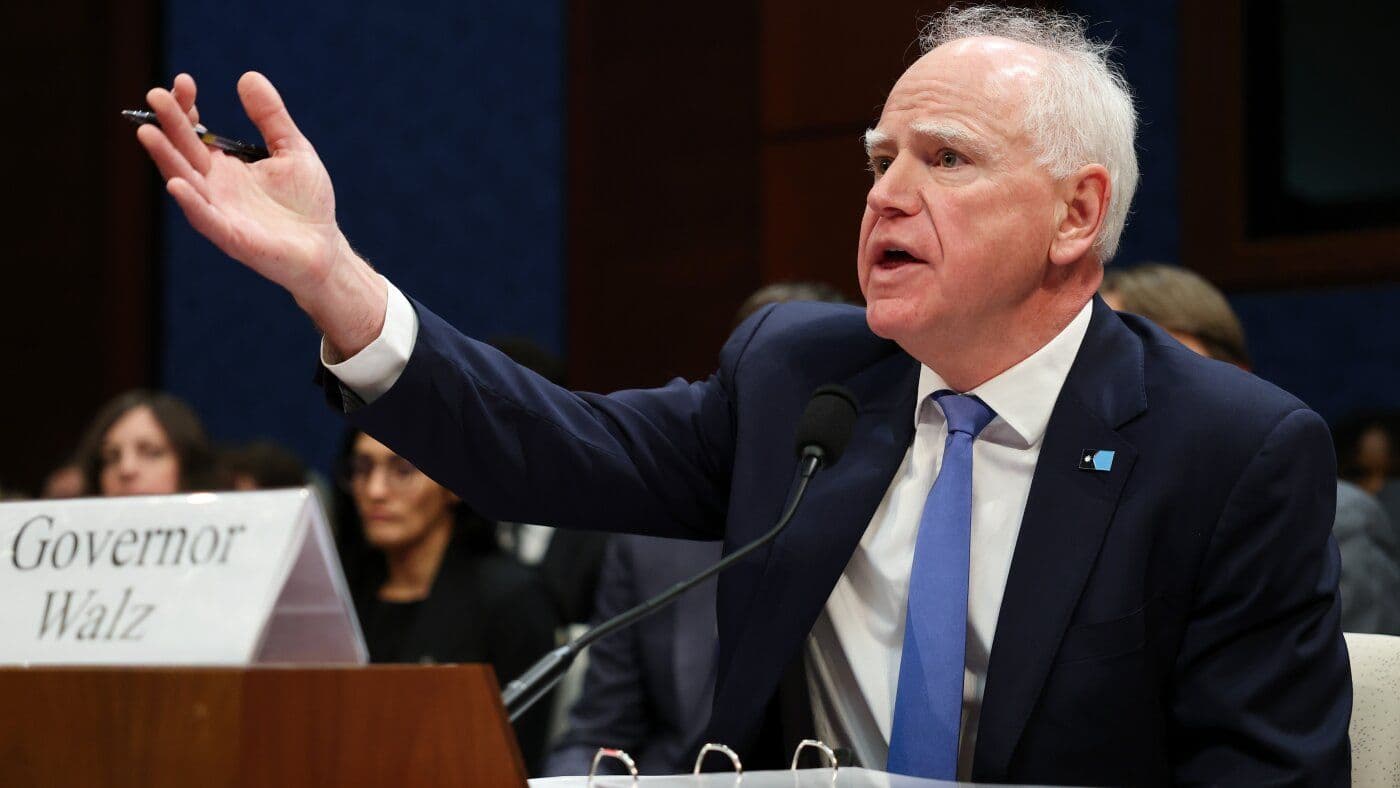
Minnesota's Medicaid Funding Crisis: What It Means for Patients and Other States
Billions in Medicaid dollars hang in the balance as the Trump administration targets fraud in Minnesota — and other states may soon face the same fate.
Billions in Medicaid Funds Frozen as Federal Crackdown Hits Minnesota
For Sarah Lindbo, Medicaid is not a political talking point — it is the backbone of her 14-year-old daughter Greta's daily life. Greta, who lives with cerebral palsy, depends on a comprehensive network of care that includes physicians, specialized medical equipment, prescription medications, a school paraprofessional, and an in-home care assistant. The majority of these services are made possible through Medicaid.
"Medicaid makes a huge impact in our day-to-day life," Lindbo explained. "It is the foundation of what gives Greta her experience at school and in our community and our family."
But that foundation is now under serious threat. Minnesota finds itself at the center of an unprecedented federal funding dispute, with hundreds of millions — and potentially billions — of dollars in Medicaid reimbursements frozen amid the Trump administration's aggressive anti-fraud campaign.
How the Funding Freeze Came About
The crisis was set in motion after federal prosecutors alleged last year that billions of dollars may have been fraudulently siphoned from Minnesota's Medicaid program over an extended period, resulting in multiple criminal charges. In response, the Centers for Medicare and Medicaid Services (CMS), led by Dr. Mehmet Oz, moved swiftly to restrict federal funding to the state.
At a February press conference, Dr. Oz placed the blame squarely on state leadership rather than its residents.
"This is not a problem with the people of Minnesota. It's a problem with the leadership of Minnesota and other states who do not take Medicaid preservation seriously," he stated.
However, health care policy analysts warn that the federal government's approach goes far beyond any conventional fraud-fighting measure and could seriously compromise care for vulnerable patients.
"If this becomes the framework for addressing fraud, it's really destabilizing," said Allie Gardner, a health policy researcher at the Center on Budget and Policy Priorities. "It risks the coverage and care for those that depend on the program."
Two-Pronged Attack: Deferral and Withholding
The federal government has deployed two distinct financial mechanisms against Minnesota simultaneously — a combination that experts say is highly unusual and particularly damaging.
Retroactive Deferrals
The first tool, known as deferral, involves CMS delaying reimbursement for approximately $259.5 million that Minnesota already spent on Medicaid services last summer. The federal agency cited concerns over potential fraud and payments allegedly made on behalf of individuals without legal immigration status, who are not eligible for Medicaid coverage.
CMS requested that the state provide documentation proving that expenditures across 14 provider categories — previously flagged by Minnesota itself as high-risk for fraud — were lawfully made. Notably, Minnesota had already shut down one of those programs, Housing Stabilization Services, the prior year due to rampant fraud.
While deferrals are a recognized oversight tool, they are traditionally narrow and well-defined. Gardner notes that the breadth and vagueness of this particular deferral make it exceptionally difficult for the state to respond effectively.
"The state kind of has to shoot in the dark in responding to CMS on what documentation they need to provide," she said. "What is the scope of information needed? Do they need documentation to justify every single claim?"
Future Funding Withheld
The second mechanism — withholding — targets future Medicaid payments. After CMS requested a comprehensive fraud-prevention plan from Minnesota in December, the state submitted a proposal outlining a series of corrective actions. In January, Dr. Oz declared the plan "deeply insufficient" and announced that CMS intended to withhold approximately $2 billion in annual federal Medicaid funding going forward.
According to Gardner, deploying both deferral and withholding simultaneously — targeting the same services — is extraordinarily rare and puts Minnesota at risk of a catastrophic financial shock.
"CMS' use of both of these processes to go after the same services at the same time — that's really concerning," she said. "Especially given the significant financial consequences to the state and providers as well as to the care and coverage of Medicaid enrollees."
Minnesota Fights Back in Federal Court
Minnesota has not accepted these measures without resistance. The state filed a federal lawsuit challenging a significant portion of the frozen deferral funds. Minnesota Attorney General Keith Ellison accused the Trump administration of adopting a reckless "cut first" philosophy that endangers residents who rely on Medicaid.
"The Trump Administration's M.O. is to cut first, no matter what the law says or who gets hurt, and ask questions later, if at all," Ellison said in a statement accompanying the lawsuit.
CMS declined to comment publicly, citing ongoing litigation. Attorneys representing the agency have argued that the $259.5 million in question represents only about 7% of quarterly federal funds owed to Minnesota — framing it as a relatively limited financial action.
Real Consequences for Patients and Providers
Medicaid policy expert Andy Schneider of the Georgetown Center for Children and Families pushed back on that framing, stressing that the state budgeted with the expectation of receiving those reimbursements.
"The federal government has just told the state, you have $259 million less to work with for the services that are happening now," Schneider said. "That's a lot in a short period of time."
The potential loss of $2 billion in annual funding would compound the problem dramatically. According to Schneider, such a shortfall could slow payments to healthcare providers, delay new patient enrollment, force cuts to reimbursement rates, and reduce the overall scope of covered services — all of which would disproportionately harm the state's most vulnerable residents.
A Warning Sign for Other States
Minnesota may be the current flashpoint, but it is unlikely to remain the only target. CMS has already sent letters to California, New York, and Maine raising concerns about potential fraud within their respective Medicaid programs. Schneider, who also served as a senior adviser to CMS during the Obama administration, views this as a potential precursor to similar deferral or withholding actions in those states.
While Schneider acknowledges the importance of rooting out fraud and holding bad actors accountable, he argues that the federal government's confrontational, unilateral approach is counterproductive.
"If they were really worried about it, they would continue to do what we did in the past, which is to work cooperatively with the state," he said.
For families like the Lindbos, the political maneuvering carries deeply personal stakes. Every dollar frozen or withheld represents a potential gap in care for people who have no alternative — children like Greta, who simply need consistent, reliable support to thrive.