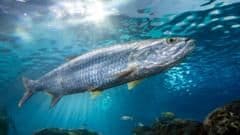
Migratory Freshwater Fish Face 81% Population Collapse — UN Calls for Urgent Global Action
A sweeping UN assessment reveals migratory freshwater fish populations have plummeted 81% over 50 years, prompting calls for international conservation measures.

Migratory Freshwater Fish Are Disappearing at an Alarming Rate
A landmark United Nations assessment has revealed a devastating truth about one of the world's most overlooked wildlife groups: migratory freshwater fish populations have collapsed by an estimated 81% over the past five decades. The findings, drawn from a comprehensive review of more than 15,000 species, are driving urgent calls for coordinated global conservation efforts.
These fish — which undertake extraordinary journeys through rivers, lakes, and inland waterways — now face a perfect storm of threats, including dam construction, widespread pollution, and relentless overfishing. Together, these pressures are cutting off fish from the breeding grounds they depend on for survival.
The Scale of the Crisis
When the UN last examined this group back in 2011, scientists were only able to evaluate around 3,000 species. Since then, the International Union for the Conservation of Nature (IUCN) has dramatically expanded its data collection efforts, allowing researchers to assess the health of more than 15,000 migratory freshwater fish species in this latest report.
The results paint a sobering picture. A team of international scientists concluded that populations have declined by roughly 81% over the last half century — a staggering loss that researchers say can no longer be ignored.
"Freshwater fish support hundreds of millions of people around the world, so for humans, they're very important," said Dr. Zeb Hogan, co-author of the report and Professor of Biology at the University of Nevada, Reno.
Beyond their economic importance, these fish are remarkable in their diversity. Some species weigh more than 650 pounds and travel upwards of 7,000 miles. Others, like the golden dorado of South America or the tropical eels of Oceania, undertake breathtaking long-distance migrations across entire continents.
Globally, migratory freshwater fish provide a critical food source for approximately 200 million people — making their decline not just an ecological emergency, but a humanitarian one.
Thirty Species Prioritized for Protection
In response to the crisis, the UN has identified 325 fish species that urgently need to be added to the Convention on the Conservation of Migratory Species — a global treaty established in 1979 that commits signatory nations to jointly protect migrating wildlife. Of these, 30 have been designated as flagship priority species, including the golden mahseer, the goonch catfish, the Atlantic Salmon, Allis Shad, River Lamprey, and Brook Lamprey.
This shorter priority list focuses on species that are not only threatened but also carry deep cultural and spiritual significance for communities around the world.
"The golden mahseer is an iconic fish of the Himalayas — it's called the tiger of the river," explained Michele Thieme, Deputy Lead for Freshwater at World Wildlife Fund US and a contributor to the report. "Many people in that region value that fish for cultural and spiritual practices that go far beyond its economic worth."
The Two Biggest Threats: Overfishing and Habitat Loss
Like most species on the priority list, the golden mahseer faces a dual assault from overfishing and habitat destruction. Dams are among the most damaging culprits, fragmenting river systems and altering natural water flow in ways that prevent fish from reaching their spawning habitats.
In Europe, the situation is particularly acute. On average, migratory fish encounter a physical barrier to their movement every kilometer along their routes. Many of these obstacles are small, outdated structures — culverts or weirs that no longer serve any functional purpose.
"It can have a massive impact in terms of the energy reserves fish are using to get over these barriers," said Dr. Janina Gray, Head of Science at the environmental charity WildFish. "That makes them more susceptible to disease. They're more likely to be predated. They will spawn in suboptimal grounds."
The cumulative toll of these barriers, she warned, is enormous — even when each individual structure might seem insignificant on its own.
A Global Treaty Must Step Up
Because most migratory fish cross international borders during their journeys, no single country can address the problem alone. Effective conservation requires governments to coordinate policies and enforcement across borders — a challenge that demands political will as much as scientific insight.
The Convention on the Conservation of Migratory Species offers a proven framework for exactly this kind of international cooperation. The Saiga antelope serves as a compelling success story: after suffering a catastrophic mass die-off in 2015 that pushed the species toward extinction, a coordinated international anti-poaching effort helped populations rebound to over one million animals.
"The focus has clearly been on some of the more well known, more visible species — the big cats, antelope, whales, dolphins," acknowledged Amy Fraenkel, UN Executive Secretary for the Convention on Migratory Species. She emphasized that it is now time for migratory freshwater fish to receive the same level of attention and protection.
The UN is proposing that the 30 priority fish species be formally added to the treaty at the convention's next major meeting, scheduled in three years' time. Critics have long argued that the agreement has historically favored large mammals over fish, insects, and other less visible species — a bias that scientists and conservationists are now pushing hard to correct.
Why This Matters
The decline of migratory freshwater fish is not simply a story about biodiversity loss. It is a story about food security, cultural heritage, and the health of the world's river systems. These fish are, as researchers put it, "an essential part of people's livelihoods" — and their disappearance would send ripple effects through ecosystems and human communities alike.
With the right international commitments and targeted local action, conservationists believe recovery is possible. But time, they warn, is running out.

