Mexico's Measles Crisis: A Race to Vaccinate Millions Amid Growing Challenges
Mexico is battling a massive measles outbreak with an ambitious vaccination push — but public enthusiasm is fading and deep inequalities threaten progress.
Mexico Launches One of Its Largest Vaccination Drives in Recent History
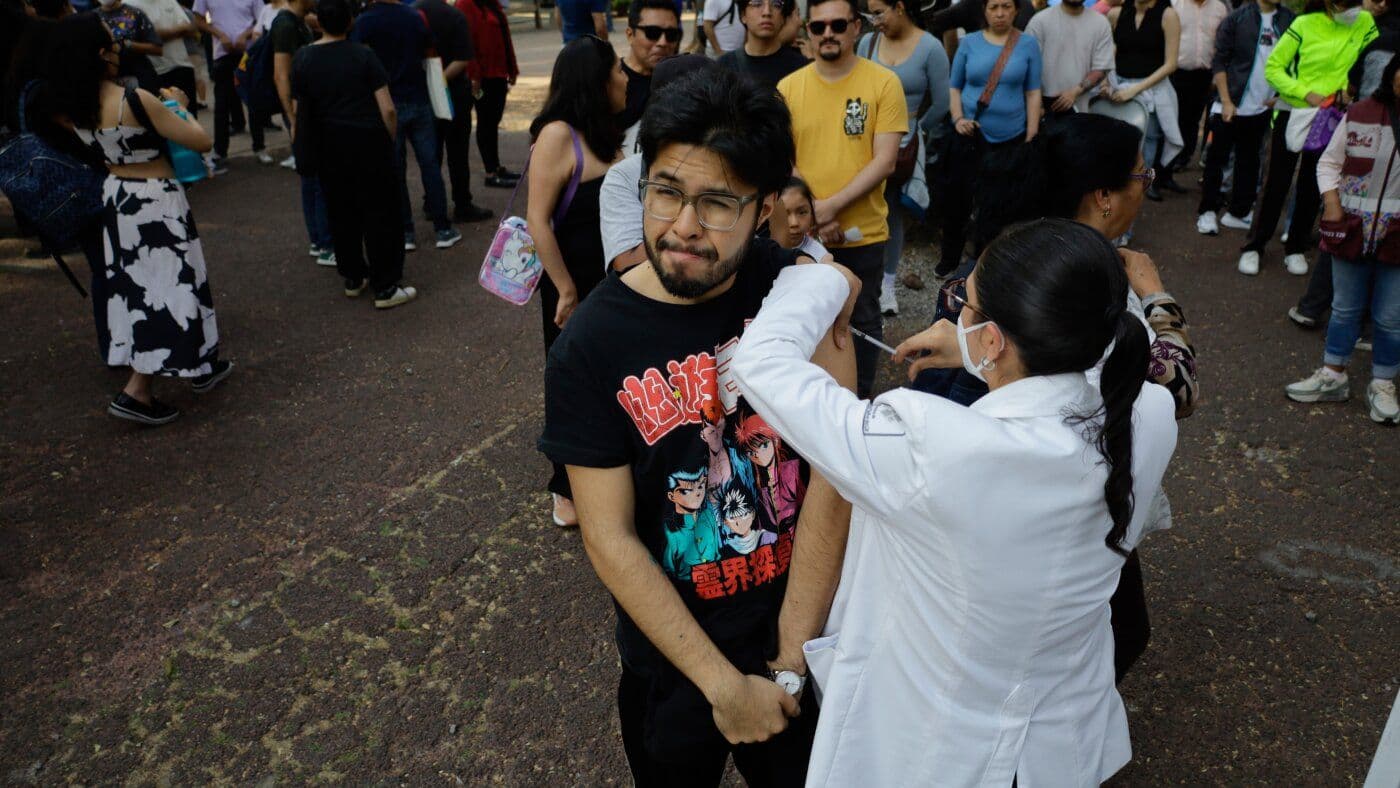
A surging measles outbreak has pushed Mexican health authorities into overdrive, launching an ambitious campaign targeting 2.5 million vaccinations every single week. Across the country, the effort is visible everywhere — from QR-coded posters lining city walls to nurses knocking on residential doors and pop-up vaccination booths appearing in bakeries, bus terminals, movie theaters, shopping centers, and busy traffic roundabouts.
In Mexico City's Chapultepec neighborhood, nurse Erica Briones Chavez witnessed the initial wave of public concern firsthand. "People were extremely worried," she recalls. "For a couple of months, we were administering two to three hundred doses daily — mothers, fathers, teenagers, infants, and even grandparents. People were willing to wait in line for two hours just to get vaccinated."
Community WhatsApp groups buzzed with real-time updates on wait times at various vaccination centers, reflecting the urgency felt by everyday citizens.
Experts Praise the Effort — But Not Without Reservations
While many infectious disease specialists have commended the scale and speed of Mexico's response, not everyone is satisfied with the approach. Dr. Sergio Meneses Navarro, a researcher at Mexico's National Institute of Public Health, argues the campaign lacks strategic focus.
"The response is large, but it isn't efficient," he says bluntly. "Our resources and efforts should be concentrated in the regions and communities with the lowest levels of protection — those are the populations most at risk."
His concern points to a fundamental tension in public health emergencies: casting a wide net versus targeting those who need help most.
Early Momentum Is Starting to Fade
Despite the initial surge in public interest, signs of declining engagement are already emerging. Nurses at the Chapultepec medical center report noticeably fewer people showing up for vaccinations. Meanwhile, the number of pop-up immunization stations has also dwindled.
At one train station serving as a vaccination point, the station manager — identified only as Horacio — offered a candid assessment: "Sometimes the health workers show up, sometimes they don't. And when they run out of vaccines, they just close up and leave early."
This inconsistency raises questions about the long-term sustainability of an emergency-level response.
How the Outbreak Began: A Cross-Border Origin
The current crisis traces its roots to 2023, when a nine-year-old child from a Mennonite community in the northern state of Chihuahua fell ill after visiting relatives in Gaines County, Texas. The disease spread rapidly through Mexico's largely unvaccinated Mennonite population — estimated at approximately 40,000 in Chihuahua alone and around 70,000 nationwide. Many of these communities descend from families who migrated from Russia to Canada and eventually to Mexico during the 1920s.
With vaccination rates already low within these communities and inconsistent coverage across Mexico more broadly, a single imported case cascaded into a nationwide outbreak.
Understanding Measles: Why It Spreads So Fast
Measles ranks among the most contagious infectious diseases known to medicine. Transmitted through airborne droplets, it can infect up to 90% of unvaccinated individuals who are exposed. What makes containment especially difficult is that an infected person can spread the virus four days before symptoms appear — meaning carriers often don't know they're contagious.
Early symptoms resemble a common cold or flu, and may include a distinctive red rash or white spots inside the mouth. Most healthy adults recover within ten days, but for children under five and those with compromised immune systems, measles can be fatal.
Since January 2024, Mexico has recorded more than 36,000 suspected cases, nearly 15,000 confirmed infections, and 35 deaths. The government publishes daily updates to keep the public informed.
"Measles is not a relic of the past," Meneses Navarro emphasizes. "It is a disease we have the technology to prevent. That technology is called vaccines."
The Two-Dose Challenge
Effective measles vaccination requires two separate doses administered at least one month apart — a logistical challenge that complicates any mass immunization effort, particularly in hard-to-reach communities.
A Fraying Public Health System
Mexico's vaccination infrastructure was once celebrated as a model for the entire Latin American region. Throughout the latter half of the twentieth century, the country provided universal, free immunizations and ran highly visible public health campaigns. As a result, measles was nearly eliminated and herd immunity was achieved across multiple diseases.
However, that hard-won progress has steadily eroded. Government funding for the public health system stopped keeping pace with population growth, stretching resources thin. Then the COVID-19 pandemic delivered another blow: with people avoiding clinics unless absolutely necessary, routine childhood vaccination rates plummeted — leaving a dangerous immunity gap in a generation of young children.
A 2023 government survey found that only one in three two-year-olds had received the complete childhood immunization schedule — a striking indicator of how far the system had slipped.
Health policy consultant Beatriz Martínez points to another factor: complacency born from success. "When diseases become less visible in daily life, people perceive less personal risk," she explains. "They stop seeing vaccination as necessary."
Misinformation and Vaccine Hesitancy Add Fuel to the Fire
Mexico has not been spared from the global wave of vaccine skepticism. Nurses at public health clinics report a steady increase in patients arriving with doubts and fears — many shaped by content they encountered on TikTok and other social media platforms.
Healthcare workers find themselves spending significant consultation time addressing misinformation and rebuilding trust in vaccines — time that could otherwise go toward administering doses.
The nurses hope that high-profile government campaigns like the current measles push will help reinforce public confidence in immunization over the long term.
Distrust Runs Deep in Marginalized Communities
For certain segments of the population, however, skepticism toward public institutions goes far beyond social media influence. Meneses Navarro notes that in rural and indigenous communities where he frequently works, some residents actively avoid health services — fearing that medical facilities spread disease rather than prevent it.
"Mexico is a profoundly stratified society with vast inequalities in income, education, and access to healthcare," he says. "These inequalities don't just create vaccine hesitancy — they create entire ecosystems where misinformation thrives and trust is nearly impossible to build quickly."
Logistical Barriers in Remote Areas
Beyond attitudes and beliefs, practical obstacles further complicate vaccination efforts in rural Mexico. Many remote areas lack adequate cold-chain storage infrastructure — the refrigeration systems essential for keeping temperature-sensitive vaccines viable. Reliable vaccine supply chains and trained medical personnel are also scarce in these regions.
Compounding the problem, Mexico has no centralized immunization registry. Without a national database tracking who has and hasn't been vaccinated, health authorities have no clear picture of coverage gaps — making it nearly impossible to mount a truly targeted response.
What Comes Next
Mexico's measles outbreak represents more than a public health emergency — it is a stress test of a healthcare system that has been under sustained pressure for years. The government's ambitious vaccination campaign demonstrates political will, but turning that ambition into lasting immunity will require addressing structural inequalities, rebuilding institutional trust, and investing in the infrastructure that makes sustained vaccination programs possible.
As Meneses Navarro puts it: the technology to prevent measles already exists. The harder work lies in ensuring it reaches everyone who needs it.