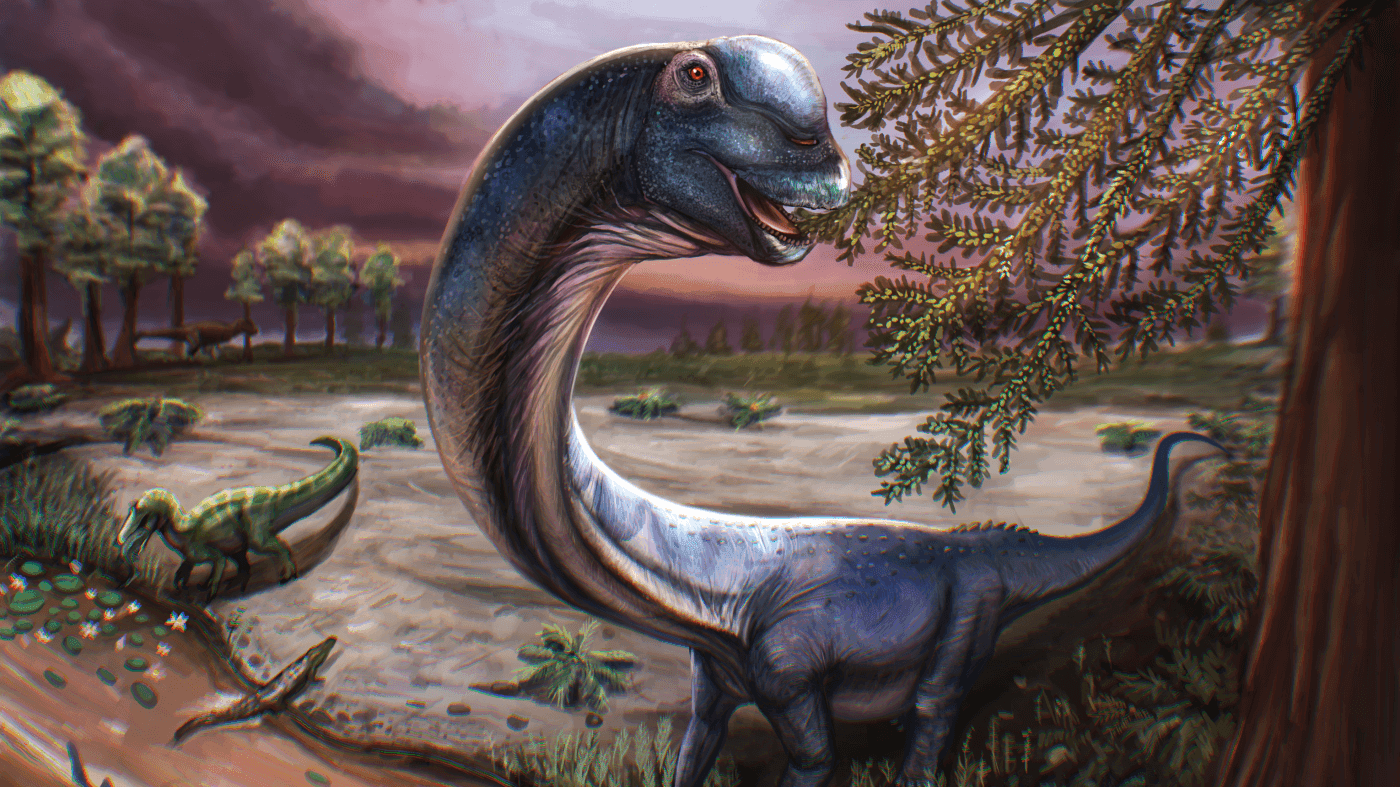
Meet the Nagatitan: Southeast Asia's Largest Dinosaur Ever Discovered
Scientists have uncovered a massive new dinosaur species in Thailand, stretching roughly 90 feet long and weighing around 30 tons — the biggest ever found in Southeast Asia.
Southeast Asia's Mightiest Dinosaur Has a Name
Scientists have officially identified a remarkable new dinosaur species unearthed in Thailand, and it has claimed the title of the largest dinosaur ever discovered in Southeast Asia. Published in the journal Scientific Reports, the findings have captured the attention of paleontologists worldwide.
The creature — a long-necked, herbivorous sauropod — is estimated to have stretched approximately 90 feet in length and tipped the scales at roughly 30 tons. To put that in perspective, that's heavier than four large African savanna elephants combined, or more than three times the mass of a full-grown Tyrannosaurus rex.
A Giant from the Cretaceous Era
This colossal beast roamed the Earth during the late Early Cretaceous period, somewhere between 100 and 120 million years ago. Researchers place it in the "upper middle" tier of the largest dinosaurs ever recorded in the fossil record — impressive in its own right, yet a sign of even greater giants to come.
"One of the many features that we're kind of excited about is the size of this dinosaur," said Thitiwoot Sethapanichsakul, a Ph.D. student at University College London and lead author of the study.
Interestingly, sauropods would grow considerably larger as the Cretaceous period progressed. Some discovered from later in that era weighed as much as 70 tons. Sethapanichsakul describes this newly found species as representing an evolutionary "on-ramp" toward the supersized giants that would dominate the Middle Cretaceous in regions like China, South America, and Africa.
The Name Behind the Discovery
Researchers have named the species Nagatitan chaiyaphumensis. The first part of the name draws from the mythological Naga — a serpentine creature revered across Southeast Asian cultures — combined with "titan," a nod to the animal's extraordinary size. The species designation, chaiyaphumensis, references Chaiyaphum, the Thai province where the fossils were unearthed.
This marks the 14th named dinosaur species to be discovered in Thailand, and researchers are already referring to it as the country's "last titan."
From Local Find to Global Discovery
The story of this discovery spans nearly a decade. A local resident first stumbled upon the fossils back in 2016, and initial excavation efforts ran through 2019 before funding ran out. With fresh financial support secured, Sethapanichsakul's team resumed digging in 2024.
While researchers do not yet have a complete skeleton, they have recovered significant bones including sections of the spine, ribs, pelvis, and legs. One foreleg bone alone measured nearly six feet in length.
Expert Reaction
Mathew Wedel, a paleontologist and anatomy professor at Western University of Health Sciences in California who specializes in sauropods, weighed in on the find — though he was not part of the research team.
"This is a big critter. Pretty nice material," Wedel remarked, noting that multiple skeletal regions are represented and that several bones are well-preserved and largely undistorted. He called the quality and quantity of the material "not bad" by the standards of large dinosaur discoveries.
The Last of Its Kind in Thailand
Based on the geological age of the rock formations where the fossils were found, and what scientists understand about how Thailand's ancient landscape evolved over time, researchers believe this may be the final large dinosaur discovery the region will yield.
"This rock formation that we found this dinosaur in is the last formation where you're going to find dinosaurs in Thailand," Sethapanichsakul explained.
Despite that sobering note, experts remain enthusiastic about the broader implications of the find. Wedel emphasized that every new fossil discovery from any corner of the world deepens our collective understanding of prehistoric life. "Every country gives us a new window into a little bit different part of the past and helps us refine our ideas of what we think was going on," he said.