Meet the 'Killer Fungus' That Could Save Britain's Native Habitats from Invasive Moss
A newly identified fungus is destroying invasive heath-star moss across the UK, offering rare hope for the restoration of threatened native habitats.
A Rare Environmental Comeback Story
Scientists have identified a previously unknown fungal species in Britain that is proving lethal to one of the country's most aggressive invasive plants. The discovery has sparked cautious optimism among ecologists, who believe this natural predator could play a significant role in restoring native habitats that have long been suffocated by the relentless spread of heath-star moss.
For once, the term "killer fungus" carries a positive connotation.
The Invasive Threat: Heath-Star Moss
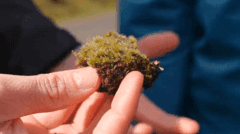
Heath-star moss may look harmless — even charming — to the untrained eye. But beneath its delicate green appearance lies an ecological bully. Scientists believe the plant arrived in Britain sometime during the 1940s, likely originating from the southern hemisphere. By 1990, it had established itself across the entire country.
Today, it blankets hillsides, sand dunes, garden fences, and has even been observed pushing through tarmac. It reproduces rapidly through widespread spore dispersal, giving it a significant competitive edge over native plant life.
"This moss has just exploded," says Dr. George Greiff, a botanist working at Amgueddfa Cymru museum in Cardiff. "In the 1930s, native mosses would have been growing here instead."
Britain is home to more than 1,000 species of moss, which form the ecological backbone of precious and rare habitats including temperate rainforests — damp coastal woodland environments — and carbon-storing peatlands. The unchecked dominance of heath-star moss has pushed many native moss species to local extinction or drastically reduced their populations.
The Discovery That Started on a Cliffside
The story of this fungal breakthrough begins four years ago on the Isle of Wight, where Dr. Greiff, then 26, was walking along a cliffside and noticed clusters of dead invasive moss. Something had killed them, but what?
He collected samples and began investigating, but the cause of death remained elusive. Then he started seeing more cases — patches of decaying heath-star moss appearing in different locations across the country. Collaborating with fellow scientists in both the UK and France, Greiff eventually pieced together the mystery.
The culprit was a potent, previously undocumented fungal species. It has since been formally named the "moss die-back" fungus — a nod to both its behavior and its newly identified family ties.
Fairy Rings of Death
Dr. Greiff guided a BBC News team along a trail in Bannau Brycheiniog National Park near Abergavenny in south Wales to witness the fungus in action firsthand. His eyes never left the ground as he scanned low embankments for telltale signs of moss collapse.
Within minutes, he located a circular patch of dead moss roughly the size of his outstretched hand — one of what he calls "fairy rings of death."
Up close through a macro lens, the scene becomes far more dramatic: tiny white formations cling to the tips of dying moss stems, the visible signature of the fungus at work. Under laboratory microscopes, the organism reveals itself more fully — wrapping around moss stems like candy floss around a stick and even penetrating individual moss cells.
Perhaps most encouragingly, young heather plants were already beginning to emerge in the gaps left behind by the decayed moss — a sign that native vegetation is reclaiming lost ground.
A Relative of a Notorious Tree Killer
Through extensive DNA sequencing, Greiff's team has determined that the moss die-back fungus is a close genetic relative of ash die-back, the devastating pathogen responsible for killing an estimated 80 million ash trees across Britain. While that fungal cousin has caused catastrophic damage, this newly identified species appears to be operating in the opposite direction — targeting an invader rather than a native species.
"It's taken a lot of DNA sequencing to fully identify this fungus," Greiff noted, reviewing samples under a microscope in his Cardiff lab.
Hope in the Fight Against Invasive Species
Britain is currently home to around 2,000 non-native plant and animal species introduced — deliberately or accidentally — by human activity. Some have become notorious ecological villains. The North American grey squirrel, for example, has driven native red squirrel populations to the brink. Japanese knotweed causes structural damage to buildings, and rhododendron deposits toxins into surrounding soil.
The discovery of a naturally occurring biological check on heath-star moss represents something scientists rarely get to celebrate: the environment fighting back.
Dr. Greiff now actively searches for evidence of the fungus wherever his travels take him. He jokes that the growing map of confirmed fungal sightings doubles as a record of his holiday destinations.
While further research is needed to understand the full scope of the moss die-back fungus's potential, scientists are hopeful that this natural predator could become a key tool in the broader effort to protect and restore Britain's most vulnerable native ecosystems.

