Meet the Bird-Inspired Robot That Can Both Fly Through the Air and Swim the Seas
Engineers at MIT have built a groundbreaking aerial-aquatic robot inspired by diving seabirds, capable of transitioning seamlessly between water and air.
A Robot That Defies Two Worlds
Deep inside a laboratory at MIT, a giant tank of bright turquoise water sits beside a powerful array of fans and a collection of small flying machines. These robots are not just impressive pieces of engineering — they represent a fundamental leap in what machines can do. Inspired by the remarkable abilities of diving seabirds like the Atlantic puffin, researchers have created a robot that can both swim beneath the surface and soar through the open sky.
Mechanical engineer Raphael Zufferey leads the project. His fascination with the puffin stems from how effortlessly the bird navigates two drastically different environments — air and water — despite the enormous difference in their densities. That biological marvel became the blueprint for something no one had ever successfully engineered before.
Engineering Inspired by Nature
The team's findings were published in the journal Science, detailing the design and performance of their new aerial-aquatic robot. The machine weighs roughly half a pound and stretches nearly three feet from wingtip to wingtip. Its translucent nylon wings are reinforced with carbon fiber struts, giving them both the strength and flexibility needed to function in two very different physical environments.
The development process took two full years. From the outset, the challenge seemed almost impossible. "Thinking of a wing that could operate in both somewhat efficiently seems implausible," Zufferey admits. Yet he and his team pressed forward, drawing from detailed studies of how puffins dive, swim, and take flight.
Two Critical Design Decisions
While the robot's overall body plan mirrors that of a diving bird, the engineers made two significant departures from nature's template.
First, they chose to eliminate legs entirely. In robotics, legs introduce unnecessary mechanical complexity and control challenges. Instead, the team asked a bold question: could the robot launch itself directly from water to air using its wings alone?
Second, they opted against foldable wings, a feature common in real diving birds. Adding the joints and motors required for folding would have made the design too complicated. Instead, they engineered natural flexibility directly into the wing structure itself.
How the Robot Works
One of the most innovative aspects of the design is the robot's open body frame. Rather than sealing the central housing — which contains the motor and battery — the team left it exposed, allowing water to flood the internal cavity freely. Every electronic component was individually waterproofed instead.
This approach serves two purposes. It keeps the robot light enough for efficient aerial flight, and it makes the machine neutrally buoyant in water, meaning it neither floats to the surface nor sinks to the bottom — it simply hovers in place at whatever depth it reaches.
During normal flight, the robot flaps its wings five to six times per second. To break free from the water's surface and launch into the air, however, it must double that rate to around ten flaps per second, generating enough speed and thrust to clear the surface in under a second.
Interestingly, most diving birds lack the raw wing power to achieve this on their own, which is why species like the puffin rely on their legs to run along the water before becoming airborne. The kingfisher is a notable exception, largely due to its exceptionally light body weight.
A Stunning Real-World Test
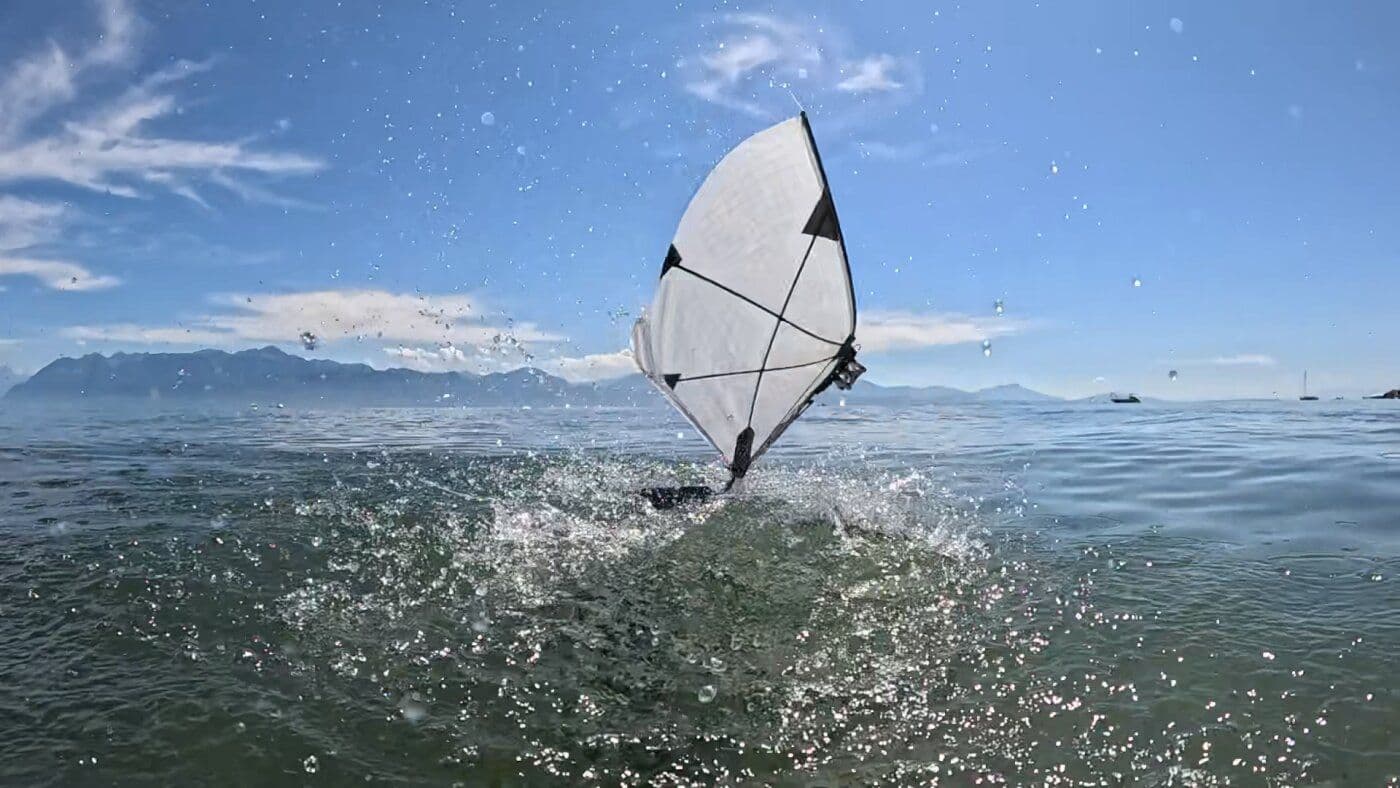
To prove the concept works outside the laboratory, the research team took their robot to Lake Geneva in Switzerland. With the Alps forming a dramatic backdrop, the machine was submerged and then activated. Within less than a second, it burst from the calm water and climbed into the air — the burst of motion sounding remarkably like a real bird taking flight.
The engineers calculated the ideal launch angles and wing dimensions to maximize performance. On a single battery charge, the robot is estimated to cover nearly four miles by air or just over a mile through water — a combined range that actually exceeds the swimming and running distances of a sprint triathlon.
What Experts Are Saying
Glenna Clifton, an animal movement biologist at the University of Portland who collaborates with roboticists, praised the achievement enthusiastically. "It is light and powerful and a monumental step in the performance at both swimming, flying, and transitioning between the two," she said.
Clifton also highlighted the broader scientific value of such bio-inspired machines. The relationship between biology and robotics flows in both directions: nature provides the inspiration for engineering breakthroughs, while the robots in turn help scientists better understand the biological principles behind animal movement.
What Comes Next
Zufferey envisions a wide range of real-world applications for aerial-aquatic robots like this one. Coastal monitoring, tracking harmful algal blooms, assessing fish populations, and studying coastal erosion are all possibilities on his roadmap. The plan is to equip future versions with onboard sensors capable of collecting environmental data during both flight and underwater travel.
The robot could, for example, fly out to a remote coral reef, descend into the water, collect samples, and return — all without human intervention. Similar missions could involve monitoring whale pods or tracking the spread of algal blooms across large stretches of ocean.
For Zufferey, the greatest source of motivation remains the natural world itself. "You see that it has already been done in biology," he says. "So that gives you hope as a robotics researcher. It tells you that it should be possible."