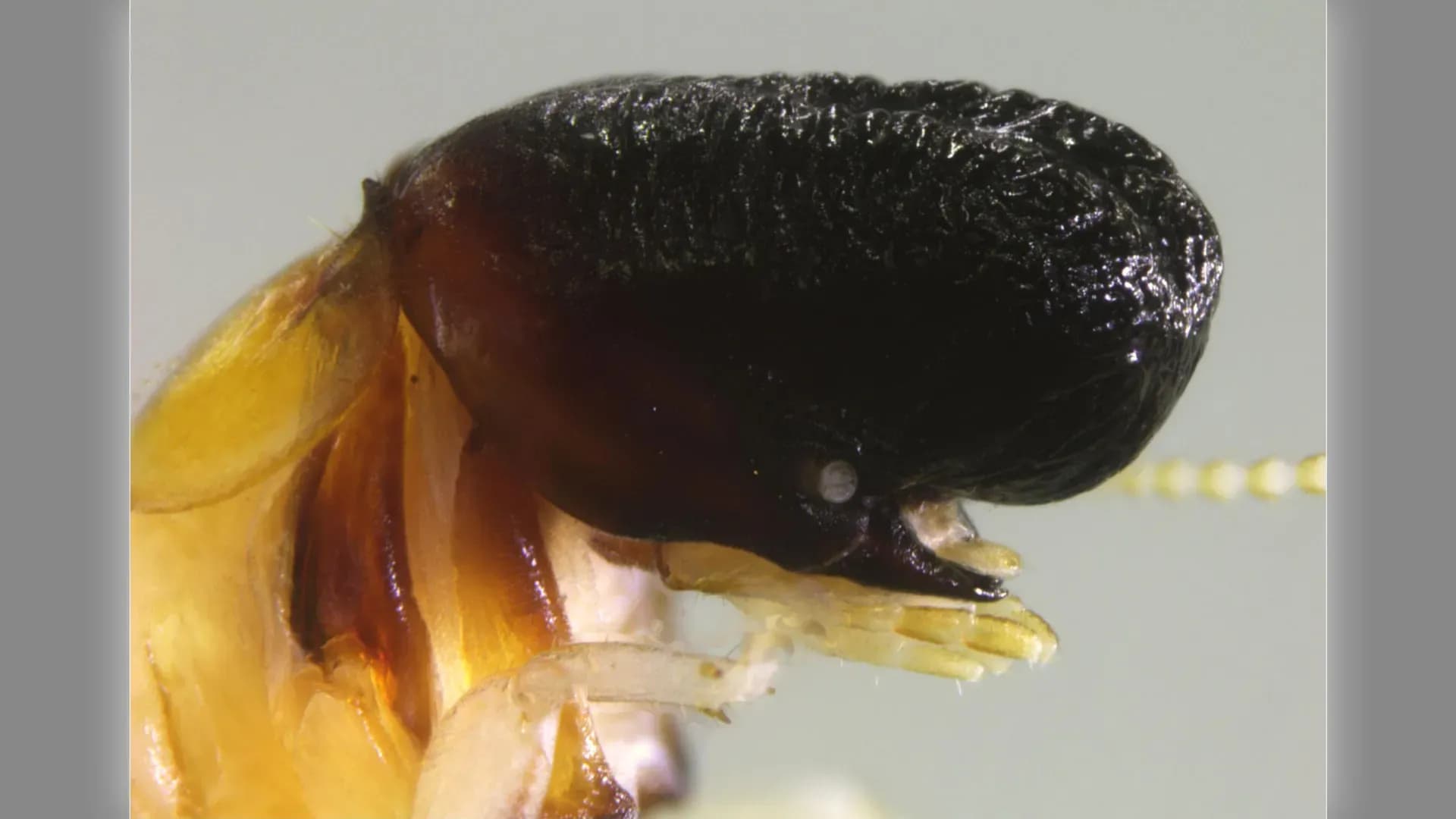
Meet Cryptotermes mobydicki: The Tiny Termite That Looks Just Like a Sperm Whale
A new termite species discovered in a South American rainforest bears an uncanny resemblance to the iconic sperm whale — and its name pays homage to it.

A Whale-Shaped Insect Found High in the Rainforest Canopy
Deep within the treetops of a South American rainforest, researchers have stumbled upon one of the most visually striking insect discoveries in recent memory. A newly identified termite species bears such a remarkable resemblance to a sperm whale that scientists named it accordingly — introducing the world to Cryptotermes mobydicki.
The species was described by an international research team led by Rudolf Scheffrahn, a professor of entomology at the University of Florida Institute of Food and Agricultural Sciences (UF/IFAS). What sets this tiny soldier termite apart is its elongated, rounded head and largely concealed mandibles — features that, when viewed from the side, paint a picture that is unmistakably whale-like.
A Shape Unlike Anything Seen Before
When researchers first encountered the specimen, its appearance was so alien compared to known termite species that they initially suspected it might represent an entirely new genus altogether.
"This termite is unlike anything we've ever seen," said Scheffrahn, whose taxonomic research is conducted at the UF/IFAS Fort Lauderdale Research and Education Center.
He went on to describe the visual parallels in striking detail: "The lateral view of the soldier's frontal prominence and elongated head resembles the head of a sperm whale, and in both organisms, the mandibles are eclipsed by the head. The whale's eye and the soldier's antennal socket are comparatively positioned."
The whimsical naming choice, he explained, was enthusiastically embraced by his co-authors. "After I noticed the resemblance to a sperm whale, my coauthors thought the name to be appropriate and whimsical, much like 'ghost orchid' or 'Dumbo octopus.'" The name also pays tribute to Herman Melville's legendary novel, Moby-Dick, further cementing the creature's literary and scientific identity.
What the Discovery Reveals About Termite Evolution
The identification of Cryptotermes mobydicki brings the total number of documented Cryptotermes species in South America to 16. Genetic analysis places the new species in close evolutionary relationship with other members of the group found across the Neotropical region, including populations in Colombia, Trinidad, and the Dominican Republic.
These genetic connections offer researchers a clearer picture of how this termite lineage has diversified and migrated over time, contributing valuable data to the broader study of insect evolution in tropical ecosystems.
The colony itself was found living inside a dead, standing tree approximately eight meters above the forest floor — a habitat typical of drywood termites, which do not require soil contact to thrive.
A Window Into Undiscovered Biodiversity
Thousands of Species Still Unnamed
With only around 3,000 termite species currently recognized worldwide, each new discovery carries significant scientific weight. Scheffrahn emphasized that this find is a reminder of how much remains unknown.
"The discovery of this distinctive new termite species underscores the vast number of unnamed organisms yet to be discovered on our planet," he said.
Tropical rainforests, in particular, are known to harbor extraordinary levels of biodiversity — much of it still uncharted. The unusual body structure of Cryptotermes mobydicki highlights just how morphologically diverse termites can be, and raises compelling questions about what other extraordinary species may be hiding in the canopy.
No Threat to Homes or Infrastructure
For those concerned about termite damage, there is reassuring news. As a drywood species native to South American rainforests, Cryptotermes mobydicki poses absolutely no risk to buildings, timber structures, or trade goods. Unlike the invasive termite species that cause considerable structural damage across parts of the southeastern United States, this newly discovered insect remains confined to its natural rainforest habitat and shows no signs of spreading beyond it.
A Small Insect With a Big Scientific Impact
The discovery of Cryptotermes mobydicki is more than a charming story about a whale-shaped bug — it is a testament to the richness of life still waiting to be catalogued in the world's tropical forests. As deforestation and climate change continue to threaten these ecosystems, findings like this serve as a powerful reminder of what could be lost before it is ever found.

