Martin Scorsese Sparks Controversy by Championing AI as a Creative Tool in Filmmaking
Hollywood legend Martin Scorsese has ignited a fierce debate after publicly endorsing an AI tool he calls 'creatively freeing' during film pre-production.

Martin Scorsese Backs AI Technology, Dividing Hollywood
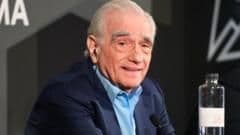
Cinematic icon Martin Scorsese has waded into one of Hollywood's most heated ongoing debates, publicly endorsing an artificial intelligence tool that he credits with transforming his pre-production workflow. The acclaimed director behind Taxi Driver, Goodfellas, and The Wolf of Wall Street has joined forces with AI company Black Forest Labs as an adviser, sparking both admiration and sharp criticism from across the film industry.
What Scorsese Actually Said
At 83 years old and with decades of filmmaking experience behind him, Scorsese openly admitted that he has long struggled with one of cinema's most persistent challenges — translating the vivid imagery in his mind into something his cast and crew can clearly understand.
"I'm interested in the intersection of technology and storytelling, and seeing how that can push the bounds of creativity to create deeper and richer experiences for audiences," the Oscar-winning director stated.
Black Forest Labs released footage showing Scorsese using their AI platform to generate instant storyboard imagery — visual blueprints that map out characters, locations, and key scenes before a single frame is shot.
He argued that the technology allowed him to communicate ideas "more clearly and efficiently" to his production designer, art director, and cinematographer, ultimately saving both time and money during the critical pre-production phase.
"During the pre-production process, time costs money, and this allowed us to move faster without sacrificing quality or craft," he explained.
Scorsese also pointed to his own history of embracing emerging technology, referencing his use of 3D filmmaking in Hugo (2011) and groundbreaking de-ageing visual effects in The Irishman (2019) as evidence that cinema must remain open to evolution.
"Remember, cinema is a young medium, only around 125 years old, so we have to be open to how it can evolve," he noted.
Industry Backlash: Artists Push Back Hard
Despite Scorsese's measured framing of AI as a practical tool rather than a creative replacement, many industry professionals responded with outrage — particularly those working in visual development and storyboarding.
Karla Ortiz, a veteran art department professional whose credits include Avengers: Endgame, Black Panther, and Doctor Strange, did not hold back in her criticism.
"He throws every single storyboard artist he's ever worked with under the bus, as he demolishes their livelihoods with models that are likely trained on those storyboard artists' same works," Ortiz wrote on X. "To use his legacy and power for this is just so disgusting."
Animation director Samuel Deats echoed those sentiments, arguing that storyboarding is neither time-consuming nor technically demanding enough to justify AI involvement.
"It takes literally seconds for me to storyboard a shot," Deats wrote. "There is absolutely no reason to need AI built on the stolen work of millions of artists to storyboard your vision. Have some damn pride and respect your peers."
Supporters Defend the Director's Position
Not everyone in the conversation condemned Scorsese's stance. A number of voices on social media rallied behind the director, framing AI as simply the latest in a long line of technological tools that filmmakers have historically adopted.
"Using AI is effectively just another special effect like CGI," one user argued. "And as shown, Scorsese is not averse to such technological advancements."
Another supporter suggested the framing of AI as a job-killer missed the point entirely: "If AI can help someone like Scorsese show his cinematographer or production team what he's imagining more quickly, I don't really see the issue. At that point, it feels less like replacing creativity and more like giving the creative process a better tool."
Scorsese Is Not Alone Among High-Profile Directors
Scorsese joins a growing list of major filmmakers who have publicly experimented with or endorsed artificial intelligence in their work.
- Darren Aronofsky's production company utilized AI to reconstruct scenes from the American Revolution across a series of short films.
- Steven Soderbergh incorporated AI-generated visuals into a new documentary exploring the life of John Lennon.
- The late Val Kilmer, who passed away in April 2025, agreed before his death to be digitally resurrected through AI for an upcoming film.
- Steven Spielberg acknowledged AI's potential to streamline tasks like location scouting, though he cautioned it should remain "a tool in a large tool chest" and never hold "the final word on anything creative."
- Guillermo Del Toro has staked out the opposite position entirely, declaring last year that he would "rather die" than use AI in his filmmaking process.
The Broader Debate Continues
The controversy surrounding Scorsese's endorsement arrives at a moment of intense scrutiny for AI across the entertainment industry. Director Adam Shankman felt compelled this week to publicly defend his new film Stop! That! Train!, starring RuPaul, against accusations that it relied on AI-generated content.
"Every shot in 'Stop! That! Train!' was made by human hands!" Shankman wrote on Instagram. "There are a sum total of ZERO shots conceived by AI in the movie. We employed hundreds of VFX artists who all killed themselves getting this out for release and not one job was taken out of human hands."
As artificial intelligence continues to embed itself into creative industries, the divide between those who view it as an empowering instrument and those who see it as an existential threat to human artistry shows no sign of narrowing anytime soon.