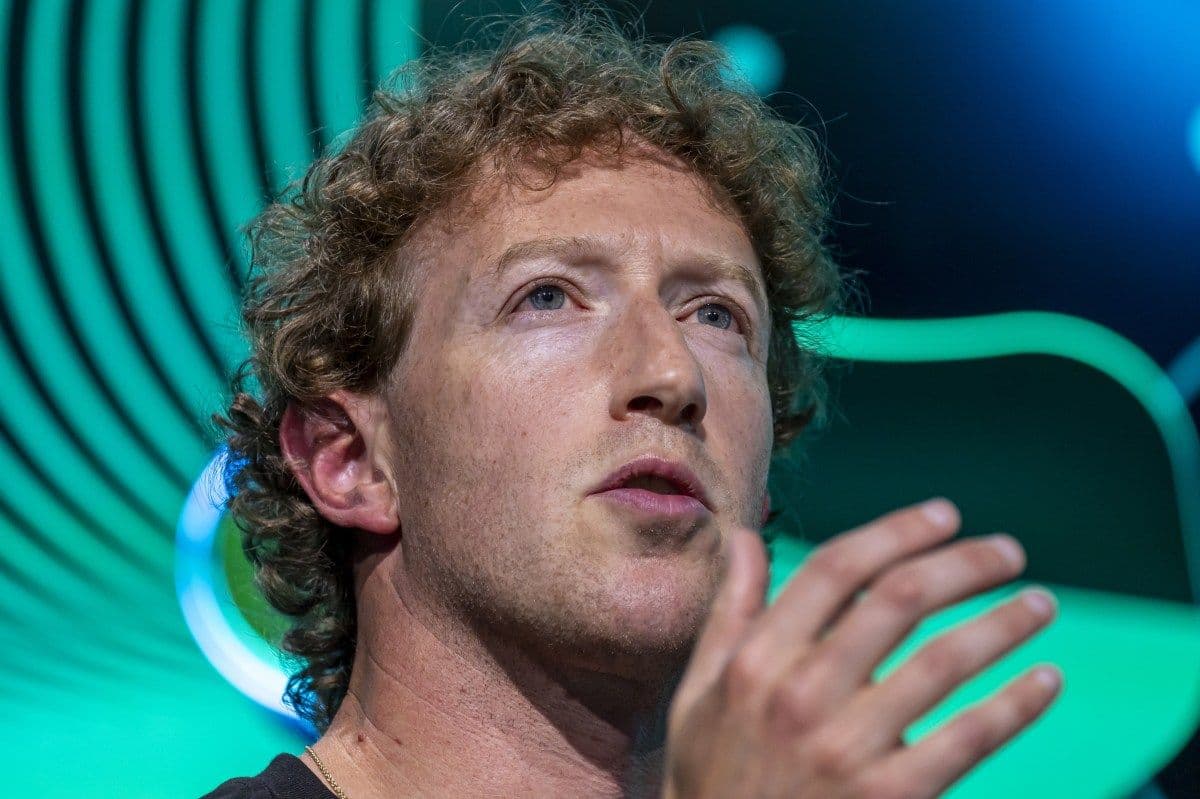
Manus Founders Trapped in China After Selling to Meta for $2 Billion
China's hottest AI startup tried to escape Beijing's orbit by relocating to Singapore and selling to Meta. Now its founders can't leave the country.
How China's Most Talked-About AI Startup Walked Into a Geopolitical Trap
The United States and China are engaged in one of the most consequential technological rivalries in modern history. Beijing has funneled billions into homegrown artificial intelligence, tightened its regulatory grip on the tech industry, and watched with growing unease as top Chinese AI talent gravitates toward American firms. Against that backdrop, Manus — arguably China's most hyped AI startup — quietly moved its headquarters to Singapore and agreed to sell itself to Meta for $2 billion. The fallout was always going to come. Now it has.
From Viral Demo to Silicon Valley Darling
Manus exploded into public consciousness in early 2024 with a demo video that turned heads across the global tech community. The clip showcased an AI agent performing sophisticated real-world tasks — screening job applicants, mapping out vacation itineraries, and dissecting stock portfolios — while boldly claiming to outperform OpenAI's Deep Research tool.
The attention was immediate and intense. Benchmark, one of Silicon Valley's most prestigious venture capital firms, led a $75 million funding round that valued the company at $500 million. The deal drew sharp criticism from some corners of Washington. Senator John Cornyn publicly questioned the wisdom of American investors backing a Chinese AI company, asking who thought it made sense to "subsidize our biggest adversary in AI, only to have the CCP use that technology to challenge us economically and militarily."
Despite the political noise, Manus kept growing. By December, the platform had attracted millions of users and was generating more than $100 million in annual recurring revenue — a milestone that made it one of the fastest-scaling AI companies of the year.
The Meta Acquisition and the Singapore Pivot
With that kind of momentum, it wasn't long before larger players came calling. Meta, whose chief executive Mark Zuckerberg has staked the company's entire strategic future on artificial intelligence, acquired Manus for $2 billion. The deal was striking on its own terms — but what made it truly unusual was the extent to which Manus had already been engineering its departure from China's sphere of influence.
Well before the acquisition was announced, Manus had relocated its headquarters and core team from Beijing to Singapore, restructured its corporate ownership, and effectively repositioned itself as a Singapore-based company. Once the Meta deal went public, Meta committed to severing all financial ties with Manus's Chinese investors and shutting down the startup's remaining operations inside China entirely.
On paper, it looked like a clean exit. In practice, it looked like exactly what Beijing feared most.
"Selling Young Crops": Beijing's Growing Frustration
China has a term for this phenomenon: selling young crops. It refers to homegrown technology companies that relocate overseas and sell themselves to foreign buyers before reaching their full potential, effectively exporting intellectual property, talent, and national competitive advantage in one transaction.
Beijing has made no secret of its contempt for this pattern — and its history of acting on that contempt is well documented. In 2020, Alibaba founder Jack Ma delivered a speech mildly critical of Chinese financial regulators. Within months, he had vanished from public life, Ant Group's blockbuster IPO was killed overnight, and Alibaba was handed a $2.8 billion fine. Chinese authorities then spent the better part of two years systematically dismantling the country's own booming tech sector, erasing hundreds of billions of dollars in market value in the process. Restraint has rarely been a defining feature of Beijing's regulatory playbook.
Founders Summoned, Travel Restricted
The reckoning arrived this month. According to a report by the Financial Times, Manus co-founders Xiao Hong and Ji Yichao were summoned to a formal meeting with China's National Development and Reform Commission. The message they reportedly received was blunt: they would not be permitted to leave the country for the foreseeable future.
No criminal charges have been filed. Beijing is characterizing the situation as a routine regulatory inquiry into whether the Meta transaction violated China's foreign investment rules. But the optics are unmistakable — two founders of a billion-dollar company are effectively grounded while the government decides what to make of the deal they struck.
A Gamble That May Not Have Paid Off
Somewhere along the way, it's likely that someone inside Manus believed they had navigated the exit successfully — that the Singapore restructuring, the clean corporate separation, and the Meta deal had placed them safely beyond Beijing's reach. That calculation may yet prove correct. But it was always a high-stakes wager.
The global AI race has made every major technological asset a matter of national interest. When a Chinese AI startup with cutting-edge capabilities sells itself to one of America's largest technology companies, the geopolitical consequences don't simply disappear because of a change of address. Beijing wants answers. And until it gets them, Manus's founders aren't going anywhere.
