Malaysia's Respond.io Secures $62.5M Series B to Expand AI-Powered Customer Messaging Platform
Respond.io raises $62.5M, boasting $35M ARR and 169% growth, as its AI-driven messaging platform eyes global expansion and strategic acquisitions.
Malaysia's Respond.io Lands $62.5M to Fuel AI Messaging Ambitions
Kuala Lumpur-based startup Respond.io has closed a $62.5 million Series B funding round, cementing its position as one of Southeast Asia's most compelling tech success stories. The round was led by Camber Partners, with contributions from Endeavor Catalyst and a group of returning investors. The company's last raise was a comparatively modest $7 million Series A back in 2022, making this latest round a significant leap forward.
From Simple Idea to High-Growth Platform
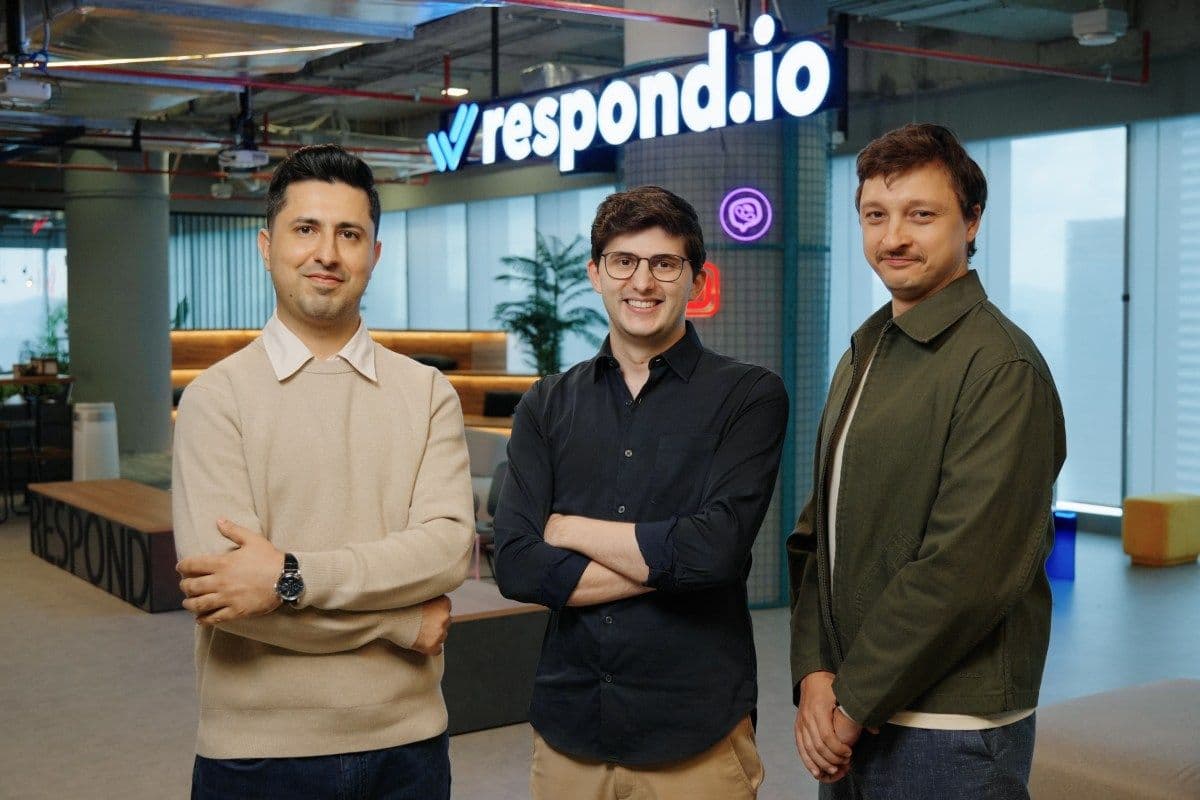
Respond.io was founded in Hong Kong in 2017 with a straightforward mission: help businesses keep pace with customers who had largely abandoned email and phone calls in favor of messaging apps. CEO and co-founder Gerardo Salandra, a veteran of IBM and Google who previously worked at fitness app Runtastic before it was acquired by Adidas in 2015, launched the company alongside CTO Hassan Ahmed and COO Iaroslav Kudritskiy. The team later relocated operations to Malaysia in 2019.
Today, the platform serves mid- to large-sized B2C companies, enabling them to manage customer conversations across a wide array of messaging channels — including WhatsApp, Instagram, TikTok, Messenger, Telegram, WeChat, Line, voice calls, and web chat — all from a single interface.
Impressive Financial Metrics Underpin the Raise
The numbers behind Respond.io's growth are hard to ignore. The company currently generates $35 million in annual recurring revenue (ARR), reflecting a remarkable 169% year-over-year increase, while maintaining a healthy 30% profit margin. The platform is now processing an extraordinary 2 billion messages every quarter, a figure that both validates its market position and fuels its AI capabilities.
AI Agents at the Core
What sets Respond.io apart from conventional customer relationship tools is its deep integration of AI agents. These intelligent systems autonomously handle large volumes of customer inquiries, qualify prospective leads, and can even close sales — all without requiring human involvement. Salandra describes the company's ideal customers as operating in "high-consideration" industries, where buyers typically need to ask questions and seek guidance before committing to a purchase. Healthcare providers, automotive dealers, educational institutions, travel companies, and retailers all fall within this category.
"You don't go to a website, put in your credit card, and buy a car," Salandra explained. "You chat with someone, you ask a lot of questions." The platform is particularly well-suited to businesses employing between 200 and 10,000 people.
A Pricing Model Built for the AI Era
As generative AI tools like ChatGPT grow more capable, questions naturally arise about whether they could render platforms like Respond.io obsolete. Salandra is confident they won't — and points to the company's pricing structure as a key differentiator.
Unlike traditional enterprise software vendors that charge based on the number of user seats, Respond.io bills clients according to conversation volume. This means it doesn't matter whether a human agent or an AI is responding to a customer — the pricing remains consistent. "When fewer humans use your product, [competitors] make less money," Salandra noted. "But we don't charge like that."
This model positions the company to benefit directly from the growing adoption of AI, rather than being threatened by it. "Every day that AI becomes more prominent, we grow faster," he told TechCrunch.
The Data Flywheel Advantage
Respond.io's massive message volume also creates what Salandra calls a "data flywheel" — a self-reinforcing growth cycle. More messages generate richer data, which improves the platform's AI performance. Better AI attracts new clients, who in turn produce even more messages. This compounding dynamic, combined with the company's eight-year head start in the messaging space, makes it difficult for newer entrants to compete on equal footing.
Incumbent platforms built primarily around email and phone-based workflows have struggled to make messaging a first-class feature, treating it instead as an afterthought. Respond.io was built messaging-first from day one, giving it a structural advantage in a market that is rapidly shifting toward conversational commerce.
Strategic Plans for the Fresh Capital
Respond.io intends to deploy its new funding across three main areas: talent acquisition, organic growth, and strategic acquisitions. Salandra has identified two types of acquisition targets — bolt-on technologies that complement the existing platform, and established companies in key markets that already come with a built-in client base and operational team.
"Imagine how many months I can save if I find the right company that maybe already has the clients and the team," Salandra said. "I can save myself six months to a year through an acquisition." He confirmed that the company is already in early-stage discussions with a handful of potential targets.
Eyes on North America and Western Europe
Geographically, Respond.io currently draws around 30% of its revenue from the Asia-Pacific region, another 30% from Latin America, and 20% from the Middle East and Africa. North America and Western Europe together account for just 20% — but those regions are now the company's fastest-growing markets.
Salandra believes these markets took longer to embrace messaging-based customer interactions but are now accelerating quickly. He expects North America and Western Europe to become the company's largest revenue segments within two to three years, making the acquisition strategy particularly timely.
Disciplined Growth with Big Aspirations
Despite the substantial capital injection, Salandra is keen to avoid the growth-at-all-costs mindset that has derailed many high-profile startups. "Even with this money, we're going to be very disciplined," he said.
But discipline doesn't mean lack of ambition. When asked about his ideal outcome, the CEO didn't hesitate: "Ringing the bell at Nasdaq."
