Living Together Means Sharing More Than Just a Home — Including Your Microbiome
New research reveals that cohabitating partners share a surprising portion of their oral and gut microbes. Here's what scientists say it means for your health.

Living Together Means Sharing More Than Just a Home — Including Your Microbiome
Moving in with a romantic partner brings plenty of changes — new routines, shared meals, and the occasional disagreement over thermostat settings. But according to a sweeping new study, there's something far more intimate being exchanged between housemates: the trillions of microscopic organisms that make up the human microbiome.
Published in Cell Press Blue, the study found that cohabitating romantic partners share roughly 44% of their oral microbiome and approximately 19% of their gut microbiome. In broader household terms, people living under the same roof — regardless of their relationship — share around 26% of their oral microbial communities.
What Is the Microbiome and Why Does It Matter?
The human microbiome refers to the vast ecosystem of bacteria, fungi, and other microorganisms that live in and on the body. These microbial communities play a critical role in regulating digestion, supporting immune function, and may even influence brain health and emotional well-being.
We aren't born with a microbiome — we acquire one. That's precisely what sparked this line of research. Lead author Vitor Heidrich, a computational biologist at the University of Trento in Italy, explains that his team wanted to trace where our microbes actually come from, since "before birth we don't have a microbiome, so they must be coming from somewhere."
How the Study Was Conducted
The research team analyzed microbiome DNA samples from 430 individuals across 207 households in both Italy and Fiji. By examining microbial strain data, they were able to quantify transmission rates based on the type of relationship between participants — a level of detail that previous studies had not fully captured.
Ilana Brito, an associate professor of biomedical engineering at Cornell University and a recognized expert in microbiome transmission, called the findings a significant step forward — particularly regarding the oral microbiome. "It's exciting — the oral microbiome is just harder to study, so it's exciting that they're able to pick up these signals," she said. Notably, data from Brito's own 2019 study on microbiome transmission among Fijians contributed to Heidrich's analysis.
How Are Microbes Being Transmitted Between People?
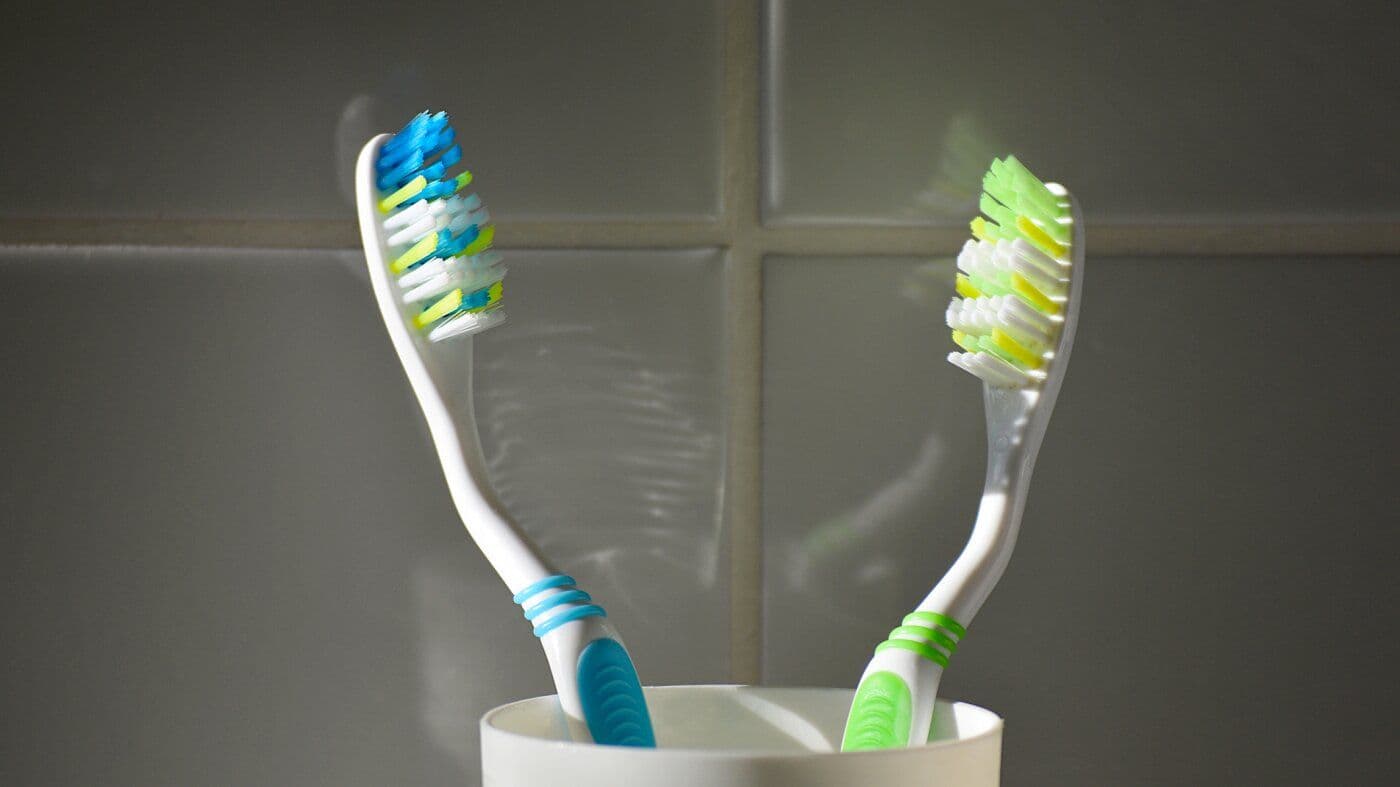
Heidrich points to several plausible transmission pathways. Everyday habits — like sharing dishes, using the same kitchen surfaces, or even having toothbrushes stored in close proximity — could all facilitate microbial exchange. The significantly higher sharing rate among romantic partners compared to general housemates suggests that direct saliva exchange, such as through kissing, plays a substantial role.
"When people exchange saliva directly, such as through kissing, you indeed see much more strain sharing," Heidrich notes, describing the data as "a nice confirmation" of what researchers had long suspected.
As for gut microbiome transmission, the explanation is a bit more uncomfortable. Heidrich acknowledges that sharing gut bacteria almost certainly involves trace ingestion of fecal matter from housemates — likely through contaminated surfaces or shared environments. "Even a single microbial cell can be enough for a successful transmission event," he adds.
Should You Be Worried About Shared Microbes?
Before alarm bells start ringing, it's worth putting this in perspective. The overwhelming majority of bacteria — including those found in the gut — are either harmless or actively beneficial to human health. Some researchers estimate that fewer than one in a billion bacterial species pose any real threat to humans.
That said, the study did identify a noteworthy concern: several of the most transmissible microbial strains appear to be associated with elevated risk of Type 2 diabetes. "We found that a lot of the very transmissible species are also linked with higher risk of Type 2 diabetes," Heidrich confirms.
This finding has prompted some important questions from the broader medical community. Dr. Jessica Queen, an infectious disease specialist and assistant professor of medicine at Johns Hopkins University, asks: "Does the microbiome health of your partner, or your immediate family who you live with, impact your disease risk?"
However, both Heidrich and Queen urge caution before drawing firm conclusions. "I think we are very far from making this kind of claim," Heidrich says. "We are only starting to investigate this as a possibility."
Queen further notes that the relationship between the microbiome and disease is likely bidirectional — meaning our microbial makeup may influence disease risk, but existing conditions could also alter our microbial communities. "We have trillions of bacteria in our gut, and really trying to experimentally prove what is causative versus correlative, and what's the sequence of events, is actually very difficult," she explains.
What About Pets and Other Housemates?
For those living with animals, Heidrich says there's no need to rethink your relationship with your furry companions. While pets likely do contribute something to our microbiome, the significant differences in their gastrointestinal environments create what he calls "bigger ecological barriers" to meaningful cross-species microbial transmission.
Heidrich himself lives with his wife and two cats and says he isn't particularly concerned about any of it. From an evolutionary standpoint, he argues that sharing microbes with those around us is simply part of being human. "As humans, we've lived together, sometimes in big groups, for millions of years, and so did our primate relatives," he says. In his view, microbial exchange is deeply woven into the fabric of human social life.
What Comes Next for Microbiome Research?
Despite these intriguing findings, the scientific community agrees that meaningful clinical recommendations — such as lifestyle changes or treatments aimed at optimizing the shared microbiome — are still years away. Researchers including Queen and Brito emphasize the need for long-term longitudinal studies, along with controlled animal model experiments to help establish clear causal links between specific bacterial strains and health outcomes.
Brito offers a balanced and reassuring takeaway: "It might be the case that we protect each other; it might be the case that it has no substantial effect." For now, she sees no compelling reason for people to change how they interact with the people they live and share their lives with.
The science of the shared microbiome is still in its early chapters — but one thing is becoming increasingly clear: the people closest to us may be shaping our inner biology in ways we are only beginning to understand.