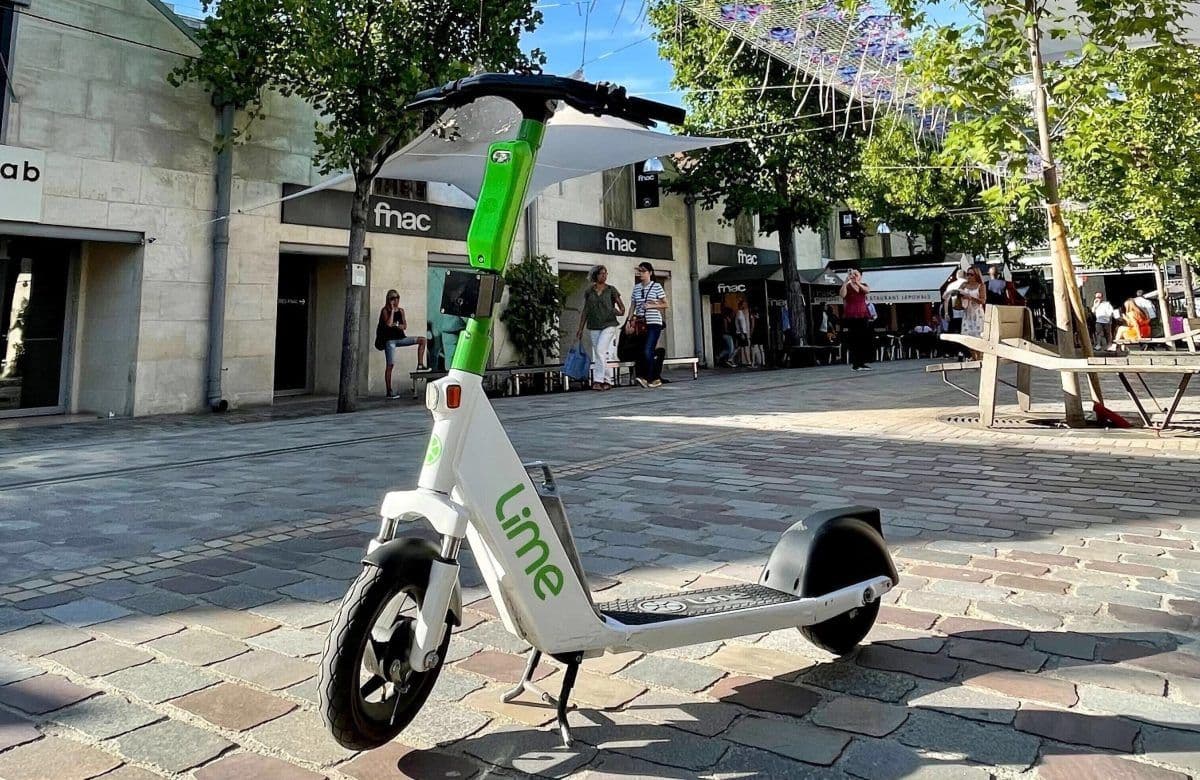
Lime Makes Its Stock Market Debut After Nearly a Decade as a Private Company
Micromobility giant Lime has officially gone public, raising $167 million in its IPO and trading on Nasdaq under the ticker 'LIME' after years of uncertainty.

Lime Officially Enters the Public Market After Years of Waiting
After nearly a decade of operating as a private company — surviving valuation rollercoasters, multiple hype cycles, and a global pandemic — micromobility company Lime has finally made its public market debut. The scooter and bike-share company raised $167 million through its initial public offering, marking a significant milestone in its turbulent history.
Lime sold 6.68 million shares at $25 apiece, landing squarely in the middle of its projected $24 to $26 price range. When shares began trading on the Nasdaq stock exchange under the ticker symbol "LIME" on Wednesday afternoon, they surged approximately 9% within the first hour — a promising start for a company that has faced more than its fair share of challenges.
A Valuation That Reflects Hard-Won Growth
The IPO places Lime's total valuation at approximately $1.66 billion — just below the figure that rival micromobility firm Bird achieved when it went public via a special purpose acquisition company (SPAC) merger back in 2021. That comparison is notable, given that Bird subsequently filed for bankruptcy protection and was forced to restructure following its own public offering.
For Lime CEO Wayne Ting, the moment carried deep personal significance. Speaking to the media on the day of the listing, Ting reflected on the company's long and difficult path to this point.
"Having that resilience and patience and belief and optimism that we will get through the toughest moments really paid dividends over the long run, because there were many days, weeks, months, where I wasn't sure if Lime was going to make it past the next three months, four months," Ting said. "To be here today as a public company feels incredibly rewarding, and it took a lot of heart, sweat, and tears to get to this point."
Years in the Making: Why Lime Waited So Long
Lime's IPO ambitions are nothing new. Back in 2021, following a $523 million fundraising round, Ting signaled that the company was targeting a public offering in 2022. He revisited that idea in 2023, but ultimately held off, citing the need for better market conditions and, more importantly, a stronger business foundation.
Ting was deliberate about not going public before the company could demonstrate lasting financial resilience — particularly in contrast to the struggles experienced by competitors in the micromobility space.
"We felt like we needed to demonstrate we were going to be a self-sustaining, profitable, free cash flow positive business, and that only happened over the last three years," he explained. "I think the timing is right, because the business is strong. We still have a lot of growth ahead of us."
Financial Pressures That Made the IPO a Necessity
While the IPO is a landmark achievement, it also comes with a degree of financial urgency. In Lime's IPO filing submitted in May, the company disclosed "substantial doubt" regarding its ability to continue as a going concern without access to new capital. The company is facing approximately $1 billion in liabilities, more than half of which is due before the end of the current year — though a portion of that debt is convertible.
Without the proceeds from its public offering, Lime indicated it would need to pursue alternative financing arrangements to stay afloat. The IPO funds are therefore not just a growth lever — they are essential to stabilizing the company's balance sheet.
A Brutal Industry Backdrop
The context in which Lime has survived and grown makes its longevity all the more impressive. The micromobility sector has proven extraordinarily unforgiving. Bird collapsed into bankruptcy after going public through a SPAC deal. Other players have either merged — as was the case with Tier and Dott — been removed from major stock exchanges, or shut down operations entirely. The landscape is littered with cautionary tales.
Against this backdrop, Lime has managed to grow its revenue steadily and reduce its losses considerably. The company generated $521 million in revenue in 2023, which climbed to $686.6 million in 2024 and reached $886.7 million in its most recent fiscal year. Net losses, meanwhile, shrank from $122.3 million in 2023 to just $33.9 million in 2024 — though they ticked back up slightly to $59.3 million in 2025. When accounting for depreciation adjustments, the company reported an adjusted gross profit of over $400 million in 2025.
Global Scale and Strategic Partnerships
Much of Lime's growth can be attributed to its international expansion strategy. The company now operates across 230 cities in 29 countries, giving it a global footprint that few competitors can match.
However, Lime does carry some concentration risk tied to its relationship with Uber. The ride-hailing giant owns a 24% stake in Lime and was responsible for more than 14% of Lime's total revenue last year, largely through an integration that lets Uber users book Lime rides directly within the Uber app in select cities.
Ting credited Lime's investment in software and machine learning as key drivers of the company's operational efficiency, enabling it to fine-tune performance on a city-by-city basis and continuously reduce unit costs.
"It's a real game of inches business, and we're constantly looking for this 1%, 2% improvement," he noted.
What Going Public Means for Lime's Future
Beyond financial stabilization and growth capital, Ting believes that public company status will open doors with city governments looking for reliable, long-term micromobility partners.
"I know a lot of cities don't like the fact that they sometimes would bring an operator into the market and that operator will go out of business in six to 12 months," he said. "They want a long-term sustainable partnership, and now that we're public, our financials are available to any city regulator looking to decide who's going to be a good long-term partner."
With fresh capital, a growing revenue base, and the credibility that comes with being a publicly traded company, Lime appears well-positioned to consolidate its role as the dominant player in the global micromobility market — even as the road ahead remains competitive and unpredictable.