Life Bounced Back Astonishingly Fast After the Dinosaur-Killing Asteroid
New research reveals microscopic plankton evolved into new species within just 2,000 years of the catastrophic asteroid impact that wiped out the dinosaurs.

Life Bounced Back Astonishingly Fast After the Dinosaur-Killing Asteroid
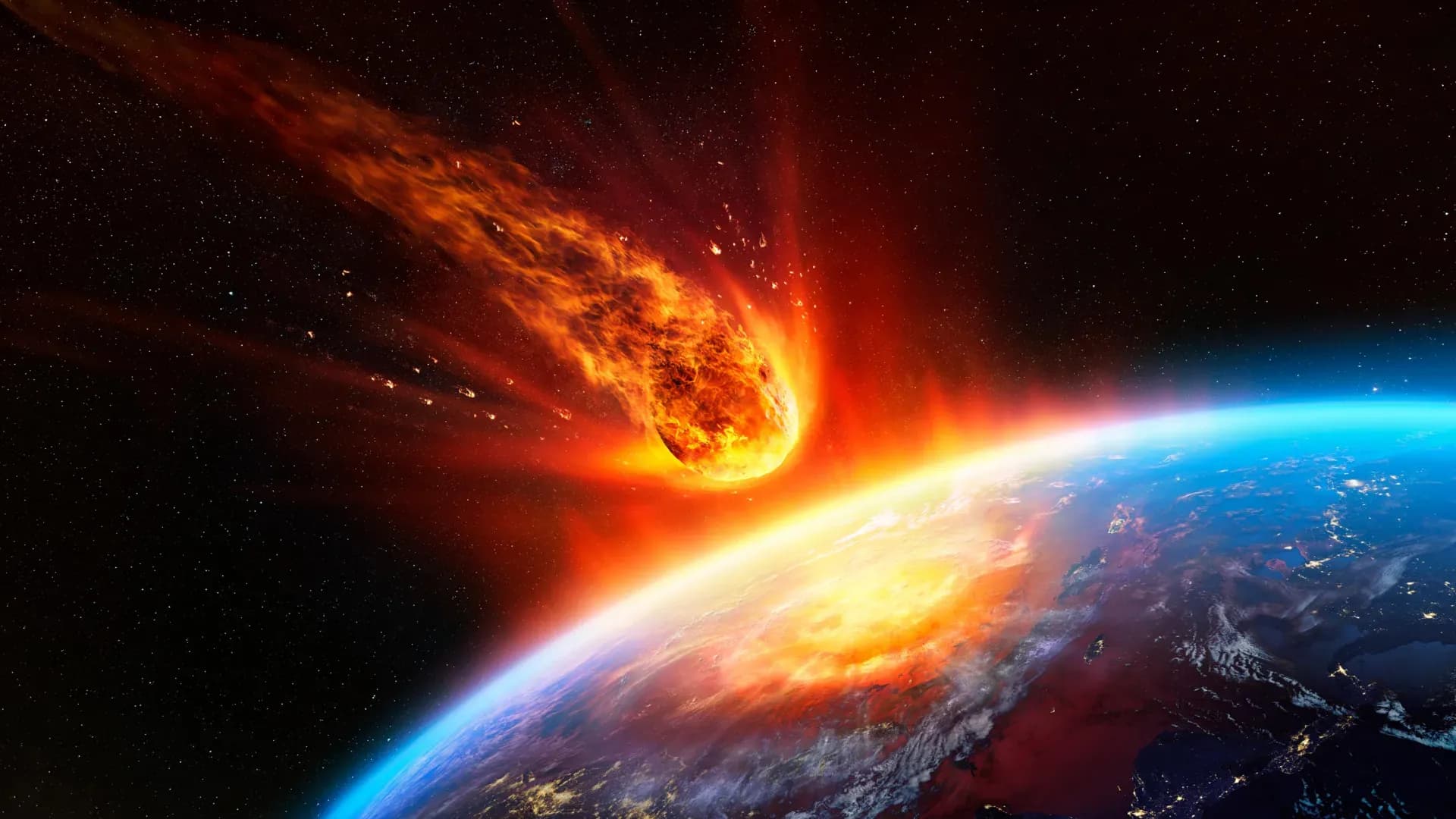
When a massive asteroid slammed into Earth approximately 66 million years ago, it triggered one of the most devastating extinction events in the planet's history. Global firestorms erupted, climates shifted violently, and the dinosaurs — along with an enormous number of other species — were erased from existence. Yet groundbreaking new research reveals that life did not stay down for long. In fact, it began fighting back with remarkable speed.
A study led by scientists at The University of Texas at Austin, published in the journal Geology, found that brand-new species of microscopic plankton emerged in fewer than 2,000 years following the catastrophic impact. That timeline is extraordinarily compressed by any scientific standard and forces researchers to fundamentally rethink how quickly ecosystems can recover after mass extinction events.
A Discovery That Rewrites Recovery Timelines
For decades, scientists estimated that the first new species following the so-called Chicxulub impact — named after the crater left in the Gulf of Mexico — didn't appear until tens of thousands of years after the disaster. That figure was largely based on calculations of how quickly sediments accumulated in ocean floors around the time of the extinction.
However, lead author Chris Lowery, a research associate professor at the University of Texas Institute for Geophysics (UTIG) at the Jackson School of Geosciences, and his colleagues identified a critical flaw in that reasoning. Those earlier estimates assumed that sediment built up at roughly the same pace before and after the extinction — an assumption that failed to account for the dramatic environmental upheaval caused by the impact itself.
"It's ridiculously fast," said Lowery. "This research helps us understand just how quickly new species can evolve after extreme events and also how quickly the environment began to recover after the Chicxulub impact."
How the Extinction Event Distorted Sediment Records
The mass extinction radically altered how materials accumulated on the ocean floor. Countless species of calcareous plankton — organisms whose shells typically drift to the seabed after death — vanished almost overnight. Simultaneously, the destruction of land-based plant life drove massive erosion, flooding the oceans with additional sediment from the continents.
These combined forces meant that sediment layers near the K/Pg boundary — the geological marker that defines the start and end of the mass extinction event — formed under highly abnormal conditions. Using standard sedimentation rates to estimate the age of fossils embedded in those layers introduced significant errors into earlier timelines.
Helium-3: A More Reliable Geological Clock
The Science Behind the Isotope Marker
To correct for these distortions, the research team turned to a powerful isotopic tool: Helium-3. This rare isotope steadily accumulates in ocean sediments at a consistent rate, making it a reliable measure of elapsed time regardless of how quickly or slowly other sediments pile up.
The principle is straightforward — when sediment accumulates slowly, Helium-3 concentrations are higher. When sediment builds up rapidly, the concentration is diluted. By measuring Helium-3 levels across sediment layers, scientists can calculate a more accurate timeline for when specific geological events occurred.
Using previously published Helium-3 data drawn from six K/Pg boundary sites across Europe, North Africa, and the Gulf of Mexico, the team recalculated sedimentation rates and produced a significantly more precise timeline of early post-extinction life.
New Plankton Species Emerged Within Thousands of Years
Armed with this refined chronology, the researchers pinpointed when a key species of foraminifera — a type of single-celled plankton called Parvularugoglobigerina eugubina (P. eugubina) — first appeared in the fossil record. Scientists commonly use the emergence of this species as a biological signal that ecosystem recovery had begun.
The team determined that P. eugubina evolved somewhere between 3,500 and 11,000 years after the Chicxulub impact, with the variation depending on the specific site analyzed. Even more striking, some other plankton species appear to have evolved in fewer than 2,000 years after the asteroid strike.
Overall, the study suggests that between 10 and 20 new foraminifera species emerged within approximately 6,000 years of the impact — though scientists continue to debate exactly which fossil specimens represent truly distinct species.
The Resilience of Life on Earth
The implications of this research extend well beyond paleontology. The findings demonstrate that under the right conditions, evolution can accelerate dramatically, producing new species at a pace that would have seemed impossible using older models.
Timothy Bralower, co-author of the paper and a professor in the Department of Geosciences at Penn State University, emphasized just how remarkable this discovery is. "The speed of the recovery demonstrates just how resilient life is," he said. "To have complex life reestablished within a geologic heartbeat is truly astounding. It's also possibly reassuring for the resiliency of modern species given the threat of anthropogenic habitat destruction."
While the full restoration of biodiversity took roughly 10 million years following the Chicxulub impact, the fact that new life was already taking shape within just a few thousand years of the worst day in Earth's history is a testament to nature's extraordinary capacity for renewal. It is a finding that not only reshapes our understanding of the ancient past but may also offer a measure of cautious hope for the living world today.