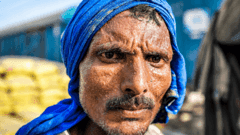
Life at 47°C: How India's Hottest District Is Surviving Extreme Heat
In Banda, Uttar Pradesh, temperatures soaring above 47°C are forcing millions to completely reshape their daily lives around the relentless heat.

When Morning No Longer Feels Like Morning
By six o'clock in the morning, the sun over Banda had already abandoned any pretense of gentleness. The light bore down with the intensity of a midsummer afternoon, and shadows were shrinking well before most households had finished breakfast.
Throughout May, this dusty district in Uttar Pradesh, northern India, claimed the grim distinction of being the hottest place in the entire country. For more than a week, temperatures refused to dip below 47–48°C (116–118°F) — an extraordinary streak that tested even the hardiest of local residents.
What made the situation truly remarkable, however, was not just the staggering heat itself, but the quiet, determined way in which Banda's two million residents adapted to it. With livelihoods tied to farming, construction, and outdoor labour, most people had no choice but to restructure their entire existence around the relentless temperatures.
A Market That Ends Before the City Wakes
Thirty kilometres from the district centre, the vegetable market in Atarra was already winding down before sunrise had fully taken hold elsewhere. Farmers hauled in tomatoes, gourds, chillies, lemons, and melons at the crack of dawn, racing to offload their produce before the heat rendered it unsellable.
"Look at the sun — it's only 6.15am, but it already feels like mid-morning," said Himanshu, a trader standing alongside stacked crates of tomatoes. The heat was not just an inconvenience; it was actively destroying his stock. "A box of tomatoes must be sold today or tomorrow. In this weather, they simply won't last."
Where the market once hummed with activity well into late morning, trade now collapsed by 8am. By 10am, the stalls stood nearly empty.
Splitting the Workday to Survive
The same compressed rhythm shapes nearly every profession in Banda. Workers, traders, and labourers alike have learned to carve their days into cooler fragments, echoing what journalist Ryszard Kapuściński once observed in the scorching landscapes of Africa — that extreme heat reduces human ambition to a single pursuit: finding shade and a breeze.
Pappu Verma, a mason, now works from 7am to noon, takes a four-hour break, then returns from 4pm to 7pm. The pause protects him from headaches and heat-related illness, but it also stretches his working day to twelve or thirteen hours.
"You still have to complete eight hours of work," he explained. "Whether you work straight through or stop and start, the pay stays the same." Without the break, he noted plainly, whatever he earned would vanish on medical expenses.
The Women Working Beneath a Water Tanker
Around 2pm on one particularly brutal afternoon — when Banda's temperature climbed to 46°C — three female road workers crouched beneath a parked water tanker on a highway bridge over the Ken River, eating lunch in the narrow strip of shade cast by the vehicle's chassis.
One of them, Shanti Devi, walked six kilometres to the worksite each morning and six kilometres home each evening. Her lunch was simple: bread with onion, salt, and pickle. Vegetables were out of the question. "If we bring vegetables, they'll spoil by noon," she said.
Her next words cut to the heart of Banda's reality: "Poor people don't have the luxury of worrying about the heat."
Water, Land, and a Vicious Cycle
The Ken River, flowing beneath that highway bridge, is central to understanding why Banda suffers as it does. Researchers point to rampant sand mining and steady groundwater depletion as key factors that have stripped the river of its capacity to cool the surrounding landscape. The result is a damaging cycle: falling water availability drives temperatures higher, and rising temperatures accelerate water loss.
The broader environmental picture is equally troubling. Banda sits close to the Tropic of Cancer, a latitude synonymous with punishing summer heat. River beds run low, exposing vast expanses of sand, stone, and gravel that absorb heat during the day and radiate it back at night. Concrete and asphalt have replaced what was once green cover.
Research from Banda University of Agriculture and Technology found that nearly one-sixth of the district's dense forest cover vanished between 1991 and 2022, primarily lost to mining operations and agricultural expansion. Tree cover now sits well below recommended environmental thresholds.
A Heat Crisis Playing Out Across the Economy
The economic toll of the heat is impossible to ignore. E-rickshaw drivers report near-empty afternoons. Shopkeepers open before sunrise and close between noon and 4pm, with customer numbers roughly halved. Entire towns effectively shut down during the peak hours, coming back to life only as evening approaches.
Local hospitals are under increasing strain. The chief medical superintendent of the Women's District Hospital, K. Kumar, reported receiving 15 to 20 heat-related cases daily — predominantly children and elderly patients presenting with diarrhoea, vomiting, and fever — since temperatures intensified.
Mobile phones across the district buzz repeatedly with government-issued alerts urging residents to stay cautious and remain vigilant during severe heatwave conditions.
A Broader Climate Warning
Banda's ordeal is not an isolated event — it is a local manifestation of a sweeping regional trend. Across northern India, heat is no longer arriving simply as high temperatures. It arrives as a dangerous combination of heat and humidity that places compounding stress on the human body, making outdoor labour genuinely life-threatening.
The Indo-Gangetic Plain, which stretches across much of northern India and encompasses Uttar Pradesh, is now considered by climate scientists to be one of the world's emerging hotspots for hazardous humid heat. A dense population, widespread irrigation, high atmospheric moisture, and millions of outdoor workers create conditions in which even ordinary physical effort carries serious risk.
According to think-tank Climate Trends, Uttar Pradesh is especially exposed due to its vast outdoor workforce, heavy dependence on agriculture, and limited access to cooling technology for the majority of its households.
The Persistence That Made This Summer Different
Dinesh Sah, a meteorologist at Banda University of Agriculture and Technology, noted that the district had recorded temperatures of 48–49°C in previous years — including two consecutive days at 49°C in 2024. But what set this summer apart was the sheer duration of the extreme heat.
"For eight or nine consecutive days, temperatures of 47–48°C continued without any relief," he said. "That persistence is what was new and alarming."
Local farmer Prem Singh put it in grounded, human terms. Intense summer heat, he said, has always been part of life here — and in measured doses, it even benefits certain crops. What concerns him now is its escalating ferocity. He points to shrinking tree cover, widespread mining, growing fossil-fuel consumption, and the rapid spread of air-conditioning as forces driving temperatures ever higher.
For the people of Banda, the question is no longer whether extreme heat will arrive each summer. It is how much worse it will get — and how long they can keep adapting.

