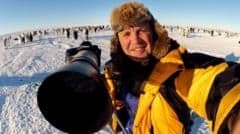
Legendary Wildlife Cameraman Doug Allan Passes Away During Nepal Trek
Doug Allan, the visionary wildlife cameraman behind BBC's Blue Planet and Frozen Planet, has died at 74 after falling ill on a mountain trek in Nepal.

Legendary Wildlife Cameraman Doug Allan Dies at 74 in Nepal
Doug Allan, one of the most celebrated wildlife cameramen in television history, has passed away after experiencing a medical emergency during a trekking expedition in Nepal. The Scottish filmmaker, who dedicated his life to capturing the planet's most breathtaking and remote environments on camera, was 74 years old.
What Happened in Nepal
According to local tourist police and hospital officials, Allan began experiencing severe breathing difficulties on the very first day of his trek near the Dhampus region, shortly after setting out toward Annapurna base camp — the starting point for climbers approaching the world's tenth-highest mountain at 8,091 metres (26,545 feet). He was swiftly transported to Care Mark Hospital in the city of Pokhara before being transferred to Manipal Hospital, where he arrived in a critical condition. He passed away the following day, on Wednesday.
A Career That Defined Wildlife Filmmaking
Born in Dunfermline, Fife, in 1951, Allan's fascination with the natural world was ignited at an early age by Jacques Cousteau's groundbreaking 1956 underwater documentary, The Silent World. That early spark of curiosity ultimately shaped an extraordinary career spanning several decades.
After earning a degree in marine biology from the University of Stirling, Allan took on various diving roles before landing a pivotal position as a research diver with the British Antarctic Survey, based at Signy Island in the South Orkney Islands. It was in those icy, remote waters that his passion for visual storytelling truly took hold.
The Meeting That Changed Everything
In 1981, a chance encounter with Sir David Attenborough opened the door to what would become one of the most celebrated partnerships in nature documentary history. Allan went on to work on the landmark series Living Planet, portions of which were filmed in Antarctica. Inspired by the experience, he purchased a 16mm cine camera and filmed Emperor penguins himself, later selling the footage to the BBC — a move that effectively launched his professional filmmaking career.
From that point forward, Allan established himself as the go-to cinematographer for extreme environments, particularly in polar regions and underwater settings. He served as principal cameraman on some of the BBC's most iconic nature productions, including The Blue Planet, Planet Earth, and Frozen Planet, all produced alongside Sir David Attenborough.
Awards and Recognition
Over the course of his remarkable career, Doug Allan accumulated an impressive array of honours:
- Eight Emmy Awards for outstanding contributions to wildlife filmmaking
- Five BAFTA Awards recognising excellence in television craft
- Honorary Fellowship of the Royal Photographic Society
- The Polar Medal — awarded twice — for his work in the world's most extreme polar environments
- BAFTA Scotland's Outstanding Contribution to Craft prize in 2017
- OBE for services to broadcast media and environmental awareness, awarded in 2024
Close Encounters and Unforgettable Moments
Allan's work frequently placed him in extraordinarily dangerous situations. In 2017, he recalled spending approximately 620 days of his life tracking and filming polar bears. On one memorable occasion, he looked up to find a polar bear pressing its wet nose against the window where he was sheltering — a moment he described with characteristic humour and wonder.
On another occasion, while filming underwater, a hungry walrus mistook him for a seal and grabbed hold of his legs. Allan managed to drive the animal away by striking it on the head with his camera — a testament to both his composure and his commitment to getting the shot.
A Voice for the Environment
In his later years, Allan channelled his lifelong love of the natural world into environmental advocacy. Earlier in 2024, he publicly called on the Scottish government to support an "ecocide" bill that would hold corporations legally accountable for causing severe or widespread damage to ecosystems. His voice carried significant weight, given his decades of first-hand experience witnessing environmental change in the world's most fragile habitats.
Tributes Pour In
Allan's management company, Jo Sarsby Management, released a heartfelt statement describing him as "a true pioneer of wildlife filmmaking" whose visual legacy "few could ever match."
"His work brought audiences closer to the wonders of our planet, inspiring awe, understanding and deep respect for the natural world," the statement read. "He was a true gentleman and will be profoundly missed."
His ex-wife, fellow wildlife photographer Sue Flood OBE, also paid tribute on social media, describing the profound influence Allan had on her life and career. She noted it was "of comfort to know that he was doing something adventurous with a dear friend" when he passed, and said she would remember him "with deep affection, respect and gratitude for a lifetime of memories."
Doug Allan leaves behind an unparalleled visual record of our planet's wildest places — a gift to generations of nature lovers and a lasting monument to a life lived with extraordinary courage, curiosity, and passion.