Lab-Grown Oesophagus Transplants Could Transform Lives of Children Born With Missing Food Pipe
British scientists have successfully grown and transplanted fully functional food pipes in mini pigs, raising hopes for children born with oesophageal defects.

A Scientific Milestone That Could Change Children's Lives
Researchers in the United Kingdom have achieved a remarkable medical breakthrough — successfully engineering fully functional oesophaguses in a laboratory setting and transplanting them into miniature pigs. Published in the prestigious journal Nature Biotechnology, the findings are being hailed as a significant step forward in treating children born with a missing or severely underdeveloped food pipe.
The Reality Behind the Research: Casey's Story
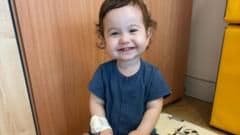
For families like the Mcintyres, this development carries profound personal meaning. Two-year-old Casey was born with an 11cm gap in his oesophagus — a condition that became known to his parents, Silviya and Sean, even before his birth.
"We were warned before he arrived that he would face serious challenges with his food pipe and would require multiple surgeries," Silviya explained.
Surgeons have since repositioned Casey's stomach to close the gap, but his recovery has been lengthy and complex. He currently relies on a feeding tube and is still working on developing his swallowing ability. The repeated surgical procedures have also affected his vocal cords, meaning he is catching up with his speech and sound development.
"Once he's able to take in enough food by mouth, we'll finally be able to remove the feeding tube," Silviya added.
For Sean, parenthood has come with an entirely unexpected set of challenges — from mastering tube feeding to being ready to respond to urgent hospital calls at any hour of the night.
"Looking at him now, he's just incredible and we couldn't be more proud," Sean said. "What the medical team did for him was nothing short of a miracle. But the thought that one early surgery could implant a working section of oesophagus and let us move forward — that would be truly life-changing."
Approximately 18 babies are diagnosed with the same condition as Casey in the UK every year.
How Scientists Built a Working Food Pipe
The experimental process began with a donor pig's oesophagus. Scientists carefully removed all of its existing cells while preserving the underlying structural framework — known as a scaffold. New cells were then introduced to this scaffold and placed inside a bioreactor, a specialised device that circulates essential growth fluids through the tissue. After just one week of growth and maturation, the engineered oesophagus was ready for transplantation.
The research team specifically selected Göttingen minipigs — the world's smallest domestic pig breed — because their size and cellular composition closely mirror those of a human child, making them the most relevant model for this type of research.
Promising Results From Animal Trials
Eight pigs underwent the transplant procedure, and all recovered well, developing functional swallowing muscles capable of moving food toward the stomach. Five of the eight animals survived to the six-month endpoint of the trial. Post-trial analysis confirmed that their transplanted tissue had developed working muscle fibres, nerve connections, and blood vessels.
Crucially, none of the animals required anti-rejection medication, as the implants were constructed using each animal's own cells — a major advantage that could simplify treatment for future human patients.
The Road to Human Treatment
Professor Paolo De Coppi, who led the research at Great Ormond Street Hospital and University College London, expressed cautious optimism about bringing this treatment to young patients within the next five years.
"The oesophagus is an exceptionally complex organ," Professor De Coppi noted. "It lacks its own dedicated blood supply, which means it cannot be transplanted in the conventional sense. Developing viable alternatives requires working with animal models that genuinely reflect human anatomy and function."
Importantly, the engineered graft is specifically designed for children — it is built to grow alongside the patient as their body develops. As a result, it would not be appropriate for adult patients dealing with oesophageal conditions such as cancer, where different anatomical considerations apply.
A Future With Fewer Surgeries
For the thousands of families navigating the challenges of childhood oesophageal disorders, the prospect of a single, early-life surgical intervention — rather than years of repeated procedures — represents an enormous leap forward. While further research and clinical trials are still needed before this becomes available to human patients, the success seen in animal models offers genuine and well-founded hope.

