Karachi's Deadly Heat Crisis: How Climate Change Is Rewriting the Rules of Survival
Record-breaking temperatures are pushing Karachi and much of South Asia to the brink, exposing millions to a climate emergency that experts say is now the new normal.

Karachi and South Asia Face a Brutal New Heat Reality
A relentless, punishing heatwave has descended across Pakistan and India, pushing temperatures to dangerous extremes and forcing millions of people to fundamentally alter the way they live — and survive. Climate scientists warn this is no longer an anomaly. It is the new normal.
Record Temperatures Grip Southern Pakistan
Throughout April and May, southern Pakistan has endured temperatures far beyond seasonal expectations. Across Sindh province, daytime highs have repeatedly surged between 44C and 46C, driving residents indoors during the hottest afternoon hours and placing an enormous burden on outdoor workers, farmers, and transportation communities who have little choice but to remain exposed.
Karachi — a coastal megacity that typically benefits from cooling sea breezes off the Arabian Sea — has not been spared. During the first half of May alone, temperatures in the city exceeded 40C on multiple occasions. The Pakistan Meteorological Department (PMD) confirmed that Karachi recently hit a peak of 44.1C, marking the city's highest recorded temperature since May 31, 2018, when the mercury climbed to 46C. Meteorologists caution that even hotter conditions may still lie ahead as the summer season intensifies.
India Also Buckles Under Extreme Heat
Across the border, India is grappling with its own severe heatwave crisis. States including Rajasthan, Gujarat, Maharashtra, and large swaths of northern and central India have recorded temperatures exceeding 45C in recent weeks. Authorities across multiple states have issued formal heatwave alerts as the extreme conditions strain power grids, elevate health risks, and disrupt the daily routines of countless citizens.
Climate researchers emphasize that these back-to-back heatwaves across South Asia are not isolated weather events but rather a visible expression of a deepening global climate crisis driving increasingly extreme and unpredictable conditions.
Coastal Communities Bear the Heaviest Burden
In Karachi, the hardest-hit areas are the city's densely populated coastal settlements, where the combination of extreme heat, prolonged power outages, and severe water shortages has created a perfect storm of suffering. In Ibrahim Hyderi — one of Karachi's largest and most established fishing communities — residents describe daily life as an increasingly desperate fight against the elements.
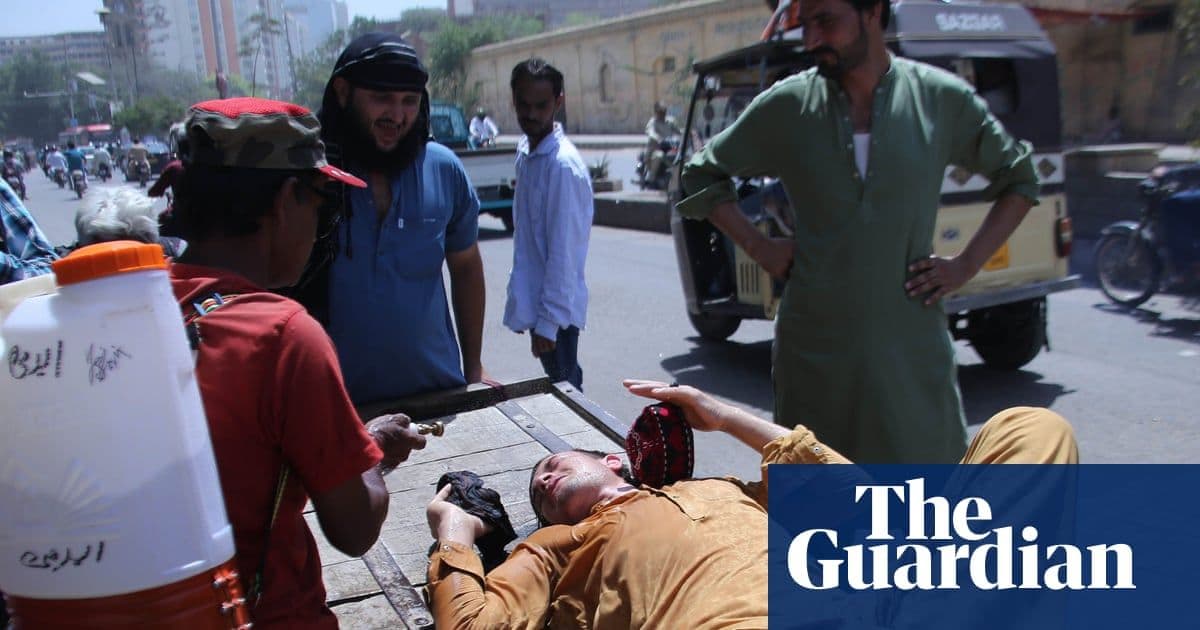
Abdul Sattar, a veteran fisherman with over 30 years of experience on the water, recounted watching a colleague collapse from heat exhaustion during the peak of the recent heatwave. "We gave him lemon water and rushed him to a doctor," Sattar said. "He only regained consciousness after receiving intravenous fluids."
The community has not forgotten the catastrophic heatwave of 2015, which claimed thousands of lives across Karachi, including a number of fishermen from Ibrahim Hyderi itself. More recently, heat-related fatalities reported during the summer of 2024 served as another grim reminder of just how vulnerable the city remains.
Hospitals Are Overwhelmed as Health Crisis Deepens
The public health consequences of the sustained heat are becoming increasingly evident in local medical facilities. Dr. Suresh Kumar, who oversees the children's ward at Ibrahim Hyderi Government Hospital, reported a dramatic spike in patient numbers beginning in the final week of April.
"On an ordinary day, we would typically see around 50 to 60 children," Dr. Kumar explained. "That number has now surpassed 200 daily."
The majority of young patients are presenting with diarrhoea, gastrointestinal infections, and dehydration — conditions directly associated with extreme heat exposure and compromised access to clean drinking water.
Climate Science Confirms: This Is No Longer Exceptional
The World Weather Attribution group conducted an analysis of the current heat emergency gripping Pakistan and India and reached a sobering conclusion: human-driven climate change has roughly tripled the likelihood of a heatwave of this magnitude occurring. The same conditions, the group found, would have been approximately 1C cooler in a pre-industrial climate — meaning what once would have been a historical rarity is now a predictable feature of the modern climate landscape.
According to the PMD, average temperatures across the region have risen by roughly 1.4C, while Sindh province alone has seen an increase of approximately 1.7C over recent decades. Experts consistently note that winters are shrinking in duration while summers grow longer, more aggressive, and increasingly difficult to predict.
Urban Heat, Humidity, and Vanishing Green Cover
Yasir Darya, founder of the Climate Action Center, highlighted an often-overlooked dimension of Karachi's heat problem: humidity. Even when temperatures remain below 40C, the city's humidity levels can make conditions feel dramatically hotter and more dangerous to human health. Darya also pointed to another alarming shift — nights in Karachi, once reliably cooler and offering residents some relief, are now increasingly warm, disrupting sleep patterns and compounding the physical toll on vulnerable populations.
"The intensity of heat has sharply escalated since 2024," Darya warned. He emphasized that Karachi is critically underprepared, lacking adequate cooling centres and public heat-relief infrastructure. The rapid loss of the city's tree canopy is also accelerating the urban heat island effect, leaving the most vulnerable residents — the elderly, the very young, and outdoor workers — dangerously exposed.
Urgent Action Required
Climate specialists and public health advocates are calling for immediate and coordinated action to address the growing crisis. Their recommendations include the urgent establishment of public cooling centres across vulnerable districts, expanded and reliable access to safe drinking water, robust emergency medical preparedness protocols, and ambitious urban reforestation programs to restore natural cooling.
A Crisis Already Here
For the residents of Karachi and the broader Sindh region, extreme heat is no longer a distant threat or a seasonal inconvenience to be endured for a few difficult weeks. It has become a relentless, year-round reality — transforming what was once exceptional into the ordinary, and reshaping survival itself into an everyday challenge.