Justice Department Pushes Back Deadline for Digital Disability Access in Public Schools and Institutions
The DOJ has delayed federal digital accessibility requirements for public institutions by up to two years, drawing sharp criticism from disability rights advocates nationwide.
Federal Disability Accessibility Deadline Extended, Sparking Outrage Among Advocates
Public schools, colleges, and local government entities across the United States will not be required to meet updated federal digital accessibility standards as originally scheduled. The U.S. Department of Justice announced a significant delay just four days before the deadline was set to take effect, granting public institutions additional time to bring their online content into compliance with revised Americans with Disabilities Act (ADA) guidelines.
What the Original Rule Required
The regulation, introduced in 2024, established concrete technical benchmarks — known as WCAG 2.1 — that public institutions were required to meet in order to ensure their digital content was accessible to individuals with disabilities. Requirements included video captions, audio transcripts, and compatibility with screen readers, which convert visual content into spoken audio for blind users.
Many institutions had been working toward the original compliance deadline — April 24, 2026 — for roughly two years. For disability rights advocates, that date represented a long-overdue milestone in the decades-long fight for equal digital access.
Last-Minute Delay Draws Fierce Criticism
Under the revised timeline announced by the DOJ, public entities serving populations of 50,000 or more now have until April 26, 2027, to comply. Smaller institutions have been granted an additional year, with a deadline of April 2028.
In its interim final rule, the Justice Department acknowledged that it had "overestimated the capabilities — whether staffing or technology — of covered entities to comply with the rule in the time frames provided."
For disability advocates, that explanation fell far short of acceptable.
"We are outraged," said Corbb O'Connor, president of the National Federation of the Blind of Minnesota. "Yet again, the blind have been told to wait to live on terms of equality."
O'Connor, who is himself blind and the father of a blind child, emphasized that international web accessibility standards have existed since 1999. He noted that communities had already begun planning around the original deadline at the most local levels. "Within minutes of meeting my son's elementary school principal for the first time, he knew the April 24, 2026 deadline," O'Connor said.
Disability Organizations Unite in Opposition
The National Federation of the Blind was far from alone in condemning the delay. The Association on Higher Education And Disability (AHEAD), which represents ADA coordinators and disability resource professionals at colleges and universities, also voiced strong opposition.
"AHEAD and its members have long anticipated clear and timely guidance that reflects current technologies, instructional models, and student needs," said AHEAD President Katy Washington. "Postponing these updates slows critical momentum and leaves institutions without the clarity needed to fully realize equitable access."
O'Connor framed the delay within a broader historical context, pointing out that Title II of the ADA — the law underpinning these accessibility protections — was signed in 1990. "We've been waiting nearly 36 years since the law that guaranteed these rights was signed into law," he said.
Why the Deadline Was Pushed Back
The Justice Department cited pressure from education advocacy groups, including those representing K-12 school districts and higher education institutions, who raised concerns about the financial burden and staffing demands of meeting the original timeline.
Sasha Pudelski of AASA, the School Superintendents Association, noted the strain many districts are already operating under. "Many districts are already financially stretched and operating in an environment where schools are asked to do more with less," she said. AASA was among the organizations that directly petitioned federal officials for an extension.
A survey conducted by the organization found that the majority of school districts reported they would struggle to cover the costs associated with full compliance. "The scope, pace, and unfunded nature of this requirement reflect a significant disconnect between federal expectations and the fiscal and human capital realities of local school systems," Pudelski added.
A Rule 16 Years in the Making
Jennifer Mathis, who was at the Justice Department when the original rule was crafted, expressed deep frustration with the reversal. She noted that public institutions themselves had long called for clear, standardized federal guidelines on web accessibility.
"The whole point of this particular rule was to create certainty and clarity for everyone," Mathis said. "To delay the standards now, after 16 years and an incredibly thorough rulemaking process, is just mindless and cruel."
Legal Action Continues in the Absence of Enforcement
While the federal rule may not take effect for at least another year, legal advocates and individuals with disabilities have not been left entirely without recourse. Courts have continued to hold educational institutions accountable through litigation.
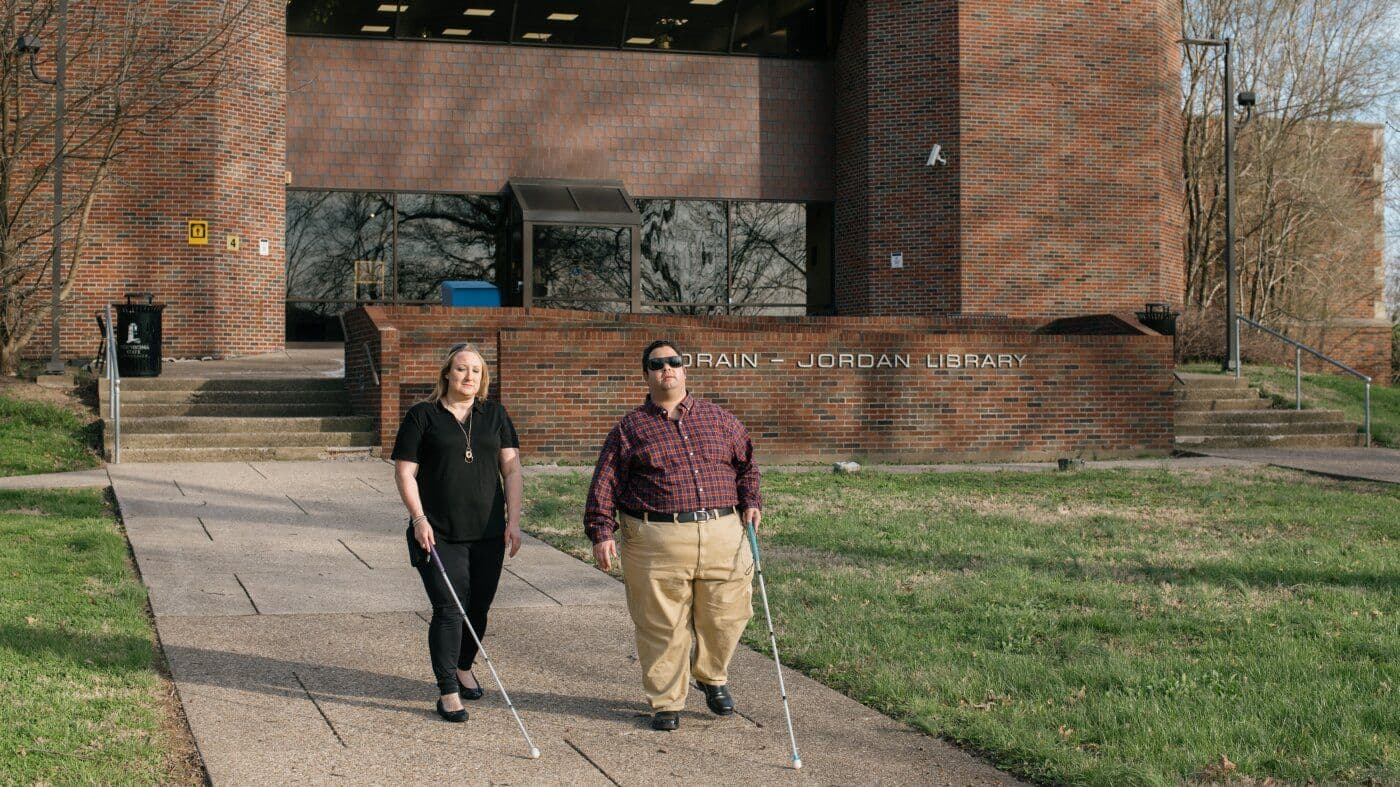
A telling example involves Miranda Lacy and Harold Rogers, two individuals who completed undergraduate degrees at West Virginia State University — an institution they credit for its strong commitment to accessibility. Now enrolled in a graduate program elsewhere, the pair allege that their new institution has failed to provide accessible learning materials, and they have filed a lawsuit to seek accountability.
Their case underscores a broader reality: in the absence of clear federal enforcement, the burden of achieving equal access too often falls on individuals with disabilities themselves — people who, as advocates note, have already waited far too long.