Justice Department Delays Digital Accessibility Deadline, Leaving Disabled Americans Waiting Longer
The Trump administration has pushed back federal rules requiring public institutions to make digital content accessible to people with disabilities, sparking outrage among advocates.
Federal Accessibility Deadline Extended, Frustrating Disability Rights Advocates
Public schools, colleges, and local government institutions across the United States have been granted an additional year to bring their digital content into compliance with federal accessibility standards — a last-minute decision that has drawn sharp criticism from disability rights organizations nationwide.
The U.S. Department of Justice announced the extension just four days before the original Friday deadline, which had been set for public entities to comply with updated Americans with Disabilities Act (ADA) digital accessibility requirements. Many institutions had spent at least two years preparing for that cutoff.
New Deadlines and Who They Affect
Under the revised timeline, public institutions serving populations of 50,000 or more now have until April 26, 2027, to meet the new standards. Smaller public entities have been given until the same date in 2028. The DOJ stated in its interim final rule that it had "overestimated the capabilities — whether staffing or technology — of covered entities to comply with the rule in the time frames provided."
The regulation, originally announced in 2024, required institutions to follow a set of technical standards known as WCAG 2.1. These guidelines established a concrete checklist of digital accessibility requirements, including video captions, audio transcripts, and compatibility with screen readers — assistive tools that convert visual content into spoken audio for people who are blind.
Disability Advocates Express Outrage
The reaction from disability rights organizations was swift and pointed.
"We are outraged," said Corbb O'Connor, president of the National Federation of the Blind of Minnesota. "Yet again, the blind have been told to wait to live on terms of equality."
O'Connor emphasized that international web accessibility standards have existed since 1999, making the delay difficult to justify. As both a blind individual and the parent of a blind child, he noted that the original deadline had already taken on real, tangible meaning at the local level. "Within minutes of meeting my son's elementary school principal for the first time, he knew the April 24, 2026 deadline," he said.
O'Connor also placed the delay within a broader historical context, pointing out that it has been nearly 36 years since Title II of the ADA — the 1990 legislation promising equal access for people with disabilities — was signed into law. "We've been waiting nearly 36 years since the law that guaranteed these rights was signed," he said.
Higher Education Organizations Add Their Voices
The Association on Higher Education And Disability (AHEAD), which represents disability resource professionals and ADA coordinators at colleges and universities, also condemned the last-minute reversal.
"AHEAD and its members have long anticipated clear and timely guidance that reflects current technologies, instructional models, and student needs," said Katy Washington, AHEAD's president. "Postponing these updates slows critical momentum and leaves institutions without the clarity needed to fully realize equitable access."
Why the Delay Was Granted
The Justice Department cited concerns raised by education advocacy groups — particularly around financial strain and staffing limitations — as justification for the extension.
Sasha Pudelski, representing AASA, the School Superintendents Association, which primarily advocates for K-12 school leaders, noted that many school districts are already operating under significant budget pressure. "Many districts are already financially stretched and operating in an environment where schools are asked to do more with less," Pudelski said.
AASA was among the groups that formally met with federal officials to request additional time. A survey of its members found that the majority of school districts expressed serious concerns about their ability to cover compliance costs. "The scope, pace, and unfunded nature of this requirement reflect a significant disconnect between federal expectations and the fiscal and human capital realities of local school systems," Pudelski added.
A Rule Decades in the Making
Jennifer Mathis, who helped develop the original rule while working at the Justice Department, described the delay as deeply frustrating given the extensive groundwork that had already been laid.
"The whole point of this particular rule was to create certainty and clarity for everyone," Mathis said. "To delay the standards now, after 16 years and an incredibly thorough rulemaking process, is just mindless and cruel."
She noted that the push for formal federal web accessibility guidelines had come not only from people with disabilities but from public institutions themselves, who sought clear, enforceable standards to follow.
Legal Action Continues in the Meantime
While the federal rule remains on hold for at least another year, disability advocates have not been without recourse. A number of successful legal actions have already held colleges and other public institutions accountable for failing to provide equal access to digital learning materials — signaling that the issue will continue to be contested in courts even as federal timelines shift.
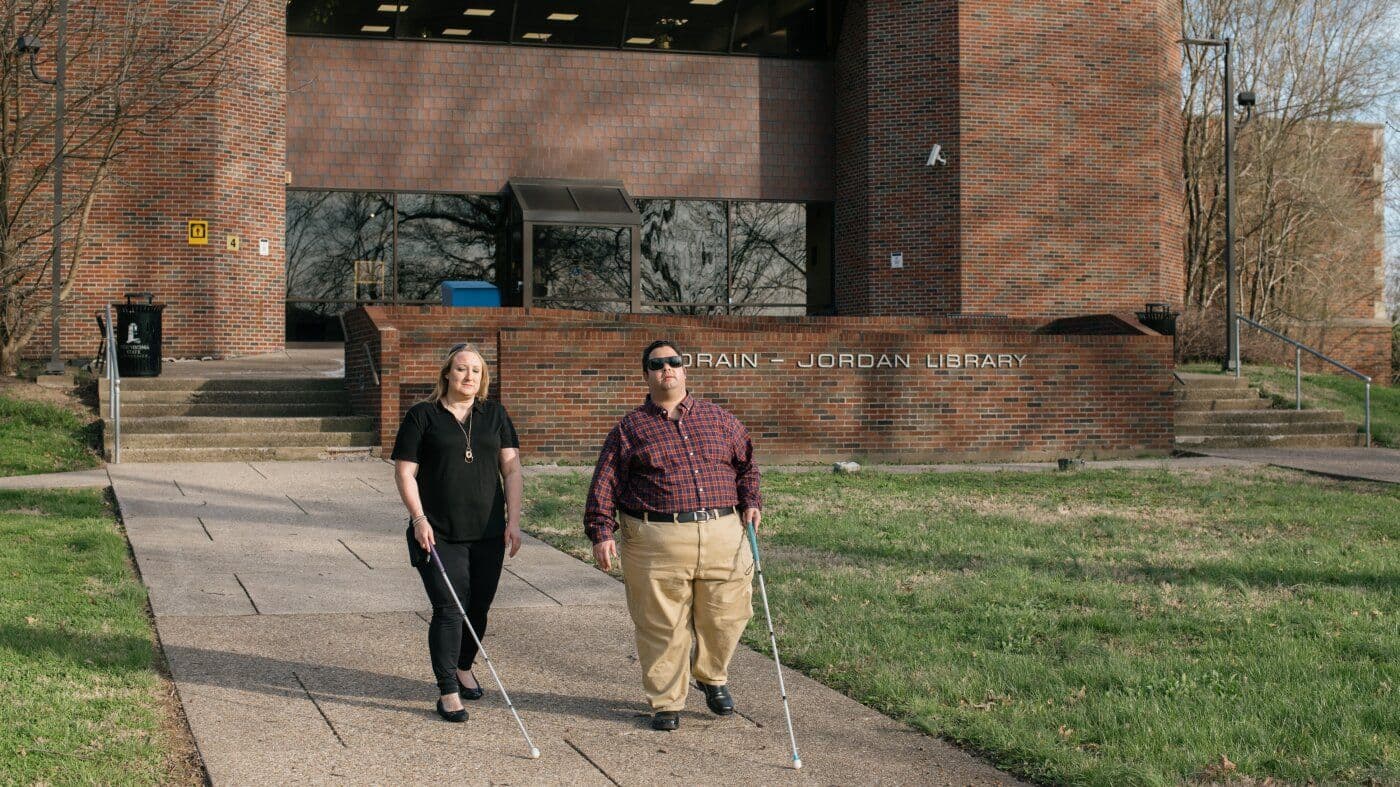
For individuals like Miranda Lacy and Harold Rogers — graduate students who have filed a lawsuit after their program failed to provide accessible learning materials despite their positive undergraduate experience at West Virginia State University — the delay represents more than a bureaucratic setback. It is a barrier to equal participation in education that continues to go unresolved.