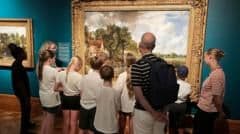
John Constable's The Hay Wain Makes Historic First Visit to Suffolk
For the first time in history, Constable's iconic masterpiece has arrived in the county it depicts, marking 250 years since the artist's birth.

An Iconic Painting Finally Comes Home
For more than two centuries, John Constable's beloved masterpiece The Hay Wain has hung in galleries far from the landscape that inspired it. Now, for the very first time in history, the iconic painting has made its way to Suffolk — the county it so famously portrays — as part of a landmark celebration marking the 250th anniversary of Constable's birth.
The oil painting, completed in 1821, is currently on display at Christchurch Mansion in Ipswich. Generously loaned by the National Gallery in London to Colchester and Ipswich Museums, the work represents a once-in-a-generation opportunity for locals and visitors alike to experience one of Britain's most treasured artworks on its home turf.
A Scene Painted Far From Where It Was Inspired
Despite capturing a tranquil rural scene along the River Stour near Flatford — complete with a horse-drawn cart wading through the water and Willy Lott's Cottage nestled on the riverbank — The Hay Wain was never actually painted in Suffolk. Constable created the sweeping six-foot-wide canvas in his London studio, working from sketches and his intimate knowledge of the landscape he had grown up in.
Constable was born in 1776 in East Bergholt, Suffolk, and formally committed himself to a career in art in 1799. Throughout his lifetime, he produced a remarkable body of work celebrating the Suffolk countryside and the River Stour valley, a region now affectionately known as Constable Country in his honour.
Despite the enduring legacy of his landscapes, Constable struggled to achieve widespread recognition during his own lifetime. His naturalistic, outdoor scenes were largely dismissed as unfashionable by contemporary critics, and he sold relatively few paintings as a result.
Years of Planning Behind a Landmark Exhibition
Exhibition curator Emma Roodhouse described the moment the painting was finally secured on the gallery wall as deeply emotional.
"When the anniversary loomed on the horizon to celebrate 250 years of John Constable's birth, I thought it was only right to be able to put exhibitions and events together," she explained.
"I did have a mini cry after it was safely on the wall — out of relief and joy. The team that helped us install it were really overjoyed."
Roodhouse noted that many visitors have been genuinely surprised to learn that The Hay Wain had never previously been displayed in Suffolk. She described bringing it to the county as a "real once-in-a-lifetime experience," adding that the painting sits beautifully alongside earlier works in the exhibition that chart Constable's remarkable artistic development.
"He was painting outdoor scenes that were really radical and fresh to a lot of people at the time," she said.
Part of a Wider Celebration
The Hay Wain exhibition forms the centrepiece of a three-part series honouring Constable's legacy. The first exhibition, which ran from March to June, explored the individuals who inspired and supported the artist throughout his career. The current display runs until October, while a third and final exhibition — scheduled from October through to February — will examine Constable's continued relevance in the modern world.
Community Pride and Cultural Significance
Carole Jones, a Labour councillor responsible for museums at Ipswich Borough Council, spoke passionately about the cultural importance of the exhibition.
"When I walked through the door and saw, at the end of the gallery, The Hay Wain there and the rest of this wonderful exhibition, I was thrilled," she said.
Jones emphasised the value of investing in cultural events that give communities a genuine sense of pride in their local heritage, and expressed hope that visitors from across the country — and beyond — would make the journey to Ipswich to see the work in person.
Peter Harrap, an artist serving as curatorial advisor for the exhibition, offered a poetic reflection on what makes Constable's work so enduringly powerful.
"You can just learn from him, interact, and have this personal encounter — moving through the landscape in exactly the same way he did," Harrap said. "It becomes a handshake across time."
Inspiring the Next Generation
The exhibition has already made a profound impression on younger visitors. Two primary school pupils from St Margaret's Primary School in Ipswich — Adwoa, aged 11, and Ella, aged 10 — were given an early preview of the painting.
"I think it's amazing because it has so many details, and it must have taken a lot of hard work to make it that big," said Adwoa. "You see it online on your phone, but if you see it in real life, it's more amazing."
Ella added that viewing the works had inspired her to be more creative: "Looking at all these pieces of art makes me want to do more creative paintings at home."
The Hay Wain is on display at Christchurch Mansion in Ipswich until October. Admission details are available through Colchester and Ipswich Museums.