Japan Drills 6,000 Meters Into the Pacific to Break Free From China's Rare Earth Grip
Japanese researchers made history extracting rare earth sediments from the deep Pacific—reshaping global supply chains and challenging China's dominance.
Japan's Deep-Sea Gamble Could Reshape the Global Rare Earth Race
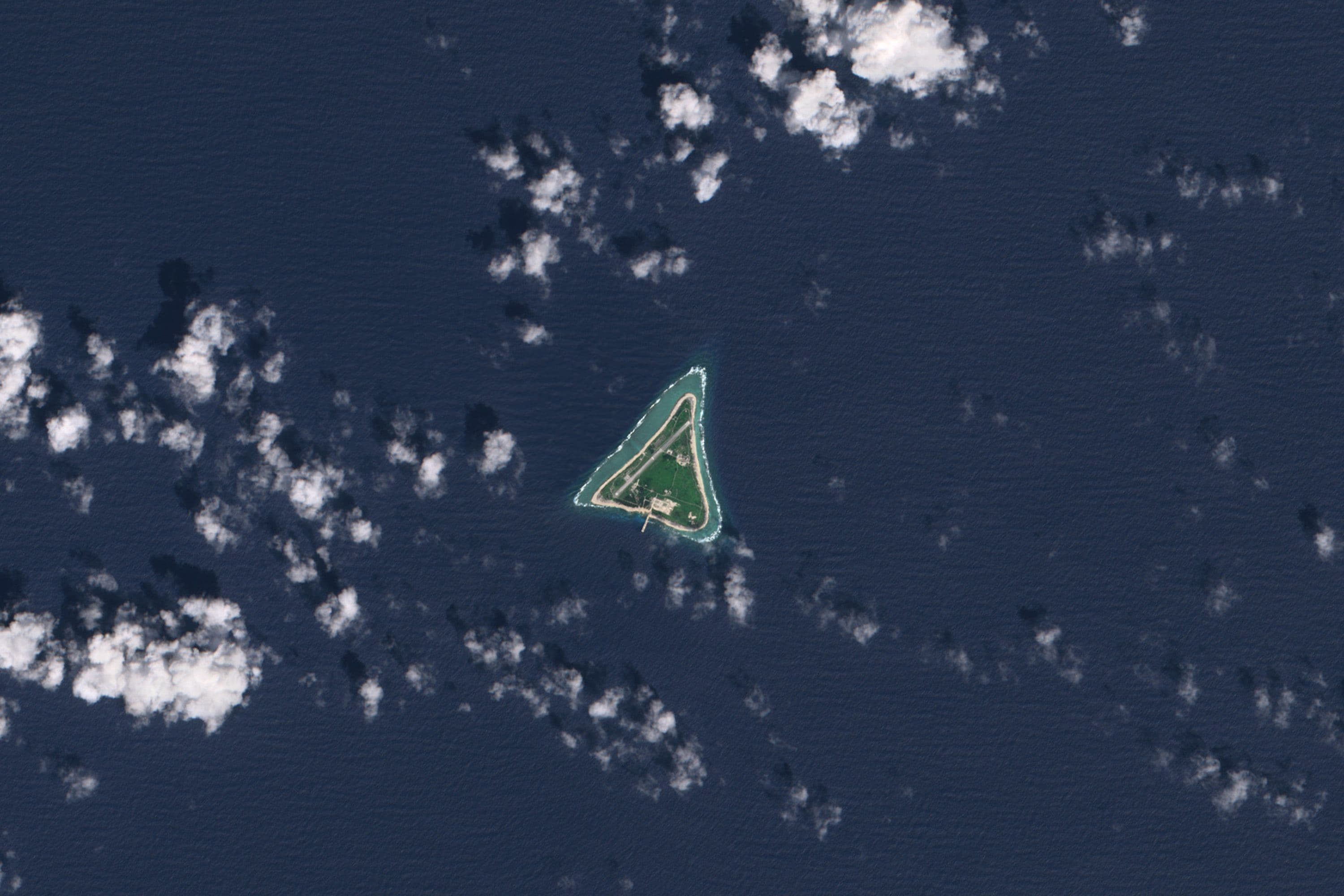
Nearly six kilometers beneath the surface of the Pacific Ocean, a team of Japanese scientists has accomplished something once thought unachievable. Using the deep-sea drilling vessel Chikyu, researchers successfully recovered sediment samples packed with rare earth elements from one of the most promising underwater deposits ever identified. The mission, centered on an area near Minamitorishima Island, marks the world's first extraction attempt at such extreme depths—and sends a powerful strategic message to Beijing.
Why Rare Earths Matter So Much
Rare earths are a collection of 17 metals that serve as the backbone of modern technology. From high-performance magnets inside electric vehicles and wind turbines to semiconductors, radar arrays, and missile systems, these materials are indispensable to both civilian industry and national defense.
Two elements found in particularly staggering quantities near Minamitorishima are especially significant. Estimates suggest the region holds enough dysprosium to satisfy roughly 730 years of global consumption and enough yttrium to last approximately 780 years. In total, the underwater deposit may contain more than 16 million tons of rare earth materials—potentially ranking it as the third-largest reserve on the planet.
The Japanese government has already labeled the mission "a significant milestone in terms of economic security and overall maritime development," while ongoing analysis continues to verify the precise composition and volume of the recovered samples.
A Crisis That Changed Everything
Japan's drive toward resource independence did not emerge overnight. Its origins trace back to a diplomatic flashpoint in 2010, when a collision between a Chinese fishing vessel and Japanese coast guard ships near the disputed Senkaku Islands triggered a serious geopolitical fallout.
In the wake of that incident, China halted rare earth exports to Japan for approximately two months. At the time, Japan relied on Beijing for more than 90 percent of its rare earth imports. The sudden embargo sent shockwaves through Japanese industry—particularly the automotive sector—and contributed to a tenfold spike in global rare earth prices within just one year.
While many other industrialized nations treated the episode as an isolated disruption, Tokyo read it as a structural warning. Dependence on a single supplier—especially a regional rival—posed an existential threat to one of the world's most technologically advanced economies.
Japan's Multifaceted Strategy to Reduce Dependence
In response, Japan rolled out a sweeping and highly integrated strategy designed to chip away at its reliance on Chinese rare earths. The approach combined several key pillars:
Diversifying Supply Chains
Tokyo pursued overseas mining investments, most notably by acquiring stakes in Australian operations and lending strategic support to the Lynas Group, one of the few major rare earth producers operating outside China.
Reducing Material Consumption Through Innovation
Japanese manufacturers, backed by government funding, developed new magnet technologies that require significantly less dysprosium. Parallel research programs explored alternative materials capable of replacing rare earths in certain applications altogether.
Building Strategic Reserves
The Japanese government established stockpiles of critical rare earth materials—a buffer designed to buy time during supply disruptions. While stockpiles don't eliminate dependence, they provide the industrial sector crucial breathing room to adapt without facing immediate shutdowns.
Leveraging Technological Expertise
Japan's deeply integrated technology sector has enabled the country to do more with less. As both a major importer and a sophisticated processor of rare earths into high-value components, Japan has turned efficiency into a competitive edge—reducing its structural needs even as demand for advanced technology grows.
The cumulative effect of these policies has been substantial. Japan has managed to cut its dependence on Chinese rare earths to approximately 50 percent—a benchmark no other major industrial nation has come close to matching.
Tensions Are Rising Again
Despite this progress, China still dominates global refining capacity, particularly for heavier rare earth elements. And geopolitical pressures are intensifying once more.
Following statements by Japanese Prime Minister Sanae Takaichi about Japan's potential military response to a Chinese attack on Taiwan, Beijing reportedly began restricting exports of rare earths, industrial magnets, and dual-use materials. Japanese companies operating in the automotive, semiconductor, and defense sectors have already reported disruptions linked to these measures.
Against this backdrop, the Minamitorishima drilling mission carries significance far beyond engineering achievement. It represents a deliberate declaration of Japan's intent to structurally reduce its strategic vulnerability—one seabed sample at a time.
The United States Steps In
Extracting minerals from 6,000 meters underwater is not only technically daunting—it is extraordinarily expensive. That is where Washington enters the picture.
During a state visit to Tokyo last October, Prime Minister Takaichi and U.S. President Donald Trump signed a bilateral cooperation agreement on rare earths and critical minerals, formally known as the Tokyo Framework. The deal includes joint public and private investments, bilateral coordination mechanisms, and a dedicated US-Japan Rapid Response Group tasked with monitoring supply chain vulnerabilities.
Under the arrangement, the United States will provide both funding and advanced technological support for commercial extraction operations currently planned for 2026, in exchange for privileged access to the recovered resources.
Takaichi reaffirmed these commitments during a subsequent White House meeting with Trump on March 19, expressing her desire for "total US commitment" to the Minamitorishima rare earth project. She also signed a complementary agreement with French President Emmanuel Macron in late March, further broadening the international coalition supporting Japan's critical minerals agenda.
What Comes Next
If full-scale industrial exploitation of the Minamitorishima deposit proves economically viable and environmentally responsible, Japan could secure a reliable domestic source of rare earths for generations—dramatically reducing the leverage Beijing currently holds over Tokyo's supply chains.
The implications extend well beyond Japan. As China continues to use rare earth access as a geopolitical instrument, the race to develop alternative sources is accelerating globally. Japan's combination of diplomatic dealmaking, industrial innovation, and deep-sea exploration may well serve as the blueprint other nations increasingly look to follow.