James Webb Telescope Uncovers Striking Differences Between Dawn and Dusk on a Scorching Alien World
NASA's JWST has detected dramatic atmospheric differences between the morning and evening sides of ultra-hot exoplanet WASP-121 b, rewriting what we know about alien weather.

James Webb Telescope Reveals Two Completely Different Twilights on a Distant Exoplanet
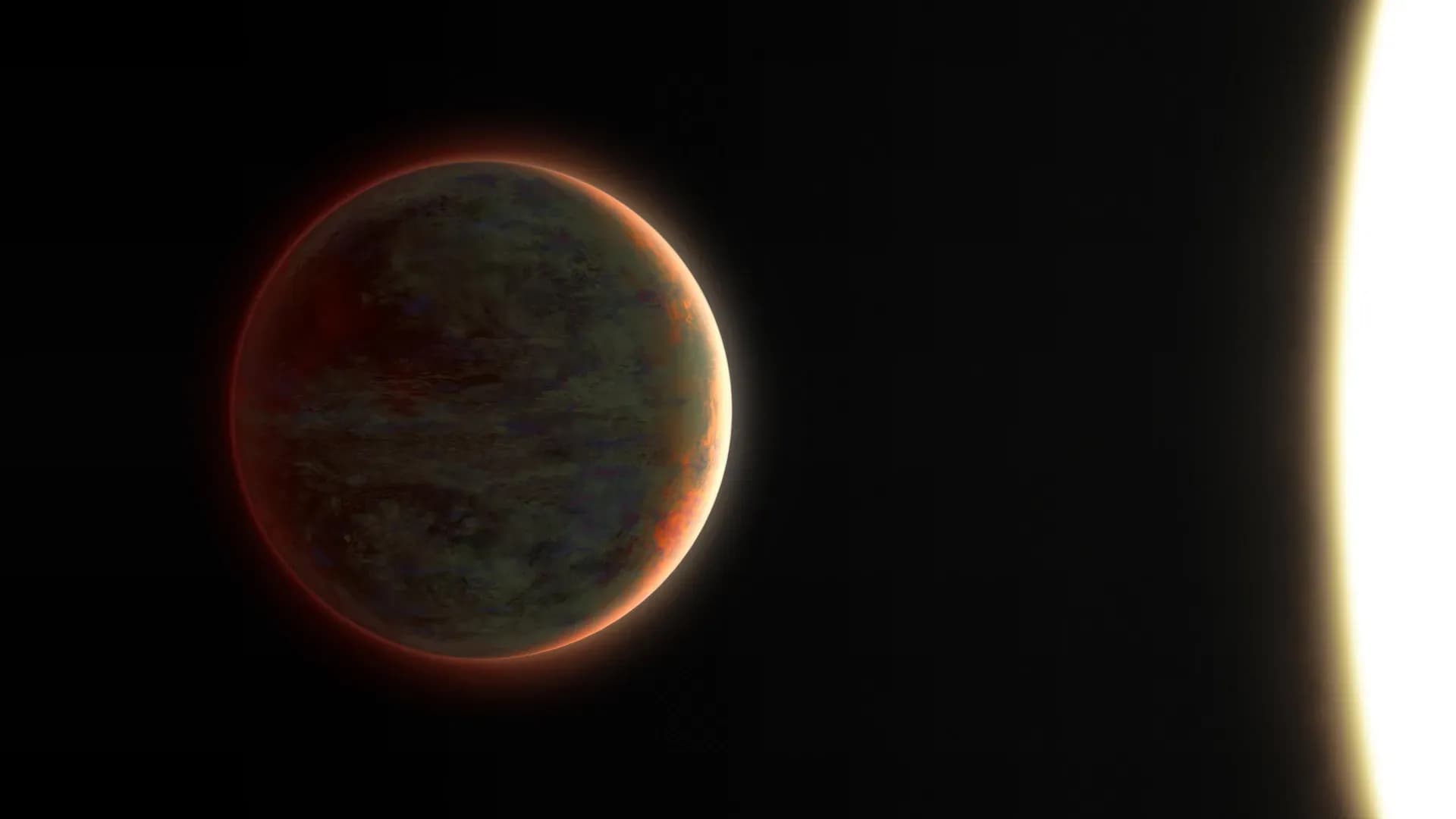
NASA's James Webb Space Telescope (JWST) has made a groundbreaking discovery about one of the most extreme planets ever studied. Scientists have detected dramatic differences between the dawn and dusk zones of WASP-121 b, a scorching gas giant located far beyond our solar system. The findings offer the most detailed look yet at how alien atmospheres behave — and raise fascinating new questions about what shapes them.
What Makes WASP-121 b So Extreme?
WASP-121 b belongs to a class of planets known as ultra-hot Jupiters. Like many close-orbiting gas giants, it is tidally locked to its host star, meaning one side permanently faces the star while the opposite side remains in constant darkness. This creates an extreme temperature divide: the dayside reaches roughly 2,770 Kelvin — nearly 2,500 degrees Celsius (4,525 degrees Fahrenheit) — while the nightside sits at a comparatively cooler 1,000 Kelvin, or about 725 degrees Celsius (1,340 degrees Fahrenheit).
These two hemispheres are separated by boundary zones called terminators — the transitional regions where day meets night. On one side lies the morning terminator, where dawn is perpetually frozen in place. On the other is the evening terminator, locked in an eternal dusk.
How JWST Captured the Atmospheric Differences
Astronomers made the discovery by analyzing infrared starlight as WASP-121 b passed in front of its host star during a transit event. As the planet moved across the star, it rotated slightly — by approximately 30 degrees — giving researchers the opportunity to study different atmospheric longitudes one by one.
Using JWST's NIRSpec (Near-Infrared Spectrograph) instrument, scientists tracked how the planet's atmosphere absorbed starlight across various wavelengths throughout the transit. Rather than averaging all the data into a single combined signal — a common approach in exoplanet research — the team allowed the signal to shift over time, reflecting the planet's rotation. Statistical analysis confirmed that this variable approach matched the observations far more accurately, providing compelling evidence that the two terminators have genuinely distinct atmospheric properties.
"With its unprecedented observational quality, JWST gives us the most detailed glimpses into distant planets to date: By measuring how starlight absorption changes as WASP-121 b rotates, we probe its atmosphere longitude by longitude," said Cyril Gapp of the Max Planck Institute for Astronomy (MPIA).
The Evening Side Runs Hotter — Here's Why
The data revealed that the evening terminator absorbs significantly more light than the morning terminator. Researchers attribute this asymmetry to powerful atmospheric wind systems that transport heat from the blazing dayside toward the cooler nightside. Because these winds blow eastward — aligned with the planet's rotation — they deliver more heat to the evening side than to the morning side.
As temperatures climb, the atmosphere physically expands, presenting a larger cross-section to incoming starlight and boosting its capacity to absorb radiation. This creates a self-reinforcing cycle that makes the dusk zone measurably hotter and more puffed up than its dawn counterpart.
Water Molecules Are Being Torn Apart
One of the most striking findings involves water. Observations showed that water molecules (H₂O) become less abundant in the hotter atmospheric regions. Scientists interpret this as evidence of thermal dissociation — a process in which extreme temperatures literally rip water molecules apart into their component hydrogen and oxygen atoms.
This finding adds further support to the idea that fierce winds are significantly heating the evening terminator. By contrast, carbon monoxide (CO) showed a stronger signal toward the end of the transit, though researchers believe this reflects temperature-driven changes rather than a genuine increase in the gas's concentration.
Mystery Clouds May Be Cooling the Morning Side
While computer simulations of atmospheric heat transport successfully reproduced the general asymmetry observed by JWST, they consistently underestimated its strength. This gap between theory and observation suggests that additional physical processes are at work — and clouds may be the missing ingredient.
Unlike Earth's familiar water-vapor clouds, any clouds on WASP-121 b would likely be composed of mineral compounds such as silicates. These exotic clouds could act as a thermal blanket, blocking infrared radiation rising from deeper, hotter atmospheric layers and making the morning terminator appear cooler than it truly is.
Modeling such clouds is enormously complex. Simulating their formation, condensation, and evaporation within a rapidly shifting environment pushes current computational methods to their limits, and most existing exoplanet atmosphere models — including those used in this study — do not fully account for cloud physics. When the research team adjusted their simulations to approximate cloud effects, the results aligned much more closely with the JWST observations. Still, the scientists caution that more sophisticated modeling will be necessary before clouds on WASP-121 b can be definitively confirmed.
A New Window Into Three-Dimensional Exoplanet Atmospheres
The implications of this research extend well beyond a single planet. The team has already identified other ultra-hot gas giants with the right combination of temperatures and orbital characteristics for similar studies. By applying this observational technique across a broader sample of worlds, astronomers hope to build a comparative picture of how atmospheric conditions vary from planet to planet — and to develop a deeper understanding of the three-dimensional structure of exoplanet atmospheres.
The study was led by Cyril Gapp of MPIA and Heidelberg University, with co-authors including Thomas M. Evans-Soma (MPIA and University of Newcastle, Australia), Eva-Maria Ahrer (MPIA), Aurélien Falco (Sorbonne Université), David K. Sing and Guangwei Fu (Johns Hopkins University), Shashank Dholakia (University of Queensland), Vivien Parmentier (Université de la Côte d'Azur), and Jérémy Leconte (Université de Bordeaux).
As JWST continues its mission, discoveries like this one are transforming exoplanet science — turning distant worlds from single data points into richly detailed, three-dimensional environments ripe for exploration.