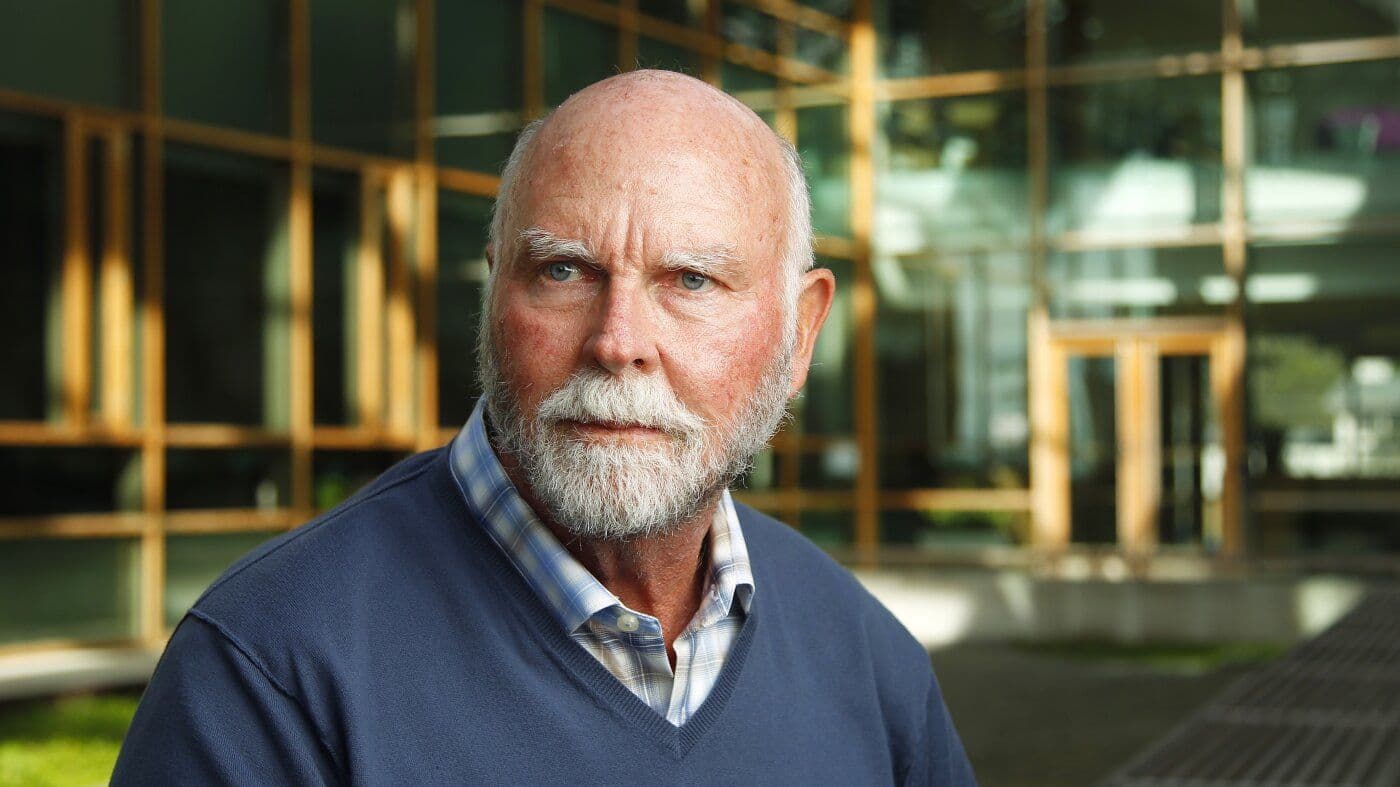
J. Craig Venter, Visionary Human Genome Pioneer, Passes Away at 79
J. Craig Venter, the trailblazing geneticist who revolutionized human genome sequencing, has died at 79 after complications from cancer treatment.
J. Craig Venter, Visionary Human Genome Pioneer, Passes Away at 79
J. Craig Venter, one of the most transformative figures in modern genetic science, has passed away at the age of 79. The J. Craig Venter Institute confirmed his death, noting that he had been hospitalized after experiencing unexpected complications arising from treatment for a recently diagnosed cancer.
A Scientific Race That Changed the World
Venter rose to global prominence when his biotechnology company, Celera Genomics, launched an audacious challenge to the government-backed Human Genome Project — a full-scale competition to be the first to completely decode the human genetic blueprint. Where others saw an impossible task, Venter saw an opportunity to innovate.
His development of the "whole genome shotgun method" — a faster and significantly more cost-effective approach to genome sequencing — drew early skepticism from the scientific establishment. Critics doubted it would succeed. It did. The technique fundamentally accelerated the pace at which genetic research could be conducted and laid the groundwork for the genomics revolution that followed.
In June 2000, Venter stood alongside President Bill Clinton at a historic White House ceremony marking the near-completion of the human genome sequencing effort. It was a moment that symbolized both the scale of the scientific achievement and the outsized role Venter had played in bringing it to fruition.
A Maverick Who Wore the Label Proudly
Throughout his career, Venter was frequently described as a scientific maverick — a label he embraced with characteristic confidence. In a 2003 interview with NPR, he stated that being called a maverick "in the context of stodgy science" was something he considered "a tremendous badge of honor."
That self-assurance was evident from early in his life. Venter credited his time serving with the U.S. Naval Medical Corps during the Vietnam War as the spark that ignited his passion for biology. Witnessing firsthand how fragile human life could be, he returned home driven by a desire to understand it more deeply.
Pushing the Boundaries of Synthetic Biology
Venter's ambitions extended well beyond sequencing. He became the first individual to sequence and publicly publish his own personal genome, a milestone that underscored his belief in the power of genetic transparency.
Perhaps even more remarkably, his research team made history in the field of synthetic biology by engineering a bacterial cell governed entirely by laboratory-synthesized DNA — essentially creating life guided by an artificially constructed genetic code.
"The idea that you can engineer a living synthetic cell from scratch was just an idea until Craig came out and said, 'I will actually do it.' And then he actually did it," said Kate Adamala, a synthetic biologist at the University of Minnesota. She also noted that the DNA-building techniques now routinely used in laboratories worldwide were developed during Venter's work on identifying the minimal set of genes necessary to sustain life.
A Legacy Measured in Breakthroughs
Drawing Endy, a synthetic biologist at Stanford University, reflected on the depth of Venter's contributions: "Craig was not only an extraordinarily innovative scientist. He also willed important ideas forward into reality and practice. The more I understand how difficult it is to cause actually new things to happen, the more I am in awe of what Craig was able to accomplish."
Mary-Claire King, a geneticist at the University of Washington, highlighted how Venter's commercial ambitions and flair for the dramatic — often controversial within the scientific community — paradoxically strengthened public support for keeping the human genome freely accessible to all. His provocative presence, she argued, forced researchers in the public sector to make their case loudly and convincingly.
"That was enormously important," King said, describing Venter as "a brilliant guy with a very strong sense of himself and enormous self-confidence."
Words That Will Endure
At the 2000 White House event, Venter addressed concerns that decoding the human genome might strip life of its mystery. His response was characteristically eloquent and defiant.
"Nothing could be further from the truth," he said. "The complexities and wonder of how the inanimate chemicals that are our genetic code give rise to the imponderables of the human spirit should keep poets and philosophers inspired for the millennium."
Venter is remembered not only for what he discovered, but for how he approached discovery itself — fearlessly, relentlessly, and always with one eye fixed on the horizon of what seemed impossible.

