Israeli Airstrikes Leave Iran's Senior Clerics Exposed as Succession Crisis Deepens
An Israeli airstrike targeted a gathering of Iran's top clerics in Qom, intensifying pressure on what remains of the regime following the death of Supreme Leader Khamenei.
Israeli Strike Targets Cleric Assembly in Qom, Deepening Iran's Leadership Crisis
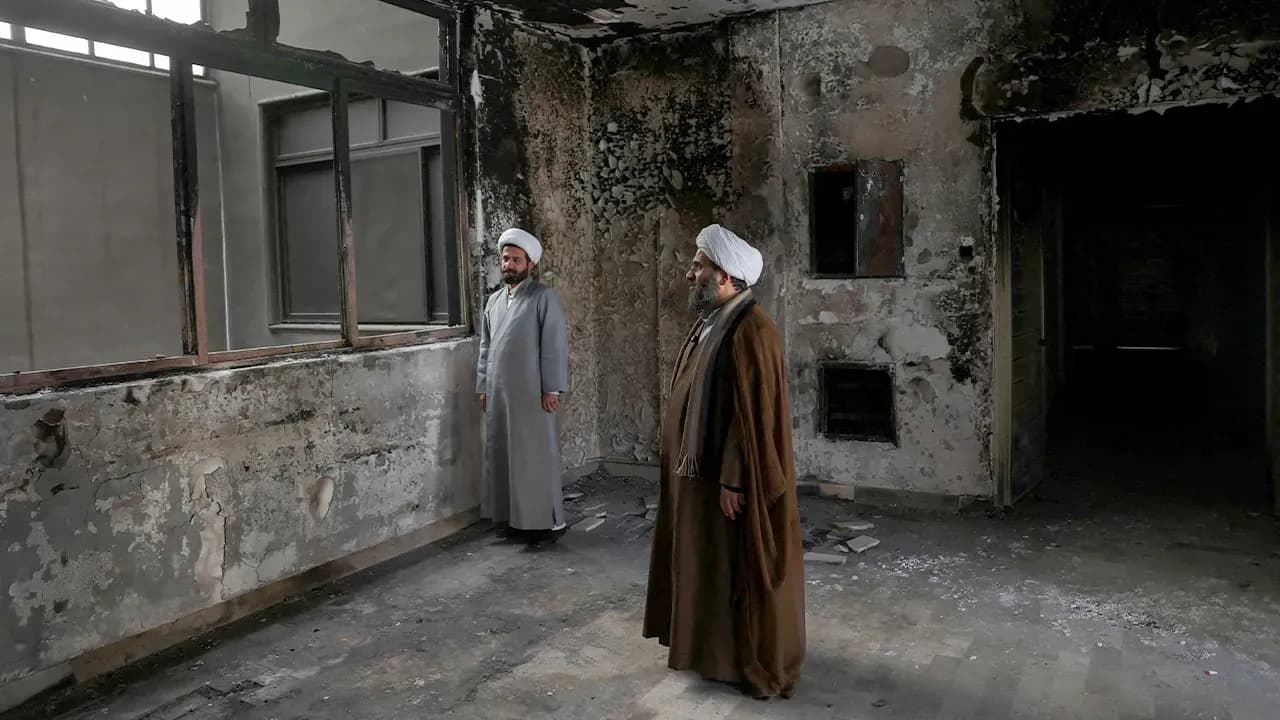
A second devastating Israeli airstrike has struck at the heart of Iran's remaining power structure, hitting a building in the holy city of Qom where senior members of the Assembly of Experts had gathered to discuss who would succeed the late Supreme Leader Ayatollah Ali Khamenei — killed days earlier when Israeli forces leveled his compound in Tehran.
The strike has left Iran's clerical leadership feeling vulnerable and increasingly isolated, according to defense analysts closely monitoring the rapidly evolving situation.
Intelligence Dominance on Full Display
Kobi Michael, a senior researcher at both the Institute for National Security Studies and the Misgav Institute, told Fox News Digital that the Qom strike represented a significant strategic and psychological blow to whatever remains of Iran's governing apparatus.
"This second strike would be another embarrassment to what has been left of the regime," Michael said. "It indicates intelligence dominance and superiority because any movement is detected, meaning they would feel exposed."
Michael further emphasized that Iran's remaining leadership is now operating in a state of heightened fear and uncertainty. "As of now, the leadership would feel insecure and hunted, with all of their plans collapsing one after another," he explained. "They would feel totally isolated and understand that the biggest risk might come from home — from a potential uprising next."
Strike Confirmed by Israeli Military
Israel Defense Forces spokesman Brigadier General Effie Defrin officially confirmed that the Israeli Air Force carried out the strike on the building where senior clerics had planned to convene, according to The Times of Israel. The assembly had reportedly been brought together specifically to deliberate succession arrangements following Khamenei's death.
Exactly how many of the Assembly's 88 members were present inside the building at the time of the strike has not been confirmed, with an Israeli defense source indicating the number remained unclear.
Operation Epic Fury: A Sweeping Military Campaign
The twin strikes on Iran's leadership form part of a far broader and more aggressive military offensive. U.S. forces, operating under what has been designated Operation Epic Fury, struck more than 1,700 targets across Iran within the first 72 hours of the campaign, according to a U.S. Central Command fact sheet.
Targets have been carefully selected to dismantle the pillars of Iran's military and security infrastructure. According to U.S. Central Command, these have included:
- Command-and-control centers
- Islamic Revolutionary Guard Corps (IRGC) Joint Headquarters
- IRGC Aerospace Forces headquarters
- Integrated air defense systems
- Ballistic missile launch sites
The stated objective of the campaign is to neutralize what U.S. officials have characterized as imminent threats while systematically dismantling Iran's security apparatus.
The Road Ahead: Weeks of Strategic Operations
Analyst Kobi Michael projected that while the campaign would require sustained effort, its core objectives could be largely achieved within weeks. "We need strategic patience and determination, and in several weeks most of the job will be accomplished," he said.
He also suggested that even if the Iranian regime manages to survive in some form, the country will be fundamentally transformed. "Even if the regime does not collapse, Iran will not be like we used to know," Michael noted.
Looking further ahead, Michael anticipated that the United States and Israel would establish a lasting oversight framework to prevent Iran from rebuilding its military capabilities. "I assume that the U.S. and Israel will establish a very robust monitoring mechanism that will enable them to react whenever the regime tries to reconstitute its military capacities again," he concluded.
Succession Question Remains Unresolved
With Khamenei gone and the Assembly of Experts now directly targeted, Iran's path to selecting a new Supreme Leader has become deeply uncertain. Among the names being discussed as a potential successor is firebrand anti-American cleric Alireza Arafi, though the political and security environment makes any formal succession process extraordinarily difficult to navigate at this stage.