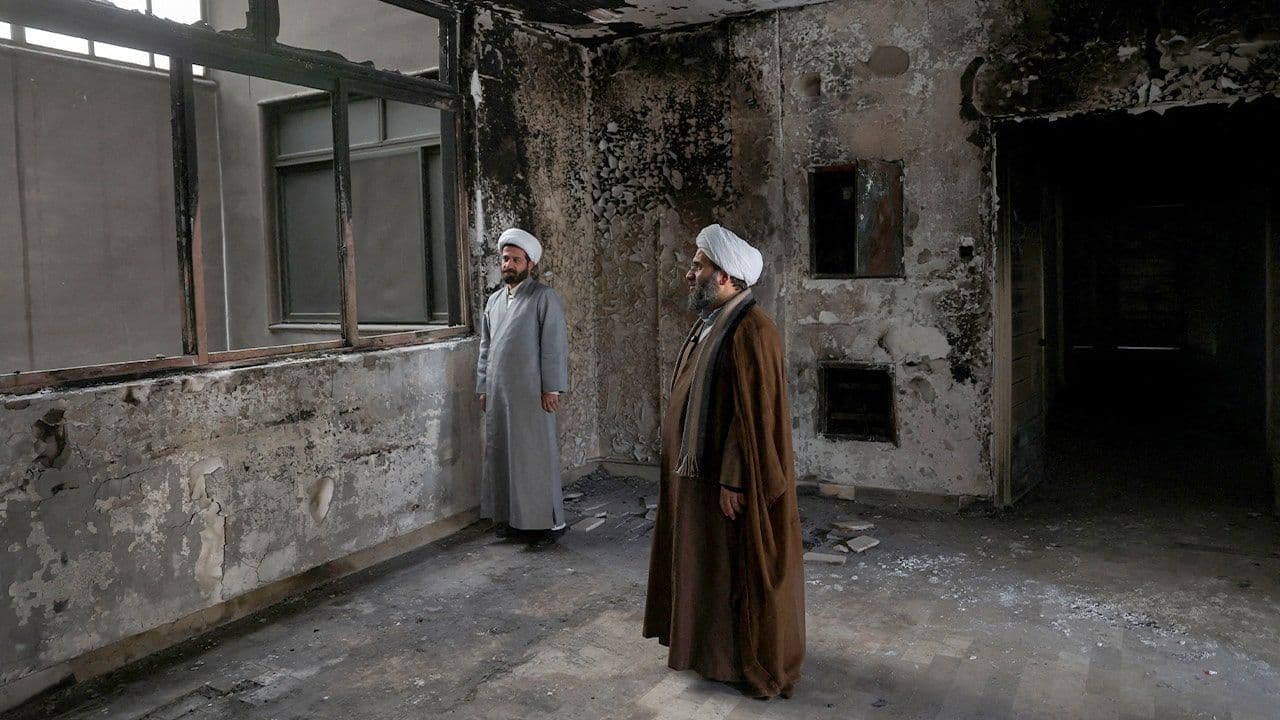
Israeli Airstrike Targets Iran's Clerical Assembly in Qom as Succession Crisis Deepens
An Israeli strike hit a meeting site in Qom where senior Iranian clerics had gathered to discuss succession plans, leaving what remains of the regime feeling exposed and isolated.

Israeli Strike in Qom Leaves Iranian Leadership Feeling 'Exposed'
A second significant Israeli airstrike has struck at the heart of Iran's remaining leadership structure, this time targeting a building in the holy city of Qom where senior members of the Assembly of Experts had been scheduled to convene. The gathering was reportedly intended to address succession planning following the death of Supreme Leader Ayatollah Ali Khamenei, who was killed when an earlier strike leveled his compound in Tehran.
Defense analyst Kobi Michael, a senior researcher at both the Institute for National Security Studies and the Misgav Institute, told Fox News Digital that the strike would have dealt a severe blow to the regime's already crumbling sense of security.
"This second strike would be another embarrassment to what has been left of the regime," Michael stated. "It indicates intelligence dominance and superiority because any movement is detected — meaning they would feel completely exposed."
Regime Described as 'Hunted' and Isolated
Michael painted a grim picture of the psychological and operational state of Iran's remaining leadership, suggesting that the compounding strikes are systematically dismantling any coordinated response.
"As of now, the leadership would feel insecure and hunted, with all of their plans collapsing one after another," he said. "They would feel totally isolated and understand that the biggest risk might come from home — from a potential uprising next."
Israel Defense Forces spokesman Brigadier General Effie Defrin confirmed that the Israeli Air Force had struck the building in Qom where the senior clerics had been scheduled to meet, according to The Times of Israel. It remains uncertain exactly how many of the Assembly's 88 members were present at the time of the attack, based on information from an Israeli defense source.
Operation Epic Fury: A Sweeping Military Campaign
The strikes on Iranian leadership figures are part of a far broader and sustained military operation. U.S. forces have reportedly hit more than 1,700 targets across Iran within just the first 72 hours of what has been designated Operation Epic Fury, according to a U.S. Central Command fact sheet.
The campaign is specifically designed to dismantle Iran's security infrastructure and neutralize what American officials have characterized as imminent and ongoing threats to regional stability.
Key Targets Struck So Far
According to U.S. Central Command, the operation has targeted a wide array of high-value military and governmental assets, including:
- Command-and-control centers used to coordinate Iranian military activity
- Islamic Revolutionary Guard Corps (IRGC) Joint Headquarters
- IRGC Aerospace Forces headquarters
- Integrated air defense systems
- Ballistic missile launch sites
What Comes Next: A Transformed Iran
Despite the scale and speed of the operation, analysts caution that strategic patience will be essential in the weeks ahead. Michael emphasized that even if the Iranian regime does not fully collapse, the country will emerge from this campaign fundamentally altered.
"We need strategic patience and determination, and in several weeks most of the job will be accomplished," he noted. "Even if the regime does not collapse, Iran will not be like we used to know."
Looking further ahead, Michael suggested that the United States and Israel are likely to establish a long-term monitoring framework to prevent Iran from reconstituting its military capabilities.
"I assume that the U.S. and Israel will establish a very robust monitoring mechanism that will enable them to react whenever the regime tries to rebuild its military capacities again," he concluded.
Succession Question Hangs Over Tehran
With Khamenei gone and the Assembly of Experts — the body constitutionally responsible for selecting a new supreme leader — now under direct military pressure, Iran's political future remains deeply uncertain. Firebrand anti-American cleric Alireza Arafi has been named as one potential contender to fill the vacuum, though the viability of any succession process appears increasingly fragile under current conditions.
