Is Public Support for Net Zero Fading? What Voters Are Really Thinking
Across the UK, enthusiasm for reaching net zero is showing signs of decline. As everyday financial pressures mount, where does climate change rank on voters' priority lists?

Climate Urgency Takes a Back Seat as Cost of Living Dominates Voter Concerns
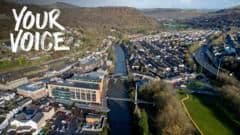
For a town that has endured repeated and destructive flooding, you might assume climate change would be front and center in the minds of Pontypridd residents. Yet, when voters in this Welsh community are asked what truly matters ahead of the upcoming Senedd election on 7 May, the answer is almost universally the same — money.
"When I vote, I'm thinking about taxes and finances... the environment doesn't really come into it," admitted one local. Another resident dismissed net zero targets as "something to deal with further down the line."
Those who had given thought to environmental policy expressed concern that climate action had effectively been "put on the back burner" by political leaders.
A Shifting Political Landscape on Climate
The last Senedd election took place as the United Kingdom geared up to host the landmark COP26 climate summit in Glasgow. At that time, the Welsh Parliament had made global history by becoming the first legislative body in the world to formally declare a climate emergency. Both Wales and the broader UK had committed to legally binding targets aimed at achieving net zero carbon emissions by 2050 — a goal requiring a dramatic reduction in greenhouse gas use, a transition away from fossil fuels, mass adoption of electric vehicles, and significant reforestation efforts.
Fast forward to today, and the political unity that once surrounded these goals has visibly crumbled. Emerging research points to a measurable drop in public urgency regarding net zero commitments across the UK.
"It's not my biggest concern right now," said Scott Richards, 27, while walking his dog along Pontypridd's riverside. His priorities, like many others, centered on personal finances and job security.
"People are genuinely struggling, and no one feels safe in their employment," echoed Rachel Hansen, 31. "The environment just isn't at the top of the agenda right now."
Voices from the Community
Not everyone was dismissing the issue entirely. David Heathfield, 41, gestured toward a nearby road notorious for flooding during storms. "That right there shows exactly what climate change is doing to us," he said pointedly.
Nathan Jones, 28, shared his frustration that politicians were sidelining what he described as "incredibly important" environmental concerns in favor of short-term political wins.
On the other end of the spectrum, 78-year-old Derek Willington questioned the logic of current energy policy altogether. "We're importing North Sea oil from Norway — why aren't we extracting it ourselves?" he argued.
The Psychology Behind Declining Climate Concern
Professor Wouter Poortinga, an environmental psychologist at Cardiff University who specializes in public attitudes toward net zero, offers an illuminating explanation for this shift. He points to a concept called the "finite pool of worry" — the idea that human concern is a limited resource, and when one issue grows in prominence, others inevitably fade.
"There's only so much people can worry about at any given time," he explained. "Climate change has taken a back seat to pressing concerns like the cost of living, the broader economy, and immigration in recent years."
The numbers support his analysis. A recent joint study by King's College London, Ipsos, and the Centre for Climate Change and Social Transformations revealed that the proportion of UK citizens who believe the country should reach net zero before 2050 has nearly halved since 2021. Meanwhile, the share of people who believe the target is unnecessary altogether has surged from 9% to 26% over the same period — though a majority of 64% still back the overall goal.
Poortinga noted that declining enthusiasm is most pronounced among individuals aged 55 and over, as well as those leaning to the right politically. "Climate change was once a genuinely cross-party issue," he observed, "but that consensus has eroded significantly, partly because the debate has been pulled into broader culture war narratives."
Competing Polls, Competing Narratives
Various organizations have released their own research during the Senedd election campaign, arriving at starkly different conclusions. The TaxPayers' Alliance claimed Welsh voters are effectively "quiet quitting" on net zero, driven by rising household bills and growing skepticism about the feasibility of green policy pledges.
In contrast, campaign group Climate Cymru insists there remains "overwhelming public support" for bold action on climate, clean energy, pollution reduction, and nature conservation.
Energy Policy Sparks Local Tensions
Where climate-related debate has emerged most sharply during the campaign, it has often centered on energy infrastructure. In the Dulais Valley, 59-year-old Geraint Evans has become a vocal opponent of proposed large-scale wind and solar farm developments in rural Welsh communities. He argues that Neath Port Talbot already generates more renewable energy than any other local authority in Wales, making further industrial-scale development in the region unnecessary and divisive.
"Climate change is ultimately in the hands of major emitters like China, the United States, and India," Evans argued. "We need a genuinely honest national conversation about what net zero really means and who should bear the burden of achieving it."
As polling day approaches, the tension between long-term environmental responsibility and immediate economic anxiety remains unresolved — leaving climate policy caught between urgency and apathy.