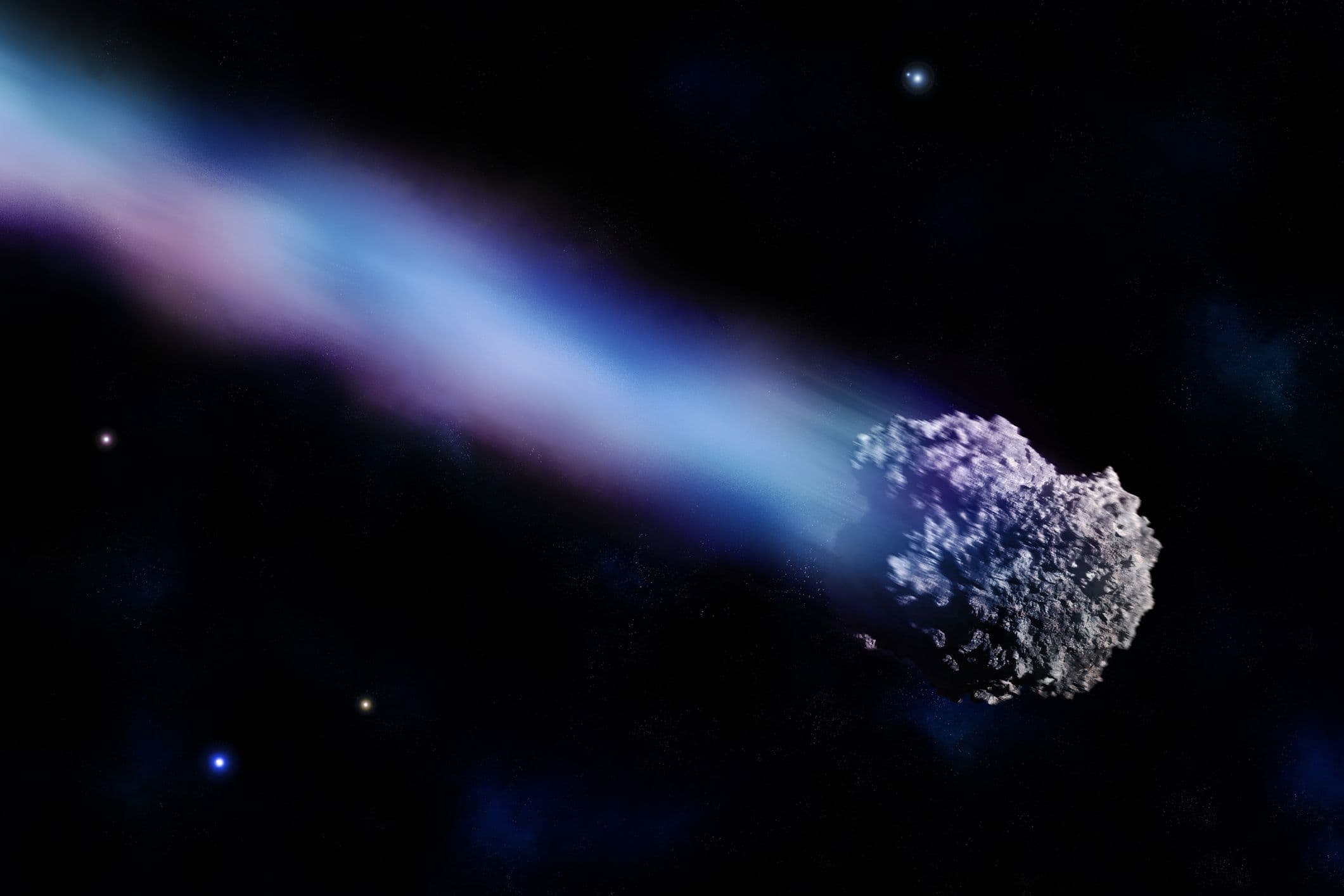
Interstellar Comet 3I/Atlas Stuns Scientists With Unusually High Alcohol Content
New observations reveal that interstellar comet 3I/Atlas contains extraordinary levels of methanol, making it one of the most alcohol-rich comets ever recorded.

Interstellar Comet 3I/Atlas Stuns Scientists With Unusually High Alcohol Content
A remarkable discovery has emerged from one of the world's most powerful radio observatories: the interstellar comet 3I/Atlas is packed with methanol — a form of alcohol widely used in fuels and industrial solvents — at concentrations far exceeding anything typically seen in comets native to our solar system.
What the ALMA Telescope Revealed
Data collected by the ALMA telescope, situated in the high-altitude Atacama Desert of Chile, shows that the coma surrounding 3I/Atlas is unusually rich in methanol. While this organic compound does appear in solar system comets, the levels detected in 3I/Atlas are up to four times higher than the standard amount observed elsewhere.
According to a study published on arXiv, this makes 3I/Atlas the second most methanol-rich comet ever documented. The only comet to surpass it is C/2016 R2, an already anomalous object first identified a decade ago. Alongside methanol, separate research efforts have also identified elevated concentrations of carbon dioxide, iron, and nitrogen within the comet — further underlining just how chemically distinctive this visitor truly is.
A Chemistry Unlike Anything in Our Solar System
The unusual chemical profile of 3I/Atlas has led researchers to propose that this comet originated in a radically different environment from anything found in our own cosmic neighborhood. The excess methanol, the carbon dioxide-dominated coma, and the atypical ratios of various compounds collectively point toward a birthplace that was either significantly colder, subjected to more intense radiation, or governed by entirely different chemical processes than those that shaped comets in our solar system.
This makes 3I/Atlas not just a scientific curiosity, but a potential window into the diverse planetary-forming conditions that exist across the galaxy.
Could 3I/Atlas Be a Hyperactive Comet?
The research team has also raised the possibility that 3I/Atlas belongs to a special class of bodies known as hyperactive comets. These are objects that emit more water vapor than their surface area alone could reasonably produce. In such comets, gaseous outgassing does not come solely from the nucleus itself — a portion is also generated by tiny ice grains drifting through the coma, which sublimate as the comet warms.
Scientists suggest that in the case of 3I/Atlas, both methanol and water vapor were released simultaneously from the solid nucleus and from these free-floating icy particles. A notable share of the methanol detected appears to have originated from detached ice deposits that began sublimating as the comet drew closer to the Sun — behavior entirely consistent with known hyperactive comet dynamics.
Ruling Out an Artificial Origin
This pattern of activity further strengthens the scientific consensus that 3I/Atlas is a completely natural object — one that is extraordinarily cold and chemically complex, but natural nonetheless. Any lingering speculation about an artificial or manufactured origin has been effectively dismissed by these findings.
A Rare Interstellar Traveler Heading Back Into the Void
At present, 3I/Atlas is departing our solar system at a speed of approximately 60 kilometers per second, never to return. It holds the distinction of being only the third confirmed interstellar object ever observed by humanity. Despite its rarity, astronomers are optimistic that upcoming generations of more advanced telescopes and detection systems will uncover many more such interstellar travelers in the years ahead, gradually expanding our understanding of the universe beyond our own cosmic backyard.