Inside 'Anxietyland': A Cartoonist's Darkly Humorous Journey Through Mental Health
Gemma Correll transforms her lifelong battle with anxiety and panic disorder into a striking graphic memoir that is equal parts funny and heartbreaking.

A Theme Park Nobody Asked to Visit
Imagine an amusement park where the rides never stop, the clowns are genuinely terrifying, and every attraction leaves you worse off than before. Welcome to Anxietyland — cartoonist Gemma Correll's vivid, darkly comic graphic memoir that maps out the exhausting mental landscape of living with anxiety and panic disorder.
The book opens in 2018, when Correll finds herself trapped in the middle of a week-long panic attack with no end in sight. She tries every remedy she can think of — long walks through her Northern California neighborhood, meditation apps, magnesium supplements, and even working her way through her liquor cabinet. Her most reliable coping strategy? Curling up on the floor in the fetal position. None of it helps.
Unraveling at the Seams
Sleepless nights pile up. Food becomes repulsive. Her eyes refuse to focus, and work deadlines blur past, ignored. What starts as one difficult week stretches into many, and Correll begins to feel herself coming apart entirely.
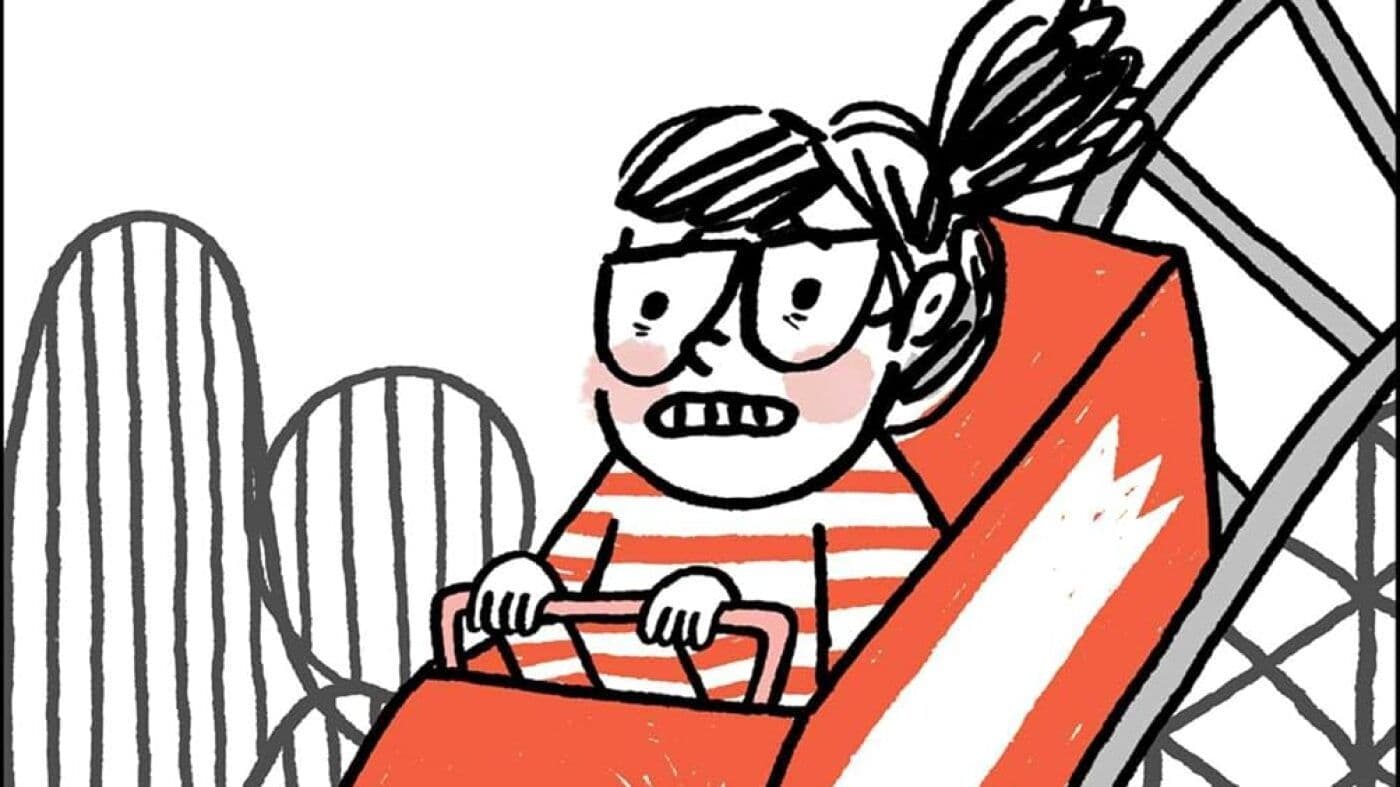
Her descent pulls her down what she illustrates as a rickety wooden rollercoaster into a place she calls "The Abyss" — a state of deep exhaustion and hopelessness. Eventually, sitting on the floor in tears next to her husband, she admits she needs professional help. He agrees without hesitation, and together they head to the hospital.
This crisis point is where Anxietyland begins — but it is far from where Correll's story with anxiety actually starts.
Riding the Worry-Go-Round Since Childhood
To tell the full story, Correll rewinds to her earliest years, guiding readers through the origins of what she simply calls "The Bad Feeling" — a constant, gnawing sensation that has shadowed her since childhood. In her illustrations, The Bad Feeling takes physical form as a sickly pink blob bristling with sharp teeth, claws, and cruel eyes. It looms over her, whispering nasty things designed to keep her frightened and small.
The theme park metaphor runs throughout the book with sharp wit. Correll's imaginary Anxietyland features attractions such as:
- The Emotional Roller Coaster — unpredictable, nauseating, and impossible to exit
- The Worry-Go-Round — a relentless cycle of obsessive thought
- The House of No Fun — self-explanatory and deeply familiar to anxiety sufferers
And yes, there are clowns. Plenty of them — and they emerge, horrifyingly enough, from a therapist's office.
As a child, Correll struggled to fit in and make friends. She was labeled over-sensitive, shy, and even a freak. Every unkind word became fuel for The Bad Feeling. She became hyper-vigilant, constantly worried about the safety of her beloved cat Oliver and countless other imagined dangers.
Young Adulthood and Burying the Pain
The memoir moves into Correll's young adult years, where she faces the ordinary pressures of college, relocation, and financial independence — all amplified through the distorted lens of untreated anxiety. She experiments with therapy but finds little relief, so she does what many people do: she buries The Bad Feeling under layers of alcohol and obsessive work. It is a temporary fix, a bandage stretched over something that desperately needs surgery.
Finding Words for the Feeling
The story eventually returns to the present, where the hospital visit becomes a turning point. Correll connects with an outpatient mental health clinic and begins learning how to actually manage her condition rather than simply survive it. For the first time, The Bad Feeling has proper names: Anxiety and Panic Disorder.
Through the clinic, she acquires genuine coping tools, processes years of accumulated emotional weight, builds new friendships, and begins medication. The journey is not dramatic or instantaneous — it is slow, unglamorous, and real.
Art That Contradicts the Chaos Within
One of the most striking aspects of Anxietyland is the contrast between Correll's polished artistic voice and the turbulent inner world she describes. Her linework is precise and confident, her characters vivid and expressive, and her dialogue sharp and witty. Reading it, you might initially struggle to believe this is the work of someone who spent years barely holding herself together.
But that tension is precisely the point. As many anxiety sufferers know all too well, the face we present to the world and the storm raging inside us are often completely disconnected. Correll's willingness to expose that gap makes Anxietyland feel profoundly honest.
Not a Self-Help Book — Something Better
Readers hoping for a structured guide to overcoming anxiety may find themselves wanting more from the book's final chapters. Correll does not position Anxietyland as a manual for recovery, and it would be a mistake to approach it as one. It is, instead, a story — one about perseverance, self-perception, and the deeply human need to be accepted exactly as you are.
In the book's closing pages, Correll writes a letter to her younger self. Her message is measured and honest: anxiety cannot be completely eliminated, but it can be managed. Through her art, her therapy, and her willingness to share her experience publicly, Correll has not only learned to cope — she has built a powerful creative voice that continues to resonate widely in the cartooning world.
For anyone who has ever felt unseen in their struggle with anxiety, Anxietyland offers something genuinely valuable: the simple, reassuring knowledge that you are not alone.