How Unpaid Health Workers Helped Prevent a Global HIV Treatment Crisis
Despite devastating U.S. aid cuts, HIV treatment levels have held steady worldwide — thanks in large part to unpaid community health workers like Uganda's Harerimana Ismail.
The Man Who Kept Working Without a Paycheck
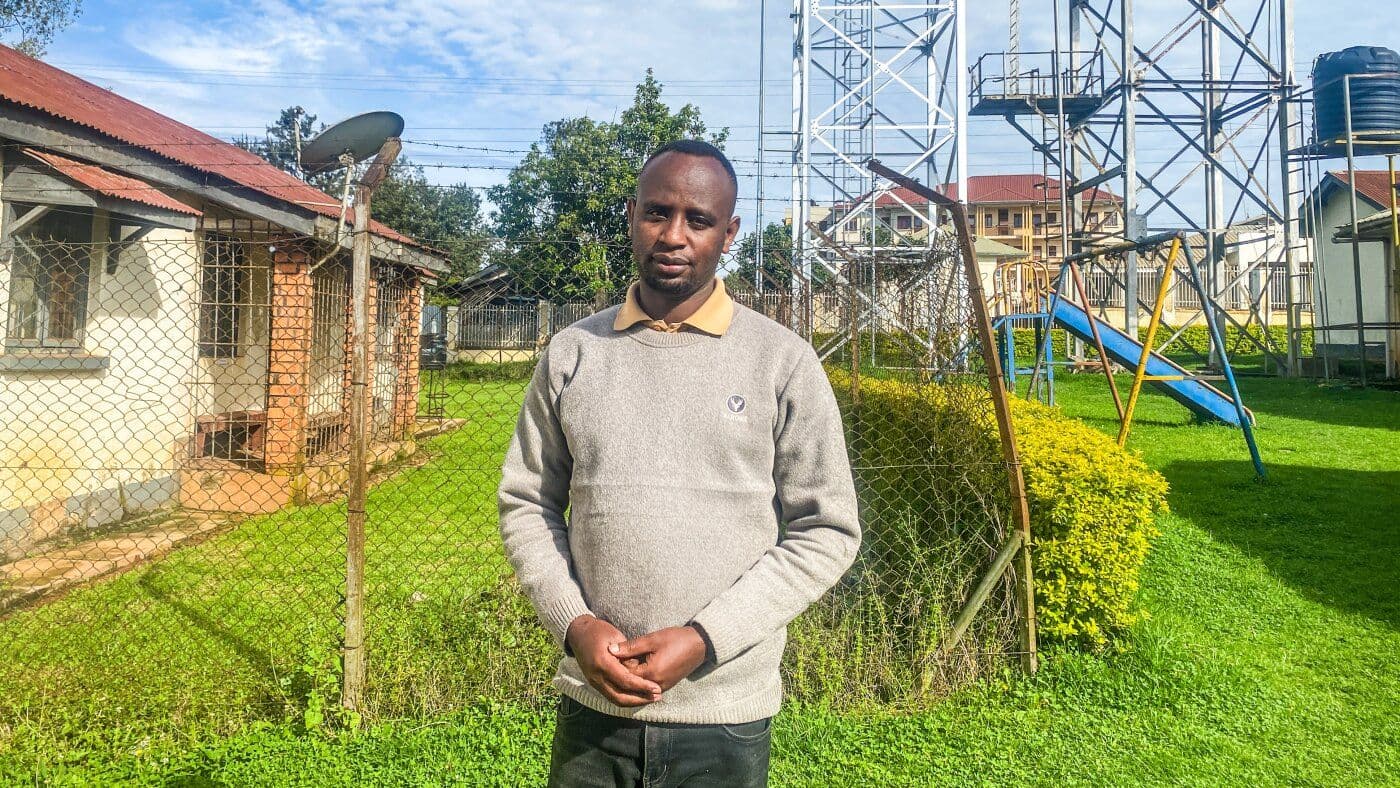
For more than a year, Harerimana Ismail has gone without a salary. Yet every day, the 32-year-old community health worker from Kabale District in southwestern Uganda continues making his rounds — knocking on doors, checking in on children living with HIV, and making sure they are still taking their medications.
Ismail lost his income when the Trump administration enacted sweeping foreign aid cuts in January 2025, effectively halting nearly all U.S.-funded international assistance programs. His monthly stipend of roughly $50 — funded through a U.S. government grant supporting his work at the Kabale Regional Referral Hospital — disappeared overnight. He had been doing this work for eight years.
Still, he hasn't stopped.
"There is not any stipend or salary that I'm paid," says Ismail, who himself was born with HIV, having contracted the virus from his mother at birth. "It's just because I understand the pain young people living with HIV pass through — that's why I remain."
Today, Ismail survives largely on vegetables from his garden. He sells Irish potatoes to cover his rent and has lost 15 pounds over the past year. To visit patients in the surrounding hills — distances too far to walk and too expensive to travel by hired motorcycle — he borrows a bicycle.
A Crisis That Was Feared but Partially Averted
When the U.S. government froze foreign aid and issued stop-work orders early in 2025, health experts sounded the alarm. Warnings of catastrophic consequences for global HIV treatment programs spread quickly through the public health community. Millions of people receiving lifesaving antiretroviral therapy appeared to be at risk.
But new preliminary data tells a more nuanced story.
According to figures that briefly appeared on a U.S. government website before being taken down, global HIV treatment levels at the end of the 2025 reporting period were roughly equal to those recorded a year earlier. Of the more than 20 million people whose HIV treatment the U.S. supports, only about 100,000 fewer individuals were on medication compared to the previous reporting cycle. Treatment numbers dipped by approximately 23% in March 2025 but rebounded strongly, finishing the year down by just 2%.
"The most severe outcomes that we were concerned about haven't come to pass," said Jeff Imai-Eaton, an associate professor of epidemiology at the Harvard T.H. Chan School of Public Health.
The State Department confirmed to NPR that treatment levels remained largely stable, attributing any apparent dip to temporary reporting issues rather than actual disruptions in care. The department also stated it expects to resume regular data reporting going forward.
Three Reasons the Numbers Held
Experts point to three interconnected factors that helped prevent the worst-case scenario from unfolding.
1. The U.S. Restarted Some Critical Programs
Following the initial stop-work orders, the Trump administration reversed course on certain programs classified as directly life-saving. Officials within the U.S. HIV/AIDS program worked to ensure that essential medications continued reaching recipient countries.
"The U.S. government did realize the potential impact of the stop work order," noted Mary Mahy, director of data and evidence at UNAIDS, the Joint United Nations Programme on HIV and AIDS. "People in place in Washington were able to communicate: 'We need to get the drugs to countries and then allow the countries to distribute.'".
2. Governments in Affected Countries Stepped Up
Nations that had been relying on U.S. aid moved quickly to fill funding and service gaps wherever possible. Ministries of Health redirected resources and prioritized HIV treatment programs under enormous pressure.
"The efforts by Ministries of Health to reprioritize and sustain services was pretty heroic," said Imai-Eaton.
3. Community Health Workers Refused to Walk Away
Perhaps the most powerful force sustaining HIV treatment levels has been the quiet dedication of frontline workers like Ismail — individuals who continued showing up, without pay, because they understood what was at stake.
"Communities just saying: 'It doesn't matter if we don't get paid, we need to reach out to these people and make sure that they're getting their medications,'" said Mahy.
Multiple HIV specialists interviewed on the topic cited the selflessness of community health workers as a decisive factor in keeping treatment numbers from falling further.
The U.S. Legacy in Fighting HIV — and a Data Blackout
For decades, the United States has been the single largest funder of the global HIV/AIDS response, channeling more than $110 billion into the effort and, by some estimates, saving 26 million lives. A significant part of that contribution involved collecting and publishing rigorous data — tracking testing rates, treatment coverage, and outcomes across dozens of countries.
"It really was a gold standard for collecting data on a regular basis and sharing it transparently — and then using that data to really inform decision making," explained Ramona Godbole, former deputy director of policy, planning and programs at the now-defunct U.S. Agency for International Development.
That transparency has largely disappeared over the past year. The government stopped releasing HIV program data as aid cuts took effect, leaving researchers and health organizations working in the dark.
"It has really been a black box. There has been no new data released," Godbole said.
The preliminary figures that surfaced briefly online — before being removed from the government website without explanation — were seen as broadly consistent with data gathered independently by other international organizations.
"It complements quite well the data that we've received from countries," said Mahy of UNAIDS.
Serious Concerns Remain Beneath the Surface
While treatment numbers have largely held, a closer look at the broader HIV landscape reveals significant warning signs.
The number of people receiving HIV testing and counseling supported by U.S. funding dropped from over 80 million at the end of 2024 to just under 70 million a year later — a decline of roughly 10 million people. Prevention programs and peer support groups have shuttered across multiple countries. Health workers report that the quality of care has deteriorated noticeably.
Ismail himself notes that some of the patients he visits are dealing with expired medications due to supply chain breakdowns. Hospital wait times for HIV medication pickups, he says, have stretched from four to nine hours.
Charles Kenny, a senior fellow at the Center for Global Development who was among the experts who issued early warnings about the aid cuts, acknowledged that the preliminary data offers some relief — while emphasizing that serious problems persist.
"If this data is right, we are in a better place than I thought we would be, even though we're still in a really bad place," Kenny said.
A Reminder of What's at Stake
The story of Harerimana Ismail is, in many ways, the story of the global HIV response in microcosm — a system held together not just by funding and policy, but by the moral commitment of individuals who refuse to abandon vulnerable people, even when the institutional support around them collapses.
For now, the numbers suggest the crisis has been managed. But experts are clear: the structural damage caused by aid cuts has not been undone, and the path ahead remains uncertain for millions of people living with HIV around the world.