How to Calculate Your Ideal Daily Protein Intake Based on Your Body and Lifestyle
Protein needs aren't the same for everyone. Learn how to calculate your personalized daily intake based on weight, age, and activity level.

Why Protein Is More Personal Than You Think
Updated federal dietary guidelines now recommend higher daily protein consumption than previous standards suggested. Yet despite the headlines and the marketing buzz surrounding high-protein diets, nutrition science is clear on one thing: there is no universal protein target that works for everyone.
Your ideal protein intake depends on a combination of factors — your body weight, how physically active you are, and where you fall on the age spectrum. Here's how to cut through the noise and determine what your body actually needs.
What Protein Does for Your Body
Protein is far more than just a muscle-building nutrient. Your body depends on it to repair tissues, produce digestive enzymes, and generate antibodies that keep your immune system functioning properly.
Rachele Pojednic, a scientist at Stanford University, explains that the body is constantly cycling through a process of breaking down old proteins and constructing new ones, using amino acids derived from the food you eat.
"Protein is the building block of skeletal muscle," Pojednic notes. "When you consume amino acids, they are broken down in your gastrointestinal tract, absorbed into the bloodstream, and then reassembled into virtually every tissue in your body."
Start With Your Body Weight
The most reliable starting point for calculating your protein needs is your current body weight. According to the latest dietary recommendations, the optimal target is 1.2 to 1.6 grams of protein per kilogram of body weight per day.
"This is the ideal range, and the research has supported it for quite some time," says Pojednic.
How to Do the Calculation
The math is straightforward:
- Take your weight in pounds and divide by 2.2 to convert it to kilograms.
- Multiply that number by 1.2 for the lower end of your target range.
- Multiply by 1.6 for the upper end.
For example, someone weighing 150 pounds converts to approximately 68 kilograms. That means their daily protein target falls between 82 and 109 grams.
What That Looks Like on a Plate
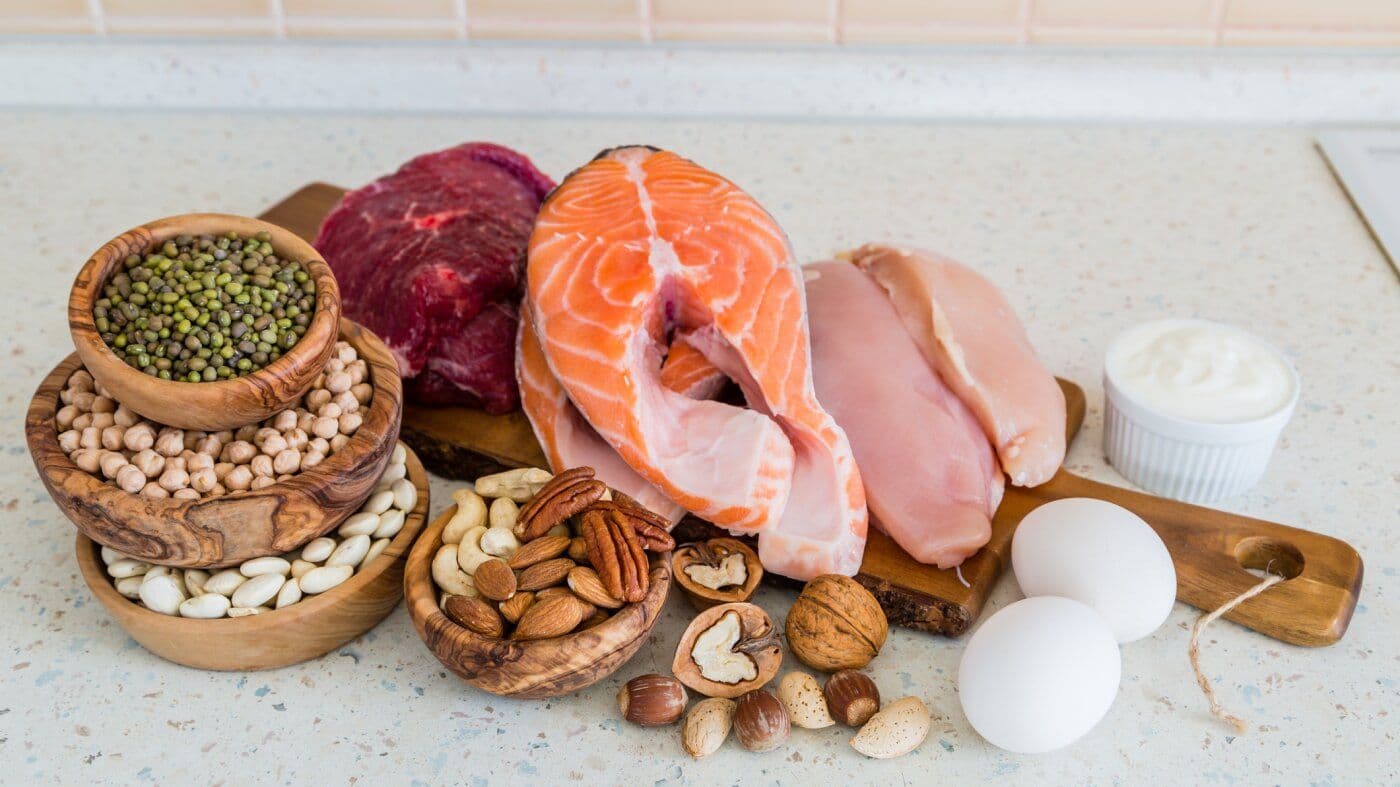
Hitting that target is more achievable than it might sound. A sample day might include:
- Breakfast: One cup of Greek yogurt (17–20g) with a handful of nuts (4–5g)
- Lunch: A cup of cooked lentils (approximately 18g)
- Snack: Almonds or hummus with vegetables (around 5g)
- Dinner: A 4-ounce chicken breast (approximately 35g)
That combination alone brings you close to or above the lower end of the recommended range.
Factor In Your Activity Level
If you exercise regularly, especially if your routine includes strength training, you should aim toward the higher end of the protein spectrum.
Stuart Phillips, a skeletal muscle health researcher at McMaster University, explains that physical activity is one of the most significant drivers of protein requirements. Exercise places stress on the muscles, increasing the rate at which they consume and utilize protein.
"When you eat more protein, your muscles can absorb more of it and synthesize more new muscle tissue," Phillips says. He adds that exercise essentially "sensitizes" muscles to protein, enhancing their ability to use amino acids for both growth and repair.
Don't Overlook the Age Factor
Muscle loss is a gradual process that typically begins in your 30s and 40s, though most people don't notice it until their 50s or 60s — when everyday tasks like lifting luggage or carrying groceries suddenly feel more difficult.
"Getting ahead of muscle loss requires both regular physical activity — particularly strength training — and adequate protein intake," Phillips says. "Exercise will slow muscle loss, and combining it with sufficient protein makes that effort even more effective."
This is especially relevant for women, who statistically consume less protein than men and are less likely to engage in strength training. Prioritizing both can significantly reduce the risk of age-related frailty and loss of functional strength.
One important reminder: protein alone will not build new muscle. Phillips is clear that it's the combination of exercise and adequate protein that produces meaningful results.
Animal vs. Plant Protein: Does the Source Matter?
The short answer is no — both animal and plant-based foods can fully meet your protein needs.
"The research shows unequivocally that you can obtain sufficient protein and all essential amino acids from either a plant-based diet or one that includes meat," Pojednic says.
Of the roughly 20 amino acids that make up proteins in the body, nine are considered essential, meaning your body cannot produce them independently. Animal products naturally supply all nine. Some plant foods — particularly soybeans, used to make tofu and tempeh — are also complete proteins.
Many other plant foods are considered incomplete proteins on their own, but eating a varied diet closes that gap. A mix of vegetables, whole grains, legumes, beans, and fruits throughout the day can supply all the essential amino acids your body requires.
A Few Important Caveats
- Kidney disease: People with chronic kidney disease may need to limit protein intake. Consult a healthcare provider before making significant changes.
- Saturated fat: If your protein sources include meat and dairy, monitor your saturated fat intake. Current guidelines recommend keeping it below 10% of total daily calories.
- Protein supplements: Powders and shakes can be a convenient option, but most people can meet their protein needs through a balanced, whole-food diet without supplementation.
Your Personalized Protein Plan
Putting it all together, your approach should be:
- Calculate your baseline using the 1.2–1.6g per kilogram formula.
- Adjust upward if you're physically active or prioritizing muscle maintenance as you age.
- Audit your current diet using a food database such as the USDA's nutrient tracker or a macro-tracking app.
- Focus on variety to ensure you're covering all essential amino acids, regardless of whether you eat meat or follow a plant-based diet.
Protein is a powerful nutritional tool — but only when your intake is calibrated to your individual needs, not borrowed from a generic recommendation or a marketing campaign.