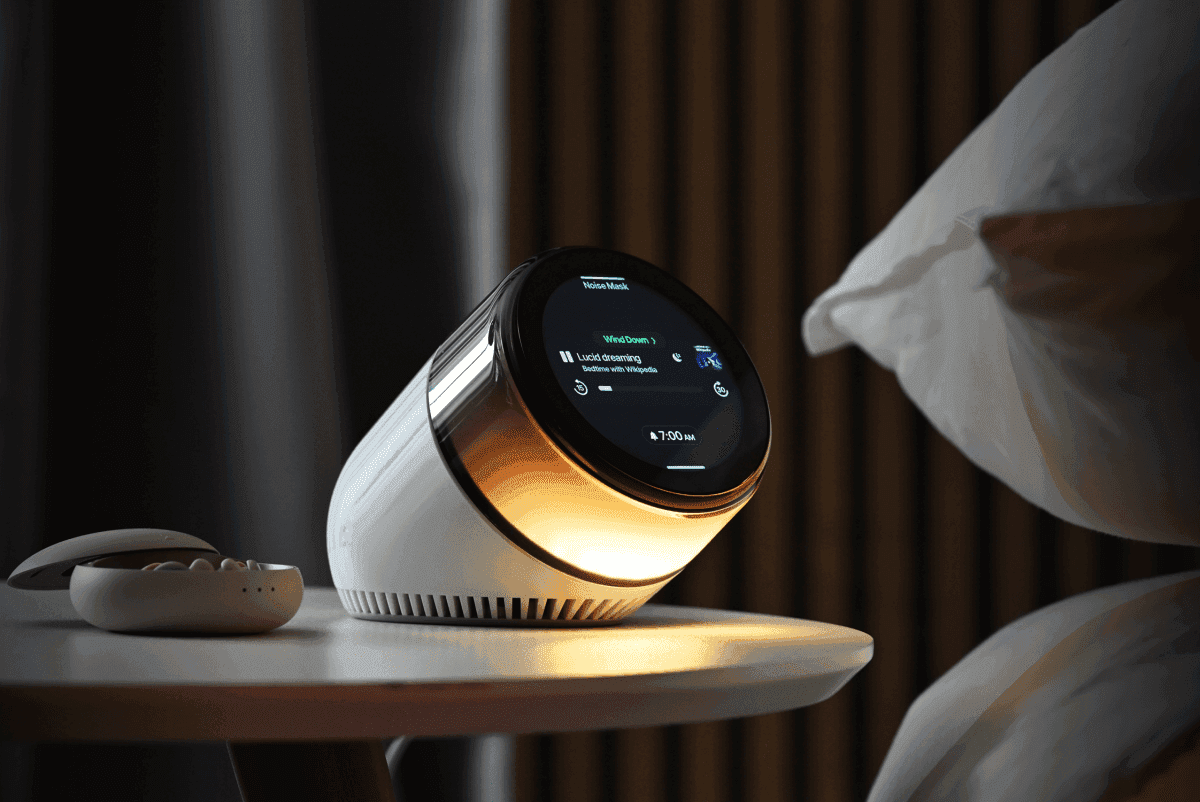
How the Dreamie Alarm Clock Finally Broke My Bedtime Phone Addiction
The Dreamie alarm clock does something no other sleep device dares to attempt — it plays podcasts. Here's how it changed one writer's sleep for good.

Breaking Free From the Bedside Phone Trap
Sleeping without a smartphone within arm's reach sounds like a modest achievement. Yet for millions of people, it might as well be climbing Everest barefoot. That was precisely my situation — until the Dreamie alarm clock entered my life and quietly dismantled a decade-long dependency I didn't fully realize I had.
I'll be the first to admit that needing a $250 gadget to stop scrolling in bed is not exactly a heroic story. But if you've ever found yourself opening Instagram at 2 a.m. when you only meant to turn on a podcast, you already know exactly what I'm talking about.
Why Phones and Bedrooms Are a Terrible Combination
The science is clear: phone use before and during sleep disrupts rest quality, and poor sleep cascades into problems with mental health, focus, physical wellbeing, and mood. I've known this for years. I've read the articles, nodded at the advice, and then placed my phone on my nightstand anyway — every single night for more than a decade.
Over time, I did manage to build one genuinely healthy bedtime habit: reading before sleep. It helps me decompress and signals to my brain that the day is winding down. But even with a book in hand, my phone was never far away. On the nights when my mind simply refused to quiet down, the only reliable solution was closing my eyes and listening to a podcast or audiobook until consciousness slipped away.
The problem? Accessing those podcasts meant picking up my phone. And picking up my phone meant notifications. And notifications meant being wide awake for another two hours.
A survey of 2,000 American adults found that 87% keep their phones in their bedrooms at night. I was firmly embedded in that majority — and I needed something to change.
What Makes the Dreamie Different
The Dreamie alarm clock doesn't reinvent the wheel with elaborate biometric sensors or AI-powered sleep tracking. Its standout feature is almost disarmingly simple: it can play podcasts directly from the internet, no phone required.
Because podcasts are distributed through open RSS feeds, any developer can build a custom RSS-based application — and that's exactly what Dreamie does. The device connects to Wi-Fi, pulls your chosen podcast from the web, and plays it on demand. It's a quiet nod to one of the internet's most enduring open standards, one that streaming giants like Spotify have been steadily working to replace with closed, proprietary systems.
How the Dreamie Sleep System Works
Ambience Mode
In its most basic state, Dreamie functions as a standard bedside clock with a gentle ambient display. Nothing complicated, nothing overwhelming.
Wind Down Mode
This is where your nightly routine begins. You can program Dreamie to ease you toward sleep with a combination of soothing sounds and warm lighting. My personal setup features the soft crackling of a fireplace paired with a dim, flickering orange glow — running for roughly 25 minutes while I read. It's a remarkably effective way to signal to your body that sleep is approaching.
Noise Mask Mode
Once the wind-down period ends, Dreamie transitions to a continuous background soundscape. I use a thunderstorm setting, which plays through the night until the morning routine begins. If sleep arrives early, you can manually trigger this mode whenever you're ready.
Sunrise Alarm
Rather than jolting you awake with a harsh buzzer, Dreamie gradually brightens a simulated sunrise light, easing you out of sleep naturally before the alarm tone sounds.
Back to Sleep Mode — The Star of the Show
This is the feature that genuinely changed my nights. If you wake up at 3 a.m. with a restless mind, a simple downward swipe activates "back to sleep" mode. You can choose from a built-in breathing exercise, an ambient soundscape, or — crucially — any podcast episode you've selected in advance.
The key detail here is the pre-selection. You choose your podcast before you go to bed, so there's no bleary-eyed scrolling through menus in the dark. You swipe, the audio begins, and your brain has something to follow other than its own anxious chatter. For those sharing a bed with a partner, Dreamie is also Bluetooth-compatible with wireless headphones, keeping your midnight listening private.
The Real-World Impact on Sleep
Before Dreamie, my middle-of-the-night routine looked like this: wake up, reach for phone, intend to open a podcast app, notice a notification, open that notification, and then spend the next two hours falling deeper into a rabbit hole I never meant to enter. My own impulse control was the problem — but Dreamie elegantly removed the temptation from the equation entirely.
The mornings improved too. Without my phone on the nightstand, I wasn't spending 30 minutes scrolling before getting out of bed. I was simply getting up, starting my day, and functioning like someone who had actually slept.
Where Dreamie Falls Short
No device is without its limitations, and honesty demands acknowledging them.
Audiobooks remain a gap in Dreamie's capabilities. Apps like Libby or Libro.fm aren't supported, and there's currently no way to upload downloaded audio files directly to the device. For those who rely on audiobooks as their primary sleep aid, this is a meaningful limitation. Podcast support is excellent; audiobook support is essentially nonexistent.
During testing, there were nights when I bypassed Dreamie entirely and reached for my phone to listen to something specific that wasn't available as a podcast. Once the phone was in my hand, old habits crept back in. Dreamie is a powerful tool, but it works best when you commit to its ecosystem.
How Does It Compare to the Brick?
Toward the end of the review period, I also tested a device called the Brick — a $59 gadget designed to block all apps on your smartphone except the ones you explicitly allow, such as podcast or audiobook players. At less than a quarter of Dreamie's price, it's a compelling alternative for anyone who wants to curb phone use without removing it from the bedroom entirely.
But there's a philosophical difference worth considering. With the Brick, your phone is still your phone — it's still the last thing you see before closing your eyes. With Dreamie, your phone can live in another room entirely. For some people, that physical separation is exactly what makes the difference.
Is Dreamie Worth $250?
The price is steep for an alarm clock, no question about it. However, there are no subscription fees and no companion app required — the cost is a one-time purchase. The interface is clean and intuitive, borrowing familiar design cues from the standard smartphone clock app, so the learning curve is minimal even for less tech-savvy users.
If you are someone who genuinely struggles to keep your phone out of bed — and the data suggests most of us are — the Dreamie offers a thoughtfully designed solution that addresses the root of the problem rather than just treating the symptoms. It won't work miracles on its own, but paired with a willingness to change, it's a remarkably effective nudge in the right direction.
For the podcast-dependent, poor-sleeping, notification-addicted among us, Dreamie might be the most practical $250 you spend on your health this year.