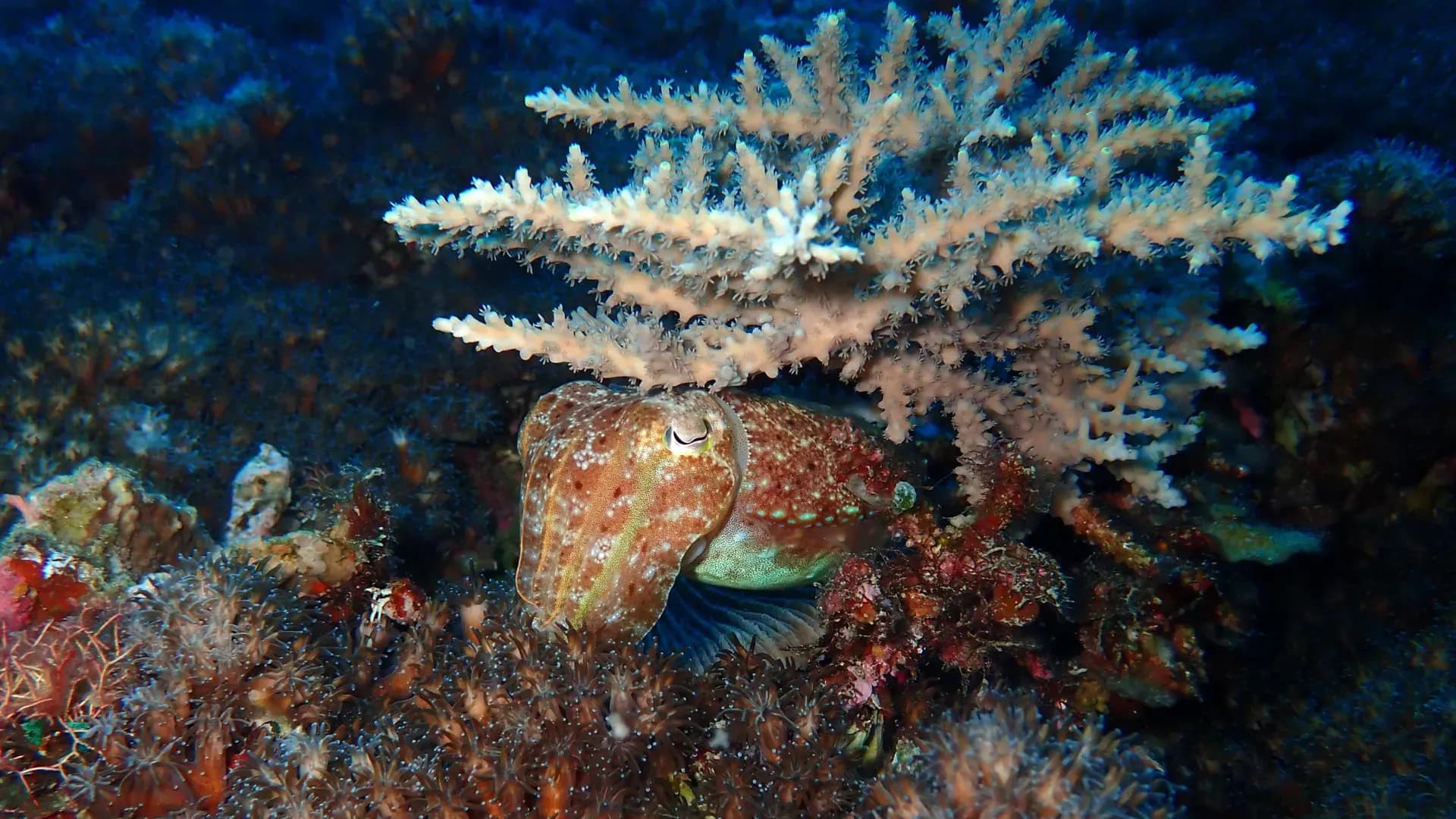
How Squid Outlasted Earth's Greatest Mass Extinction to Dominate the Oceans
New genomic research reveals how squid and cuttlefish survived catastrophic extinction by hiding in deep-sea refuges—then exploded into thousands of species.

The Ancient Survivors Hiding in Plain Sight
Squid and cuttlefish are among the ocean's most captivating creatures—capable of shifting colors in milliseconds, propelling themselves with jet-like precision, and demonstrating intelligence that continues to astonish researchers. Yet for all their visibility in today's oceans, their evolutionary past has remained stubbornly obscure. Now, a landmark study has finally shed light on how these remarkable animals came to be—and how they managed to survive one of Earth's most devastating catastrophes.
Published in Nature Ecology & Evolution, the research from scientists at the Okinawa Institute of Science and Technology (OIST) combines three newly sequenced squid genomes with extensive global datasets to construct the most comprehensive evolutionary timeline of decapodiform cephalopods—the ten-limbed group that includes squid and cuttlefish—ever assembled.
Cracking a Decades-Old Evolutionary Mystery
Scientists have long struggled to trace the ancestry of squid and cuttlefish. Their fossil record is frustratingly sparse, and their genomes are notoriously complex—often reaching twice the size of the human genome—making sequencing and analysis a formidable technical challenge.
"Squid and cuttlefish are remarkable creatures, yet their evolution has been notoriously difficult to study," said Dr. Gustavo Sanchez, Staff Scientist in OIST's Molecular Genetics Unit and lead author of the study. "The question of their ancestry has been under investigation for decades, and many research groups have proposed different evolutionary hypotheses. With our new genomic information, we have been able to resolve some of the mysteries surrounding their origins."
Previous attempts to map decapodiform evolution were hampered by limited datasets and conflicting signals from different morphological and molecular sources. Whole-genome sequencing has now provided a far cleaner and more reliable foundation for understanding how these animals are related to one another.
Building the First Genome-Based Evolutionary Tree
Over five years, the OIST team collaborated with researchers worldwide—including through the Aquatic Symbiosis Genomics Project, supported by the Wellcome Sanger Institute—to sequence genomes from nearly every major lineage of decapodiformes. The result is the first evolutionary tree for this group built entirely from genomic data.
One particularly pivotal specimen was the elusive ram's horn squid (Spirula spirula), a deep-sea dweller whose unusual spiral internal shell had long misled scientists into placing it too close to cuttlefish on the evolutionary tree. Co-author Dr. Fernando Á. Fernández-Álvarez of the Spanish Institute of Oceanography had long suspected that sequencing this species would be transformative. "I believed this genome could help close a key gap and bring clarity to the broader evolutionary questions of cephalopods," he explained—and the data proved him right.
Collecting the necessary samples was itself a major undertaking. Many squid species inhabit remote tropical reef systems or the poorly explored deep sea, making fresh DNA samples difficult to obtain. The team was fortunate to find several key species near their base in Okinawa's Ryukyu Archipelago, while international collaborators supplied access to rarer specimens.
A Deep-Sea Origin Over 100 Million Years Ago
By integrating genomic evidence with the fossil record, the researchers pieced together both the chronology and the ecological backdrop of squid and cuttlefish evolution. Their findings point to a deep-ocean origin, with the major decapodiform lineages diverging from one another approximately 100 million years ago during the mid-Cretaceous period.
This deep-sea birthplace left lasting marks on the group's biology. Most decapodiform species share some form of internal shell—ranging from the rounded cuttlebone of cuttlefish to the thin, blade-like gladius of many squid—a feature the researchers believe reflects their ancient deep-water heritage. Some shallow-water species have since lost the shell altogether, but its persistence across so many lineages speaks to its deep evolutionary roots.
Surviving the End-Cretaceous Catastrophe
Approximately 66 million years ago, the Cretaceous-Paleogene (K-Pg) mass extinction event wiped out roughly three-quarters of all species on Earth, including the non-avian dinosaurs. The ocean surface became a hostile environment—battered by acidification, temperature swings, and oxygen depletion. Yet the ancestors of modern squid and cuttlefish endured.
The researchers believe these early cephalopods found sanctuary in oxygen-rich pockets of the deep ocean, far from the chaos unfolding at the surface. "The sea surface would have been a very harsh environment for cephalopods," Sanchez noted. "Intense ocean acidification in shallower waters would also likely have degraded their shells, so the fact that some form of this feature has been retained throughout their evolutionary history is evidence of their deeper oceanic origins."
The 'Long Fuse' Explosion That Shaped Modern Oceans
What followed the extinction event is perhaps the most striking chapter in the squid and cuttlefish story. For tens of millions of years after the initial lineage splits in the Cretaceous, evolutionary change was slow and measured. Then, as Earth gradually recovered and coral reef ecosystems began to re-establish themselves in shallow waters, something remarkable happened: diversification accelerated dramatically.
New habitats opened up, and squid and cuttlefish lineages poured into them, rapidly evolving to exploit the changing seascape. Scientists describe this pattern as a "long fuse" model—a prolonged period of evolutionary stability followed by a sudden, explosive burst of diversification.
"Following the initial lineage splits in the Cretaceous, we don't see much branching for many tens of millions of years," said Sanchez. "However, in the K-Pg recovery period, we suddenly see rapid diversification, as species adapt and evolve to new and changing ecosystems. This is an example of a 'long fuse' model—a period of limited change followed by an explosion of diversity."
What This Means for Future Cephalopod Research
Beyond resolving evolutionary timelines, the newly assembled genomes open exciting doors for investigating the molecular basis of the traits that make squid and cuttlefish so extraordinary.
"Squids and cuttlefish have so many unique features compared to other animal groups, making them an endless source of inspiration for scientists," said Professor Daniel Rokhsar, head of the OIST Molecular Genetics Unit. "With these genomes and a clear picture of their evolutionary relationships, we can make meaningful comparisons to uncover the molecular changes associated with major cephalopod innovations—from the emergence of novel organs and dynamic camouflage to the neural complexity that supports their remarkable behavior."
From their quiet origins in the ancient deep sea to their current reign across the world's oceans, squid and cuttlefish have proven themselves to be among evolution's most resilient and inventive success stories. This new research ensures that scientists are only just beginning to understand how they got there.