How Runway Is Challenging Google and Redefining the Future of AI
Once a tool for indie filmmakers, Runway has evolved into one of AI's boldest players — betting that video, not language, holds the key to true machine intelligence.
From Film School to the AI Frontier
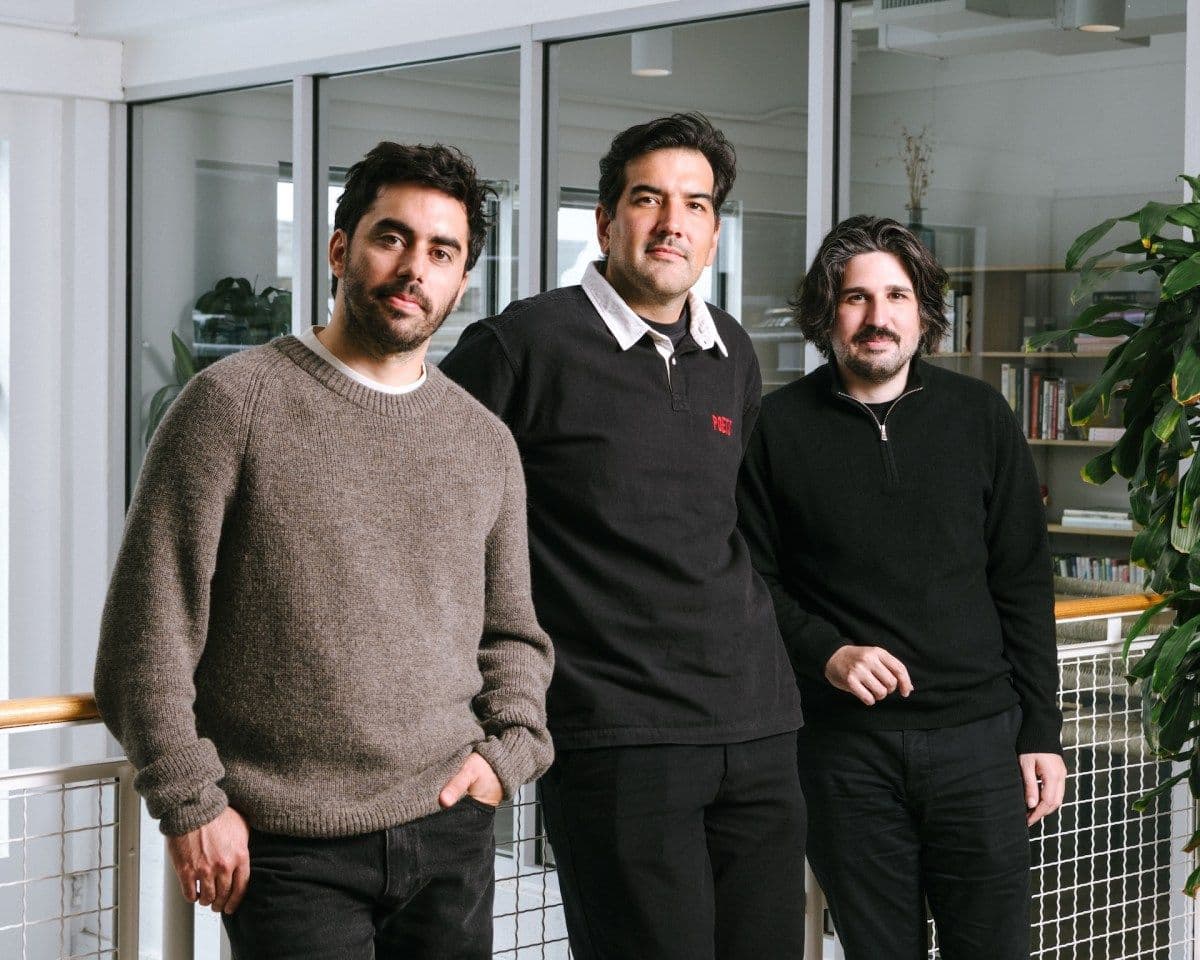
Runway doesn't fit the standard Silicon Valley mold. There are no Stanford dropouts among its founders, no former Google engineers, and no massive seed funding that allowed the company to sidestep revenue pressure for years. Instead, the three co-founders — two from Chile and one from Greece — crossed paths at NYU's Tisch School of the Arts and quietly built something remarkable from New York City.
Yet despite its unconventional origins, Runway has emerged as one of the most closely watched artificial intelligence companies in the world — not simply for what it has already created, but for the far more ambitious vision it is now pursuing.
Why Video, Not Language, May Be the Real Path to AI Intelligence
For years, the dominant assumption in AI development has been that intelligence is rooted in language. Flagship models like OpenAI's ChatGPT and Anthropic's Claude were built on that foundation, trained on vast oceans of human-written text.
Runway is placing a fundamentally different wager. Its founders believe the next leap in artificial intelligence won't emerge from text at all — it will come from video and so-called world models, systems capable of learning how physical reality actually operates rather than simply how people talk about it.
That distinction may sound theoretical. Its consequences are anything but.
The Case Against Language-Only AI
Runway co-founder and co-CEO Anastasis Germanidis argues that training AI models on observational data from the real world represents the next true frontier of the field. The companies that achieve it first, he contends, won't be those that mastered language.
"We're basically bound by our own understanding of reality," Germanidis explained during a conversation at Runway's sunlit headquarters near New York's Union Square. "Language models are trained on the entire internet — message boards, social media, textbooks — distilling existing human knowledge. But to get beyond that, we need to leverage less biased data."
Runway's Journey: From Creative Tool to Scientific Infrastructure
Founded in 2018, Runway initially made its name developing AI-powered video generation tools, including its current flagship model, Gen-4.5. These tools allow users to transform simple text prompts into polished, editable cinematic content.
Today, Runway's technology is embedded in professional production pipelines at film studios and advertising agencies alike. The company has secured partnerships with major media organizations including Lionsgate and AMC Networks, and its tools have contributed to acclaimed productions such as Everything Everywhere All At Once.
The company is now valued at $5.3 billion, and according to one of its founders, generated $40 million in new annual recurring revenue during the second quarter of 2026 alone.
Expanding Into World Models
Within the past six months, Runway has moved decisively beyond video generation. The company launched its first world model in December — AI systems sophisticated enough to simulate environments and predict how they will behave — and has additional releases planned for this year.
Runway is not the only player in this space. Startups Luma AI and World Labs are pursuing comparable goals, while Google has been developing its own Genie world model. Former Meta chief scientist Yann LeCun and AI pioneer Fei-Fei Li are also competing in this arena.
But Germanidis frames world models not merely as a product category — he sees them as foundational scientific infrastructure. The more diverse sensory data a single model is trained on, the closer it gets to functioning as a digital twin of the physical universe — a simulation you could run experiments on far faster than any physical laboratory allows.
"If we can build a better scientist than human scientists, we can accelerate progress in how we understand the universe and how we solve problems," Germanidis said.
The People Behind the Vision
Germanidis first discovered programming at age 11 in Athens. He arrived in the United States at 18 to study neuroscience and film, before returning to computer science and working at several Silicon Valley companies — an experience that left him disillusioned with the culture.
Co-CEO Cristóbal Valenzuela grew up in Santiago, Chile, studying economics before transitioning into film and eventually software. Chief Innovation Officer Alejandro Matamala Ortiz, also from Santiago, studied advertising and ran his own design firm.
The three met in 2016 at NYU's Interactive Telecommunications Program — a graduate course Valenzuela described as "an art school for engineers." All three had harbored filmmaking ambitions at various stages of their lives.
A Mission That Kept Evolving
Runway's original question was straightforward: could AI make everyone a filmmaker? After releasing their first video-generation model in early 2023, that mission sharpened into something more demanding — could AI make everyone a great filmmaker?
Pursuing that goal required expanding the team to 155 employees spread across offices in New York, London, San Francisco, Seattle, Tel Aviv, and Tokyo. Along the way, the founders realized the technology was revealing something larger about itself.
"Throughout this process, we learned that these models can understand how the world works," Matamala Ortiz noted. "And if you scale them, they can be useful for many other different things."
Those things now include robotics, drug discovery, and climate modeling. Runway launched a dedicated robotics division last year that Germanidis says has already produced real-world testing and deployments. His own long-term ambition for the technology extends to biological world models and anti-aging research.
The Competition and the Challenges Ahead
Whether Runway can successfully carry its leadership in AI video generation into the world model era remains an open question. The competitive landscape has grown formidable.
Kian Katanforoosh, CEO of AI benchmarking firm Workera and a lecturer at Stanford, notes that no one has yet demonstrated a proven leap from video intelligence to generalized reasoning through world models — but he doesn't dismiss the possibility. He does, however, flag a critical practical concern: compute access.
"How are you going to build a foundational model without a cluster?" Katanforoosh asked pointedly. "I don't think anybody can do that."
Runway has partnerships with CoreWeave and Nvidia and has raised $860 million in total funding, including a $315 million round in February backed by strategic investors including AMD Ventures and Nvidia. That funding puts it broadly in line with direct competitors — Luma AI has raised approximately $900 million and World Labs $1.29 billion — but far behind the industry's deepest pockets.
Google Looms Large
The most formidable threat on the horizon is Google. The tech giant's Veo model competes directly with Runway's core video generation business, while its Genie world model targets the same long-term territory Runway is racing toward. Alphabet, Google's parent company, carries a market capitalization of $4.86 trillion. OpenAI, another indirect competitor, has raised roughly $175 billion according to CEO Sam Altman.
For a company born out of an arts graduate program with no traditional Silicon Valley pedigree, the scale of that competition is stark. But Runway's founders have consistently framed their outsider status as a source of clarity rather than weakness — a perspective that has already taken them further than most expected.