How One Woman From Papua New Guinea Stood Up to a Mining Giant and Won
Theonila Roka Matbob grew up surrounded by devastation left behind by a copper and gold mine. Now she's a Goldman Prize winner fighting for justice.

A Rainforest Scarred by Industry — and One Woman's Fight to Restore It
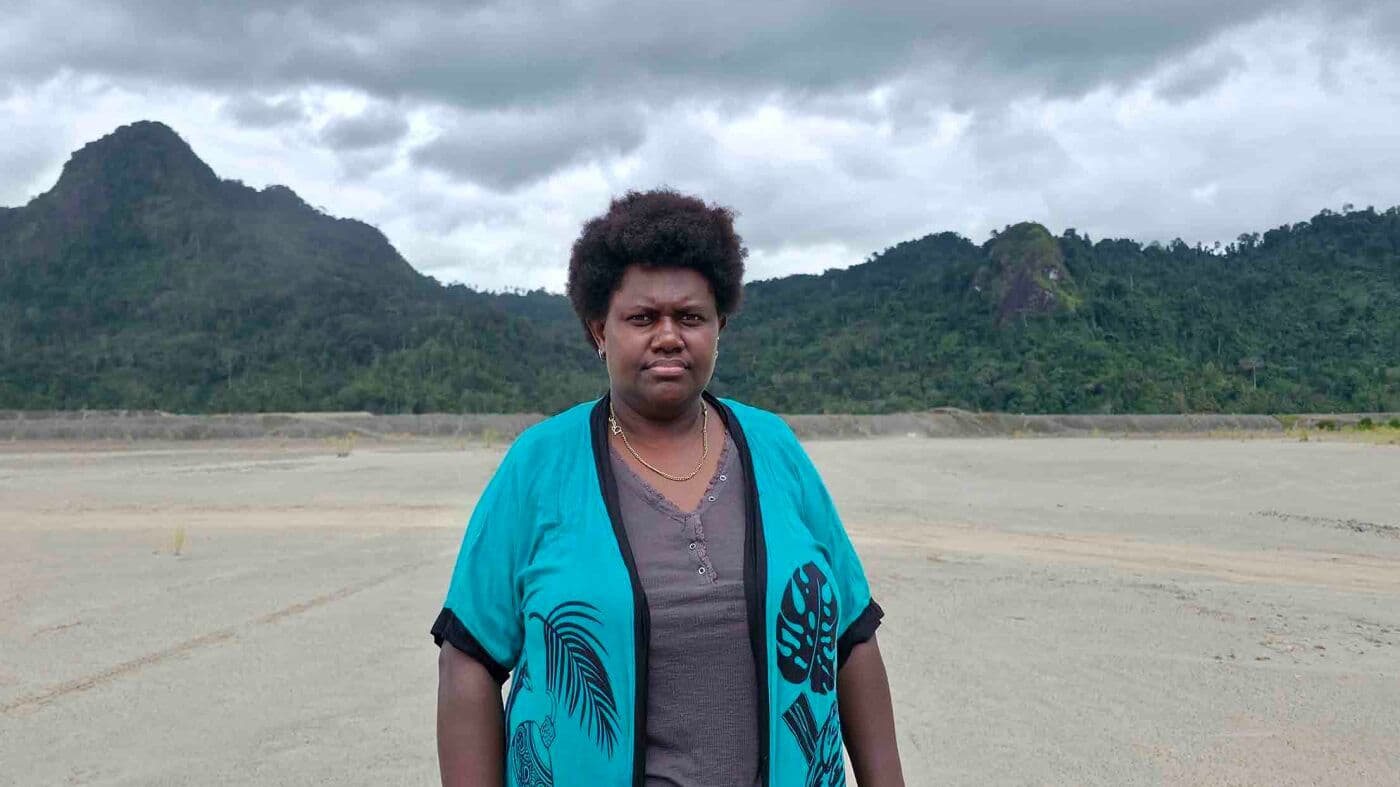
For most children, growing up near a lush tropical rainforest would mean climbing trees, swimming in clean rivers, and eating fresh fruit fallen from the branches overhead. For Theonila Roka Matbob, childhood meant something entirely different. Raised on the largest island in Papua New Guinea's Autonomous Region of Bougainville, she was surrounded not by thriving greenery but by barren rock and sand — a landscape stripped bare by decades of industrial mining.
Today, at 35 years old, Roka Matbob is being honored as one of the 2026 Goldman Environmental Prize winners — one of the most prestigious global recognitions for grassroots environmental activism. Each year, the prize celebrates one champion from each of the world's inhabited regions. Roka Matbob represents the island nations.
The Mine That Changed Everything
The source of her homeland's destruction is the Panguna copper and gold mine, developed and operated by Bougainville Copper Ltd., a subsidiary of Rio Tinto — one of the world's largest mining corporations, headquartered across Australia and the United Kingdom. Between 1972 and 1989, the mine extracted millions of tons of copper along with hundreds of tons of gold and silver from the Bougainville landscape.
But the environmental toll was catastrophic and enduring. Rivers became contaminated. The surrounding land was stripped of vegetation. Residents were warned from childhood to stay away from the water, avoid eating anything from the ground, and keep their distance from the riverbanks — though explanations were rarely offered.
"From our grandparents and parents, the advice you always get is: Don't go near the water. Don't go near the river. It is poisonous," Roka Matbob recalls. "And they don't tell you why."
As she grew older, she began searching for answers herself.
A Civil War, a Lost Father, and a Life in Survival Mode
The damage done by the Panguna mine extended far beyond the environment. The influx of outside labor and the export of profits to foreign shareholders created intense local resentment, ultimately igniting a violent, decade-long civil conflict. The armed uprising eventually evolved into a broader separatist insurgency. Thousands of lives were lost in the fighting.
Roka Matbob was personally touched by the violence. Just days before her third birthday, her father was abducted by an armed group and subsequently killed. Her mother and siblings were left to survive as best they could, moving from place to place in search of safety before eventually settling in a government-controlled camp.
"I was born into that broken environment," she says. "Growing up, it's a life on survival mode — permanently."
When the mine finally shut down amid the chaos, no remediation plan was put in place. The environmental contamination was simply left behind.
From Schoolyard Protests to International Legal Action
Roka Matbob's activism began in high school, where she organized protests to draw attention to the ongoing destruction of her community's land and health. Over the years, her efforts grew in both scale and impact.
Her most significant achievement came when she became the lead complainant in a landmark human rights case filed by the Human Rights Law Centre against Rio Tinto. The complaint demanded accountability for decades of environmental and social harm caused by the Panguna mine.
The outcome was historic. In 2021, Rio Tinto agreed to fund an independent environmental assessment of the impacted region. By 2024, the company had signed a memorandum of understanding committing to work directly with affected communities to address and remediate the damage.
"Theonila is leading a historic effort to obtain justice for decades of environmental and social devastation because of the Panguna mine," said Ilan Kayatsky of the Goldman Environmental Prize. "Her efforts have brought together a coalition intent on improving the lives of Bougainvilleans, today and into the future."
What Keeps Her Going
For Roka Matbob, the motivation to keep fighting is deeply personal and deeply cultural. As a member of the Indigenous Nasioi people and the Basikang clan, she belongs to a matrilineal tradition in which women are considered the guardians and protectors of the land.
"We women are the land guardians and keepers," she says proudly.
She also draws strength from motherhood. With two young children of her own, she refuses to accept passing on a poisoned environment to the next generation. "No mother would want to pass on to her child a broken, contaminated portion of the environment," she explains.
Her roots, too, play a role. In her culture, relocating to another tribal territory is not an option. The land her family occupies is the land her children and grandchildren will inhabit for generations. That permanence demands a permanent solution.
A Voice in Politics and Beyond
Roka Matbob has also carried her advocacy into the political arena, becoming one of very few women elected to Bougainville's House of Representatives. While she acknowledges that the political culture remains largely patriarchal, she sees her gender as a source of power rather than a barrier.
She points to a saying in her native language: it takes a woman's cry to start a fight, and a woman's tears to broker peace. In that tradition, her struggle for environmental justice is not just activism — it is a fulfillment of her role within her community.
As for the prize money that accompanies the Goldman award, Roka Matbob says that decision will not be hers alone to make. She and her community will determine together how best to use it.
Her story is a reminder that behind every legal victory and corporate concession, there is often a single determined individual who refused to stop asking why — and refused to stop demanding better.