How Mosquitoes Lock Onto Human Targets: New Flight Data Reveals the Science
Scientists have built the most detailed mathematical model of mosquito flight ever created, revealing exactly how these insects zero in on human hosts.
Scientists Crack the Code on Mosquito Hunting Behavior
For the first time, researchers have developed a precise mathematical model explaining how mosquitoes locate and approach human targets. A collaborative team from the Georgia Institute of Technology and the Massachusetts Institute of Technology used advanced statistical analysis to decode mosquito flight behavior — and the findings could transform how we design traps and prevent bites.
The team applied Bayesian inference, a statistical method that identifies the most probable explanation for observed data, to an enormous collection of recorded mosquito movements. The resulting model accurately replicates real-world mosquito behavior using fewer than 30 parameters, making it both powerful and remarkably efficient.
"The big question was, how do mosquitoes find a human target?" said Cheng-Yi Fei, a postdoctoral researcher at MIT. "There were previous experimental studies on what kind of cues might be important. But nothing has been especially quantitative."
The Largest Mosquito Flight Dataset Ever Collected
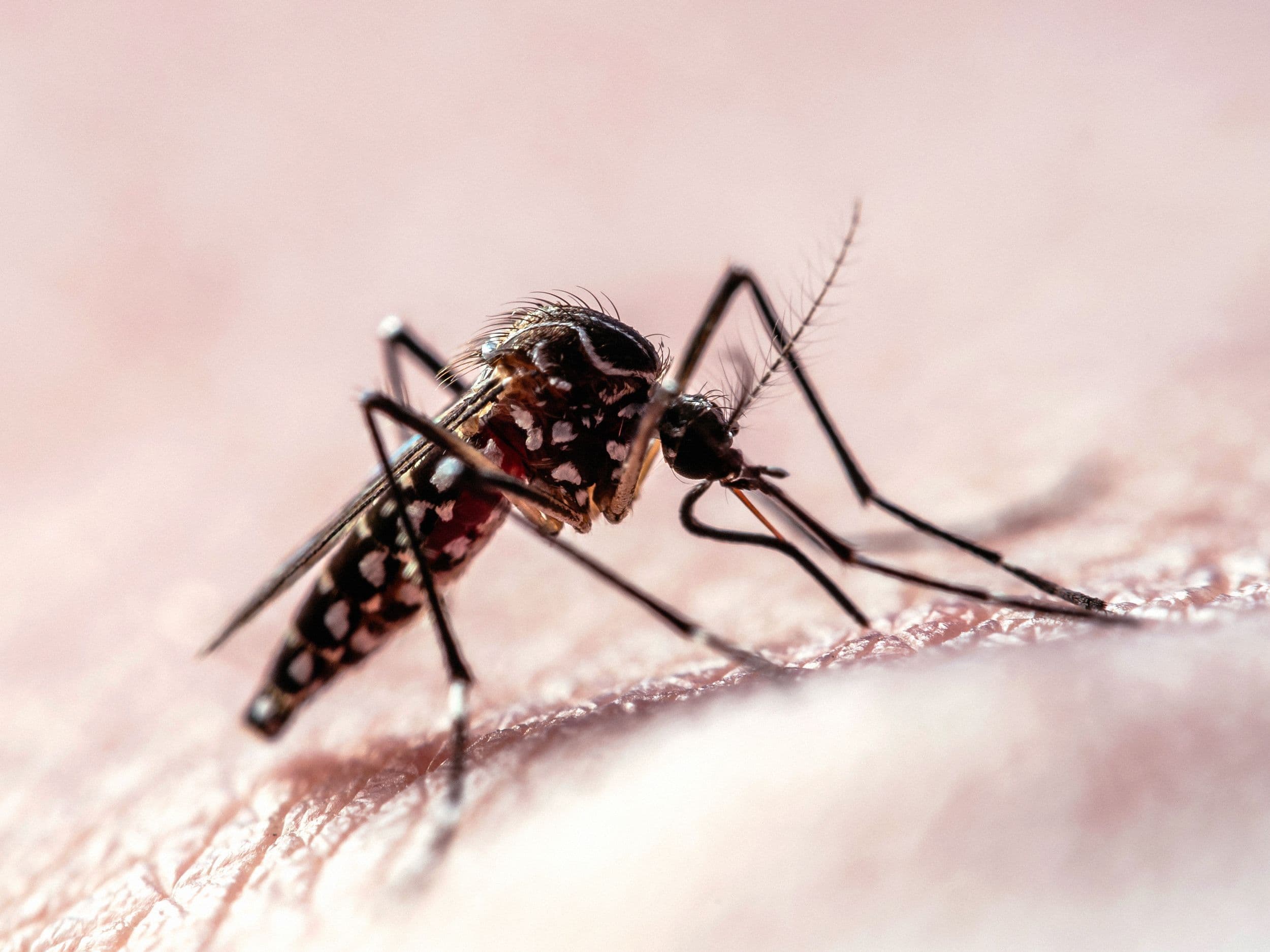
To gather data, researchers released pairs of female Aedes aegypti mosquitoes into a sealed chamber and tracked their every move using dual infrared cameras, capturing positions at 0.01-second intervals. Across 20 experiments, the team logged more than 53 million data points and over 400,000 individual flight paths — the largest dataset of its kind ever assembled for quantitative mosquito research.
Initial observations focused on mosquitoes flying around human subjects wearing dark clothing. A striking pattern emerged immediately: the mosquitoes consistently targeted the head area. This discovery became the foundation for the entire investigation.
Vision Plays a Bigger Role Than Expected
In a follow-up experiment, test subjects wore clothing that was black on one side and white on the other. Despite the fact that carbon dioxide and body odor were released equally from both sides of the body, mosquitoes overwhelmingly gravitated toward the darker side. In an environment without wind, this result clearly demonstrated that visual contrast is a critical factor in how mosquitoes identify potential hosts.
Two Distinct Modes of Mosquito Flight
By closely analyzing mosquito movement in a stimulus-free environment, researchers identified two clearly distinct behavioral states:
- Active mode: Mosquitoes moved energetically through the space at roughly 0.7 meters per second, actively scanning their surroundings.
- Idle mode: Mosquitoes glided with minimal thrust, a passive state most commonly observed near the ceiling of the test chamber and believed to represent a pre-landing phase.
How Mosquitoes Respond to Visual and Chemical Cues
When exposed to dark visual targets, mosquitoes slowed noticeably upon approaching within approximately 40 centimeters. However, without additional signals such as body odor, heat, or humidity, the insects frequently retreated without making contact. This confirms that vision alone is not enough to trigger a landing or a bite.
Carbon dioxide triggered a markedly different reaction. As mosquitoes entered within roughly 40 centimeters of a CO2 source, they dramatically reduced their speed to around 0.2 meters per second and began flying in erratic, directionless patterns. Simulations showed that mosquitoes can detect carbon dioxide concentrations as low as 0.1 percent, with a detection range extending about 50 centimeters from the source.
When Senses Combine, Attraction Intensifies
The most significant behavioral shift occurred when visual and chemical cues were presented together. Under these combined conditions, mosquitoes began orbiting the target in circular patterns, and far more individuals converged near the stimulus compared to either cue presented alone.
Critically, this combined response could not be replicated by simply adding the individual reactions together in the model. This suggests that the mosquito brain integrates multiple sensory inputs in a complex, interactive way — not as separate, independent signals.
Why Mosquitoes Are Drawn to the Human Head
To validate their model's predictive power, researchers simulated a scenario using a subject in white clothing with a dark hood — essentially a "dark sphere emitting carbon dioxide" — and compared model predictions against actual mosquito distributions. The model successfully predicted mosquito density around the head with high accuracy.
This makes biological sense: the human head tends to appear darker than other body parts in certain lighting conditions and is also a significant source of exhaled carbon dioxide. It is, in effect, a convergence point for two of the most powerful mosquito-attracting signals.
Quantifying Bite Risk
Researchers also measured how close mosquitoes came to a target under different stimulus conditions, using the distance at which 50 percent of flight paths converged as a risk benchmark:
- No stimulus: approximately 65 cm
- Visual stimulus only: approximately 40 cm
- Carbon dioxide only: approximately 25 cm
- Visual + carbon dioxide combined: approximately 20 cm
The data makes clear that layering multiple sensory stimuli dramatically increases the likelihood of a close approach — and ultimately, a bite.
Practical Applications: Smarter Mosquito Traps
The mathematical model developed in this research opens the door to computer-based design and optimization of mosquito traps before any physical prototype is built. Researchers also believe the framework can be extended to other mosquito species, including Anopheles mosquitoes, which are responsible for transmitting malaria.
"Our work suggests that mosquito traps need specifically calibrated, multisensory lures to keep mosquitoes engaged long enough to be captured," said MIT professor Jorn Dunkel.
The team has also released an interactive web application that allows users to explore the flight models generated from the study — putting cutting-edge mosquito science directly in the hands of the public.