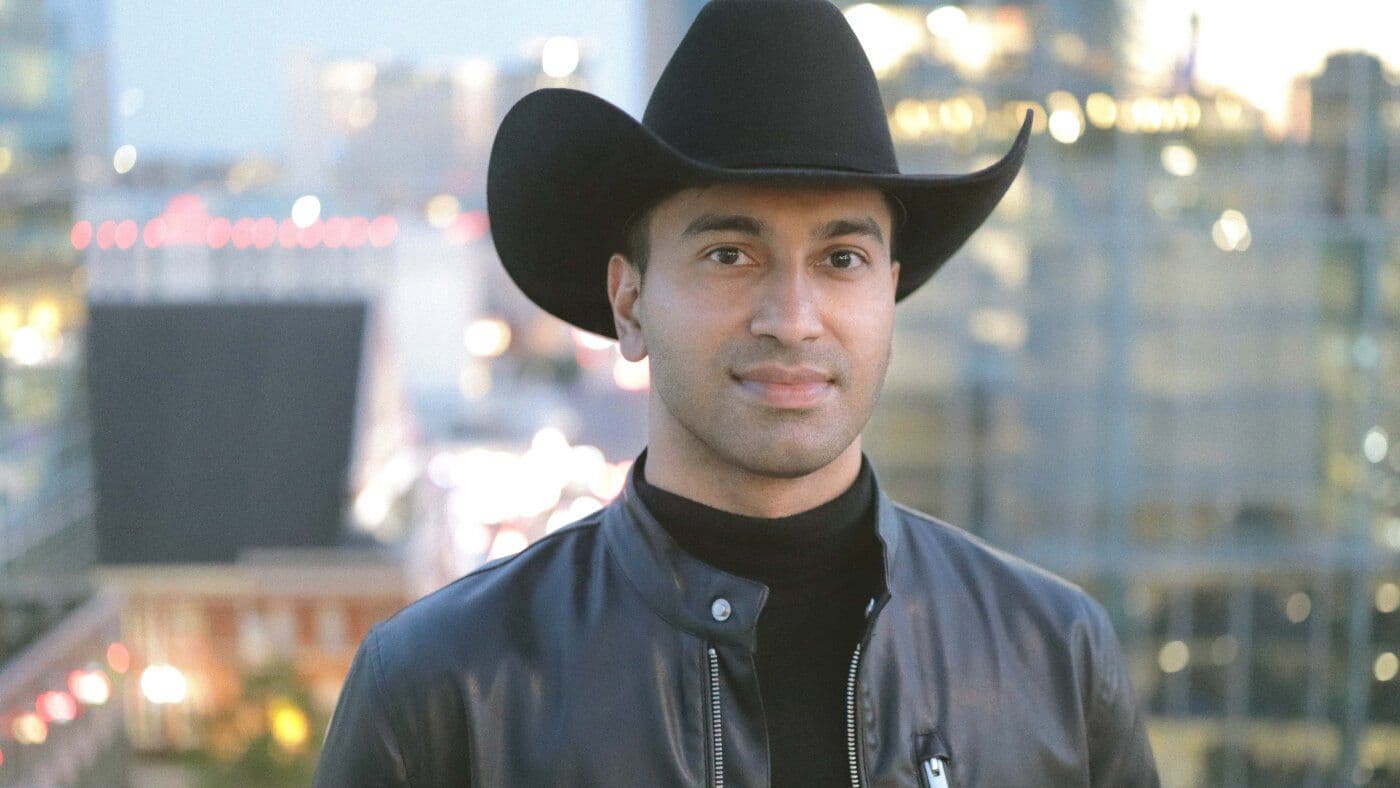
How Mo Sabri Is Rewriting Country Music History as a Muslim Pakistani American Artist
Singer-songwriter Mo Sabri blends Appalachian country with Sufi qawwali music, creating a cultural fusion that's making waves in Nashville and beyond.

A Country Artist Unlike Any Other
On May 31, Nashville will witness something truly historic. Singer-songwriter Mo Sabri will take the stage with the Nashville Symphony to perform an orchestral version of his debut album, Tennessee Desi — a groundbreaking musical project that weaves together Appalachian country sounds and qawwali, the centuries-old devotional music of Sufi Islam.
For Sabri, this moment is far more than a concert. It is the culmination of a lifetime shaped by two distinct yet surprisingly compatible cultural worlds.
Growing Up Between Two Musical Worlds
Sabri was raised in Johnson City, East Tennessee — a small city just 30 minutes from Bristol, widely recognized as the birthplace of country music. His Pakistani immigrant parents filled their home with the swirling, rhythmic energy of qawwali while simultaneously spinning country classics by legends like Kenny Rogers and Dolly Parton.
Those seemingly contrasting sounds planted deep roots in the young Sabri. Today, he channels both influences as a Nashville-based country artist who openly embraces his identity as a Pakistani American Muslim.
A quick browse through his YouTube channel reveals the breadth of his artistry — original country tracks like Married in a Barn sit alongside heartfelt covers of qawwali classics such as Tajdar e Haram.
What Is Qawwali — and Why Does It Matter Here?
Qawwali originates from India and Pakistan and draws its name from the Arabic word qaul, meaning "to speak." It is a musical expression of Sufi Muslim poetry — drawing on revered poets like Rumi and Hafez — and combines passionate singing, rhythmic handclaps, and drumbeats to transport listeners into a state of spiritual elevation.
For Sabri, reconnecting with qawwali became especially meaningful at the start of the COVID-19 pandemic. With time to reflect, he turned to the music as a way of staying connected to his heritage and his parents.
"Since I've never lived in Pakistan, it felt like a way to stay in touch with my roots," he explains.
He also notes that he may have a familial connection to the legendary Sabri Brothers, one of Pakistan's most celebrated qawwali duos — a lineage that deepened his sense of responsibility toward the genre.
Why Country Music Felt Like Home
Although country music has long been associated with a predominantly white, conservative audience, Sabri never saw it as foreign territory. The genre simply mirrored the life he was living in rural Tennessee.
"There was a lot of sitting on your porch and watching the sunset, driving down the road in your truck with the windows down," he recalls.
Beyond lifestyle, he was drawn to country music's raw honesty — its unflinching commitment to truth-telling. For Sabri, writing country music as a Muslim man carries an almost rebellious energy.
"It's almost punk rock — that I can talk about being Muslim in the place that most people think I shouldn't or can't," he says. "I feel most free writing country music."
Finding the Harmony Between Two Folk Traditions
Tennessee Desi is the artistic result of Sabri's lifelong journey between cultures. The album features a cover of the beloved bluegrass anthem Rocky Top — an ode to the Tennessee hills — alongside Allah Hoo, a qawwali that narrates Islam's creation story.
In developing the project, Sabri discovered that the two genres share far more common ground than most people would expect.
"Country is a folk music of Appalachia, and qawwali is a folk music of South Asia," he says. "Religion is also a major theme in both genres."
One technical challenge was reconciling the musical scales. Western music operates on a 12-note scale, while Eastern music incorporates microtones — subtle pitches that fall between standard notes. Sabri found creative solutions, including the use of a slide guitar, a staple of country and blues, which mimics those microtonal nuances.
"You place a piece of metal on the string, and the note is no longer exact," he explains.
An Audience That Crosses Cultural Divides
Sabri tested an early version of the Tennessee Desi set at a live show in Indiana, and the response was telling. Country fans and South Asian community members — people from entirely different backgrounds and political beliefs — all found something to connect with in his music.
"It's a testament to the fact that there are people in the South who enjoy the fusion, and there are South Asians who love country music," he says.
His reach even extends to South Asia itself. Viewers from the region have left enthusiastic comments on his YouTube channel, praising his reinterpretation of Tajdar e Haram. While some have offered constructive feedback about his Urdu pronunciation, Sabri takes it in stride — he understands the language fluently but admits he speaks it slowly.
A Full-Circle Moment for His Family
Charles Alexander, a digital strategist of Malaysian Indian descent with 16 years of experience in Nashville's music industry, underscores the significance of Sabri's Nashville Symphony appearance.
"This is a really big deal," Alexander says. "It speaks volumes in terms of diversity and representation in the types of music that has germinated in Tennessee."
For Sabri, the concert carries a deeply personal weight. His father immigrated to the United States in the 1970s, his mother in the 1980s. Both came from the mountains of Pakistan and chose to build their lives in the mountains of East Tennessee.
"They wanted me and my siblings to have the opportunities they never had — and find success," Sabri says.
Now, as their son prepares to stand on one of Nashville's most prestigious stages — merging the music of their homeland with the music of their adopted country — that dream is being realized in the most beautiful way.
"Me performing at the Symphony," Sabri says, "is their American dream come true."