How Light Simultaneously Strengthens and Restricts Plant Growth
Scientists have discovered that light tightens the bond between a plant's outer and inner tissues — boosting structure while quietly limiting growth.
Light: A Double-Edged Force in Plant Development
For decades, sunlight has been celebrated as the essential engine behind plant growth. But a groundbreaking new study suggests the relationship between light and plant development is far more nuanced than previously understood. Researchers have found that light doesn't simply accelerate growth — it also places subtle but measurable limits on it.
The Discovery Behind the Science
Scientists at Osaka Metropolitan University have identified a previously unknown biological mechanism that sheds new light on how plants respond to their environment. Led by Professor Kouichi Soga of the Graduate School of Science, the research team set out to examine how light exposure affects the structural relationship between different tissue layers in young pea stems.
Using a specialized measurement technique, the team analyzed how firmly the epidermis — the plant's outermost cellular layer — adheres to the inner tissue beneath it. The results were striking and unexpected.
Plants that developed under normal light conditions displayed significantly stronger adhesion between these two tissue layers compared to plants raised in complete darkness.
"Compared with plants grown in the dark, the epidermal and inner tissues of plants grown in the light are more tightly bound together," said Professor Soga. "This phenomenon has never been reported before, making it a particularly interesting finding."
The Role of p-Coumaric Acid
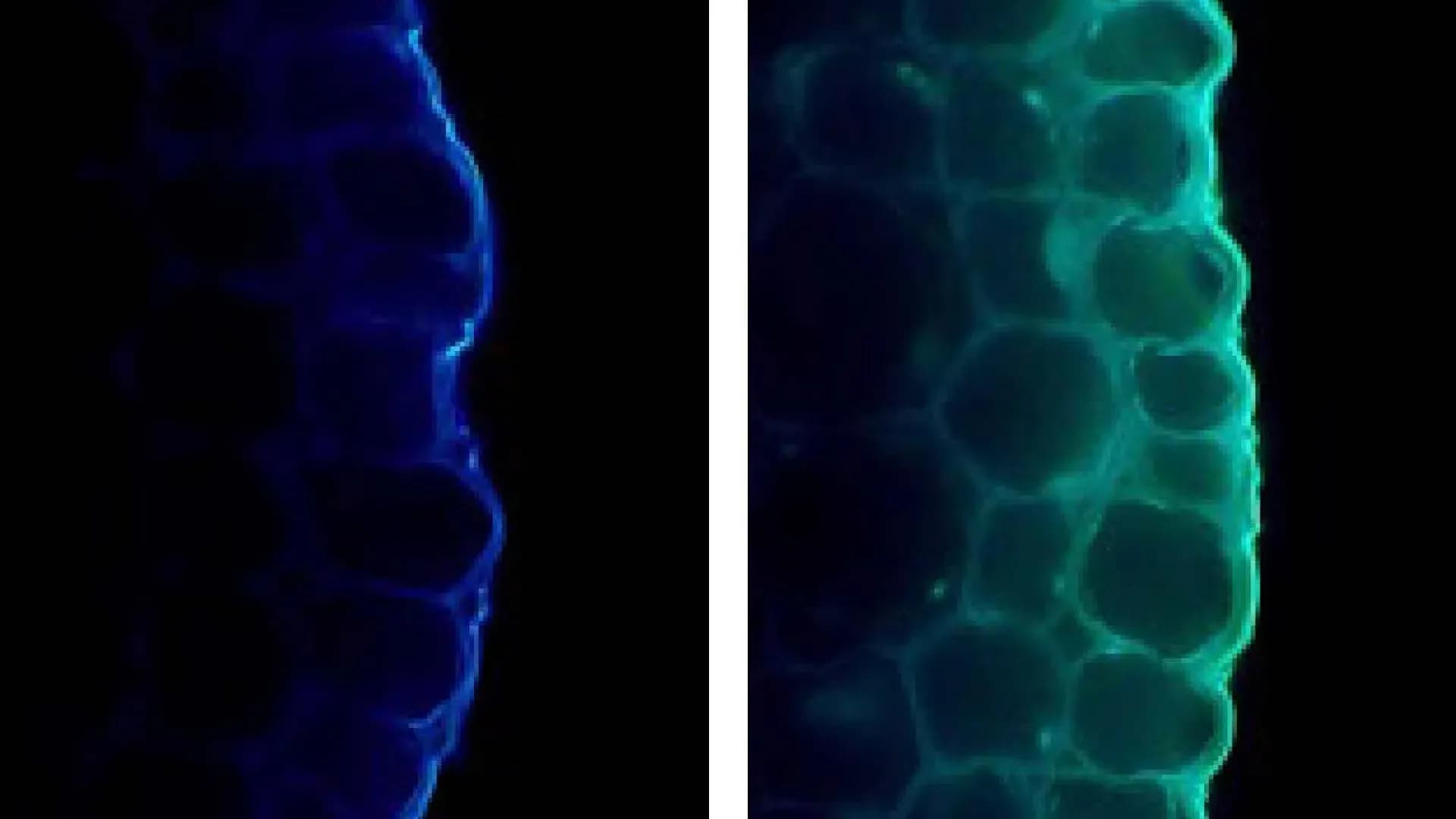
To identify the underlying cause of this increased tissue bonding, the researchers turned to fluorescence microscopy, a technique that allows scientists to detect specific compounds within plant cells.
Their analysis revealed that light-exposed stems produced elevated levels of a compound known as p-coumaric acid — a phenolic acid recognized for its ability to reinforce plant cell walls. The evidence strongly suggested that light triggers the accumulation of this compound, which in turn tightens the structural connections between tissue layers.
What the Compound Does
p-Coumaric acid acts like a biological adhesive, reinforcing the cellular architecture of the plant. Its increased presence in light-grown plants helps explain why those specimens showed greater tissue adhesion than their dark-grown counterparts.
"This provided strong evidence that the accumulation of p-coumaric acid was a key factor in strengthening the adhesion between the epidermal and the inner tissues," explained Yuma Shimizu, graduate student and lead author of the study.
A Hidden Trade-Off: Strength Versus Growth
While greater structural integrity might seem entirely beneficial, the findings reveal an important biological trade-off. When the epidermal and inner tissue layers are bound more tightly together, the inner tissues lose some of their freedom to expand outward. This mechanical constraint ultimately places a ceiling on how much the stem can grow.
In other words, the same light that provides energy for growth is also quietly engineering a physical limitation on that growth — a push-and-pull dynamic happening at the cellular level.
Implications for Agriculture and Crop Science
Beyond its scientific intrigue, this discovery carries meaningful potential for practical applications in agriculture and crop development. Understanding how tissue adhesion changes in response to environmental conditions could open new avenues for breeding plants that are more resilient under stress — whether from drought, temperature extremes, or variable light conditions.
Professor Soga emphasized the broader significance of the findings: "By measuring the adhesion between the epidermal and the inner tissues as stem growth changes in response to various factors, we expect to determine whether growth regulation mediated by changes in adhesion is a universal mechanism. These findings could be highly significant for plant cultivation. If we can control adhesion, it may be possible to breed plants with improved tolerance to environmental stress."
What Comes Next
The research team plans to continue investigating whether this adhesion-based growth regulation is a universal pattern across plant species or specific to certain varieties. If confirmed as a widespread mechanism, it could fundamentally reshape how scientists and agriculturalists think about plant development and stress response.
The study was published in the peer-reviewed journal Physiologia Plantarum, adding a compelling new chapter to our understanding of plant biology.