How Iran's Regime Uses Faith, Fear, and Financial Favors to Maintain Its Iron Grip
Experts reveal how Iran's ruling clerical establishment weaponizes religion, indoctrination, and intimidation to control its population — and why it may be losing its hold.

Faith as a Political Weapon, Not a Sacred Purpose
As a schoolboy growing up in Iran, Benny Sabti once received a reward that would stay with him for the rest of his life. Recognized as an outstanding student, he was handed a Persian-language translation of Adolf Hitler's Mein Kampf. "They translated Hitler's book into Persian and distributed it to students," Sabti recalled.
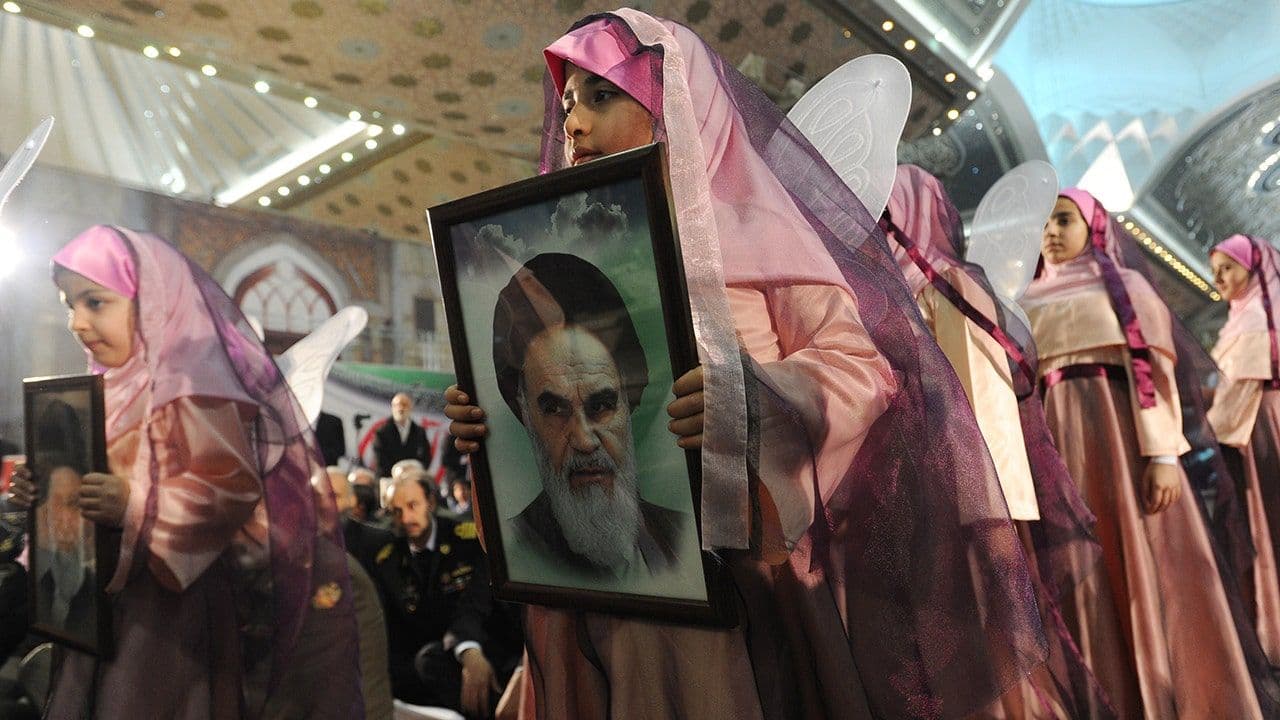
Today, Sabti serves as an Iran analyst at the Institute for National Security Studies (INSS) in Israel. Looking back on that childhood moment, he sees it as a window into something far larger — a sweeping, state-engineered effort to mold the minds of young Iranians through schools, mosques, workplaces, and media, all woven together into a single ideological fabric designed to secure loyalty to the clerical regime.
Yet according to those who have studied and lived under that system, the Islamic Republic's leaders were never truly driven by sincere religious devotion. "Faith for them is their tool," said Banafsheh Zand, an Iranian-American journalist and editor of the Iran So Far Away Substack. "It's not the end all to be all. It's a tool that they can hide behind so that they can carry out all their criminalities."
The Architecture of Religious-Political Control
Power Rooted in Doctrine
The Islamic Republic was established on the foundational principle of velayat-e faqih — the "guardianship of the Islamic jurist" — a doctrine that concentrates supreme political and religious authority in the hands of a single supreme leader. On paper, this framework presents itself as a divinely guided system of governance. In reality, critics argue, it functions as something far more cynical.
"It's more like a mafia," Zand said bluntly. "They use faith in order to keep people down."
The regime's ideological machinery, she explains, runs on two parallel tracks: reward and punishment. On one side, financial incentives draw in the vulnerable. On the other, the constant threat of reprisal keeps dissent suppressed.
Buying Loyalty Through the Basij
One of the most visible vehicles for this patronage system is the Basij — a paramilitary militia operating under the Islamic Revolutionary Guard Corps (IRGC). Families who align themselves with the regime through Basij membership can access a range of tangible benefits, including employment opportunities, housing assistance, and educational privileges.
"If you are poor and you join the Basij, they give you benefits," Zand explained. "But you have to go along with whatever it is that they offer you."
This transactional relationship has allowed the regime to cultivate a base of ideologically compliant supporters — not necessarily through genuine belief, but through economic dependency.
Ideology Embedded Into Every Corner of Daily Life
Sabti describes an elaborate network through which the regime extends its ideological reach into the most ordinary moments of daily existence. "In banks, offices, public spaces and even in the bazaars, regime representatives walk between shops telling people it is time to pray and checking who is not attending," he said.
Friday prayer sermons serve as weekly vehicles for government messaging, delivered by mosque leaders closely integrated into the political establishment. Sabti notes that Iran operates no fewer than 16 state propaganda bodies — institutions dedicated to broadcasting the regime's interpretation of Islam and the ideals of the Islamic Revolution across the country and beyond its borders.
Exporting the Revolution
The ideological project is not confined to Iran's own population. According to Sabti, certain institutions are specifically designed to extend the regime's religious and political influence internationally. "There is a university dedicated to converting Sunnis to Shiism," he said. "They bring people from Africa and South America to Iran, convert them to Shiism and send them back to export the Shiite Islamic revolution."
Schools as Ideological Incubators
Perhaps nowhere is the regime's indoctrination effort more deliberate than in the classroom. "Schools are heavily indoctrinated," Sabti said. Textbooks on civics and social studies consistently frame Islam as inherently superior to all other belief systems and political ideologies.
The ideological overlay is so pervasive that it transcends any single subject. "You cannot separate any school subject from Islam," Sabti noted. "Not history, not geography. Everything is mixed with ideology. The only thing missing was adding it to mathematics."
It is in this context that the Mein Kampf episode takes on its full significance. The message embedded in that prize, Sabti says, was unmistakable — hostility toward designated enemies was to be cultivated early, and political identity was to be shaped before critical thinking had a chance to take root.
Hypocrisy at the Top Erodes Credibility
For all its ideological ambition, the regime's authority is quietly undermined by the very behavior of its elites. Sabti points to a glaring contradiction visible in the lives of Iran's ruling class. "Their children live abroad while the elites live in palaces in Iran and in other countries," he said. "It is hypocrisy."
This disconnect between the austere, religiously disciplined lifestyle the regime demands of ordinary Iranians and the lavish, often Westernized lives enjoyed by its leadership class has not gone unnoticed by the population.
Ruling Through Fear and Manipulation
Where financial incentives fall short, intimidation fills the gap. "They make examples out of people in the most vicious possible way," Zand said. "It's fear and manipulation."
The atmosphere of surveillance and suspicion this creates permeates Iranian society at every level. "Everybody is afraid of the police," Zand said. "Everybody is afraid of their neighbors."
This pervasive anxiety ensures that even those who privately reject the regime's ideology often conform outwardly — creating a society where visible compliance masks deep internal dissent.
An Ideological Machine Running Out of Steam
Despite the sheer scale of Iran's propaganda and patronage apparatus, there are strong indications that the system is losing its persuasive power. "Over the years, the indoctrination has stopped working," Sabti said. "Most of the public does not truly believe it."
The regime continues to hold power, but Sabti attributes this less to ideological conviction than to coercive force. "The regime maintains control through money, weapons and propaganda," he said.
Zand concurs that decades of pressure have failed to fundamentally reshape Iranian cultural identity. Many Iranians, she argues, have simply learned to perform compliance while privately preserving a separate sense of self.
"They won't have a problem to transfer as long as they realize that the new Iran has no room for the violence and the horrifying characteristics of the Islamist regime," Zand said — suggesting that beneath the surface, the foundation for a different kind of Iran remains very much alive.