How H&M Plans to Turn CO2 Into Clothing With Rubi's Breakthrough Technology
Startup Rubi has developed an enzyme-based process to convert carbon dioxide into cellulose, attracting H&M, Patagonia, and Walmart as pilot partners.
A Fashion Industry Under Pressure to Change
The global fashion industry is facing a reckoning. Every second, the equivalent of a full garbage truck of discarded textiles ends up in landfills or incinerators. On top of that staggering waste crisis, the sector produces more carbon emissions than international aviation and maritime shipping combined — making it one of the most environmentally damaging industries on the planet.
While some companies are exploring textile recycling innovations and others are developing materials that sidestep fossil fuels entirely, one California-based startup is taking a radically different approach: pulling carbon dioxide straight from the atmosphere and transforming it into fabric.
Meet Rubi: Biology Outside the Cell
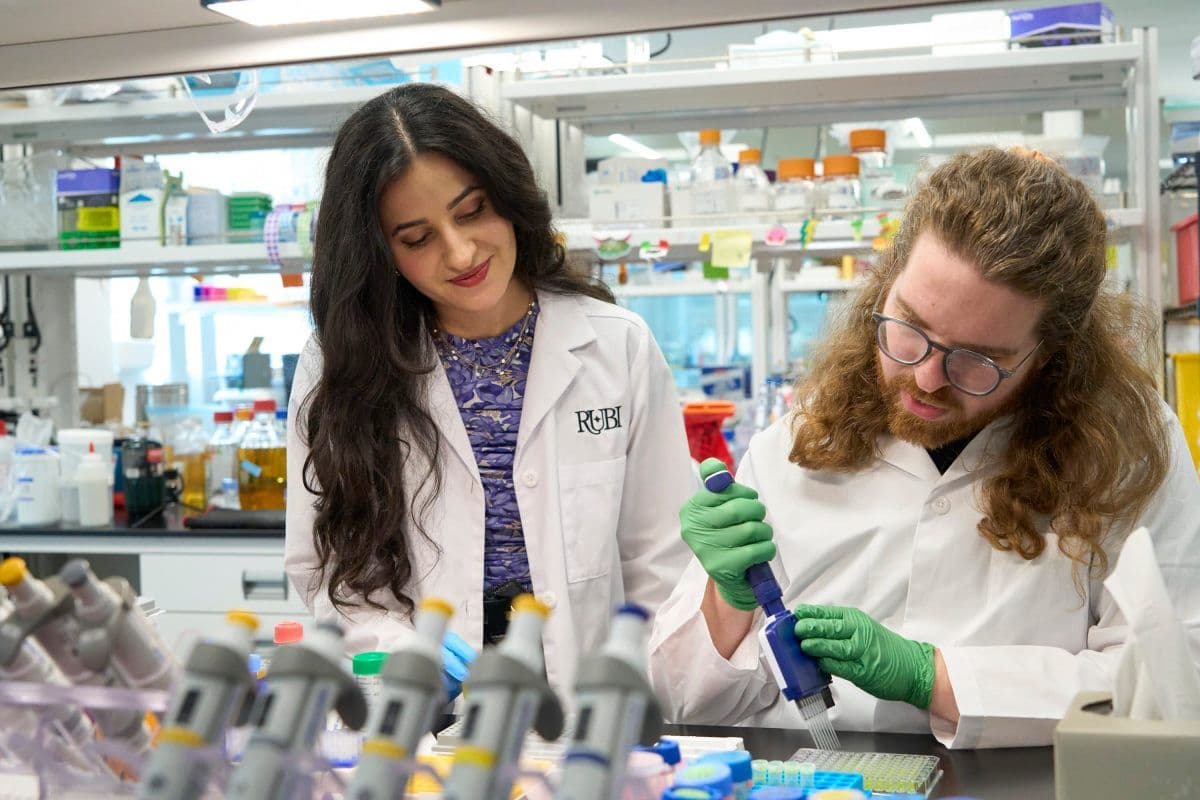
Founded by twin sisters Neeka and Leila Mashouf, Rubi has engineered an enzymatic process that converts captured CO2 into cellulose — the raw material used to produce lyocell and viscose fabrics. Co-founder and CEO Neeka Mashouf describes the technology as "basically taking the machinery of biology outside of the cell."
Unlike competing approaches that rely on genetically engineered bacteria in fermenters or chemical catalysts to drive the CO2 conversion, Rubi harnesses enzymes — proteins that facilitate chemical reactions with remarkable efficiency. This distinction matters. The enzyme industry is already massive, powering everything from high-fructose corn syrup production to wastewater treatment, meaning the infrastructure and cost efficiencies are already within reach.
Neeka, a materials scientist by training, teamed up with her sister Leila — then a medical student at Harvard Medical School — to survey every available technology for sustainable cellulose production. Time and again, they kept returning to enzymes as the most promising solution.
How the Technology Works
Rubi's process uses a carefully sequenced "cascade" of enzymes to break down and reassemble waste carbon dioxide into cellulose. The company has also integrated artificial intelligence and machine learning to improve the enzymes' effectiveness and long-term stability.
In practice, the enzymes are suspended in a water-based solution. When carbon dioxide is introduced into the reactor, white cellulose begins to form within just a few minutes. The reactors themselves are compact enough to fit inside shipping container-sized modules, making the system highly scalable and deployable across different locations.
Currently, the process operates in batches, but Rubi is working toward a continuous production model that would significantly increase output and reduce costs.
$7.5 Million Raised to Scale Up Production
Rubi recently closed a $7.5 million funding round to build a demonstration-scale version of its cellulosic production system — one capable of producing tens of tons of material using CO2 as its primary input. The round was led by AP Ventures and FH One Investments, with additional backing from CMPC Ventures, H&M Group, Talis Capital, and Understorey Ventures.
The startup has already secured more than $60 million in non-binding off-take agreements with select partners, signaling strong commercial interest in the technology. Rubi has also completed material testing with 15 pilot partners, a roster that includes retail giants H&M, Patagonia, and Walmart.
Addressing a Gap in the U.S. Supply Chain
One of Rubi's key value propositions lies in addressing a notable gap in domestic raw material supply. Today, most cellulose destined for textile production is sourced from trees — including both managed plantations and, in some cases, old-growth rainforests. These supply chains are lengthy, complex, and geographically fragmented.
"These textile and raw material supply chains are very long," Mashouf explained. "Here in the U.S., we've gotten interest in being able to actually produce cellulose pulp that's textile grade, where that doesn't exist today."
By enabling local, carbon-negative cellulose production, Rubi could help brands shorten their supply chains while simultaneously reducing their environmental footprint.
Beyond Fashion: A Platform for the Broader Economy
While apparel companies represent Rubi's primary target market in the near term, the startup's ambitions extend well beyond clothing. Cellulose is a versatile compound used across numerous industries, from packaging and pharmaceuticals to construction materials.
"This really is a platform," Mashouf said. "We think of it as a platform to make all the important chemicals and materials across the economy in a low-cost way."
If Rubi can scale its technology effectively, it could represent a meaningful shift in how industries source one of the world's most widely used natural materials — replacing tree-derived cellulose with a version built entirely from captured carbon.
