How Eclipse Ventures Turned a $147M Bet Into a $2.5B Cerebras Windfall — and Why the Physical World Is Just Getting Started
Eclipse Ventures scored a 17x return on Cerebras Systems' IPO. But for founder Lior Susan, this milestone is just the beginning of a much larger physical-world revolution.

From Lonely Thesis to Billion-Dollar Vindication
Back in 2015, betting on the physical world was not exactly a crowd-pleaser in Silicon Valley. When Lior Susan launched Eclipse Ventures and began championing the digitization of real-world industries, most investors were chasing enterprise software and SaaS plays.
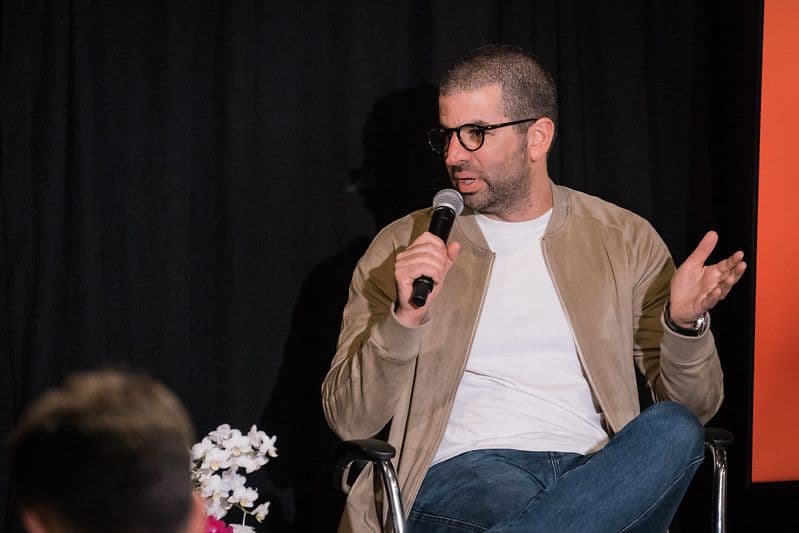
"It felt fairly lonely the first couple of years," Susan admitted during a recent StrictlyVC event held in San Francisco.
Fast forward to today, and Eclipse Ventures is no longer on the fringe — it is squarely at the center of one of technology's most exciting investment moments.
The Cerebras Payday That Validated Everything
Eclipse's conviction was put to the test in 2016, when the firm led a $6.5 million Series A round in Cerebras Systems, a semiconductor company building specialized AI chips. Over the years, Eclipse continued backing Cerebras, deploying a total of $147 million into the company.
When Cerebras went public this week at an IPO price of $185 per share, that long-term commitment paid off in a dramatic fashion — generating a total return of $2.5 billion, representing a roughly 17-fold multiple on invested capital.
For Susan, however, the Cerebras exit is not the main event. It is proof of concept for a thesis he has held for over a decade: that 85% of global GDP is rooted in the physical world, and that companies operating at that intersection of hardware, software, and real-world infrastructure represent one of the greatest untapped opportunities in venture capital.
Why Software Moats Are Eroding
Susan's optimism about physical-world technology is not purely about semiconductors. It is also a pointed commentary on what is happening to pure-play software businesses.
Public market investors have grown increasingly skeptical of traditional SaaS models, with many software stocks experiencing notable selloffs earlier this year amid concerns that AI tools — such as Anthropic's Claude Code and OpenAI's latest models — could enable enterprises to build their own custom software solutions in-house.
Susan put it bluntly: "I think people understand that the real moat in software is gone. You can vibe code pretty much whatever you want."
But there are clear limits to what AI-assisted coding can replace.
"What you cannot do with 'vibe code' is manufacture wafers, because you need machines and silicon, and they need clean rooms, and a bunch of other things," Susan said.
This is the fundamental argument at the heart of Eclipse's investment philosophy — physical complexity creates durable competitive advantages that no amount of AI-generated code can replicate overnight.
A Portfolio That Is Catching Fire
The numbers backing Susan's thesis are hard to ignore. Eclipse's portfolio companies — spanning robotics, energy, defense, and semiconductors — raised nearly $15 billion from outside investors in the past year alone. In just the first quarter of 2026, that figure reached $4.5 billion, a striking contrast to the firm's first eight years, during which its portfolio companies raised less than $4 billion in total.
Some of the most significant recent funding rounds include:
- $1.2 billion raised by Wayve, an autonomous driving AI company
- $650 million secured by True Anomaly, a space technology firm
- $270 million closed by Bedrock Robotics
- $200 million raised by Oxide Computer
Notably, Eclipse was the Series A investor in all four of these companies — a track record that any venture firm would be proud to claim.
Five Forces Aligning for a Historic Moment
Susan argues that the current surge of interest in physical-world technology is driven by more than just AI hype. He identifies five key forces that must align for this market to truly flourish: technology, capital, customer demand, talent, and policy.
For the first time, Susan believes all five are working in concert. Investors and engineers are pivoting away from SaaS toward sectors like robotics, semiconductors, space, and critical minerals. Simultaneously, the U.S. government is offering subsidies and shaping regulatory frameworks to actively encourage domestic growth in these industries.
"This is the first time I believe in America ever, from Henry Ford and Carnegie, those five forces are aligned," Susan said. "For builders like us, this is the best time to build those companies."
Public market signals support this optimism as well. Shares of semiconductor giants TSMC and Micron recently reached all-time highs, and a new generation of elite founders is increasingly drawn to startups that blend hardware innovation with software intelligence.
The Bigger Picture
What Eclipse Ventures represents is a broader recalibration of where value is truly created in the technology economy. As AI commoditizes software development and erodes the barriers that once protected SaaS businesses, the companies that build, manufacture, and operate in the physical world are emerging as the next frontier for venture-scale returns.
For Lior Susan and Eclipse, the $2.5 billion Cerebras outcome is a landmark moment — but if their thesis holds, it may ultimately be remembered as just the opening chapter.