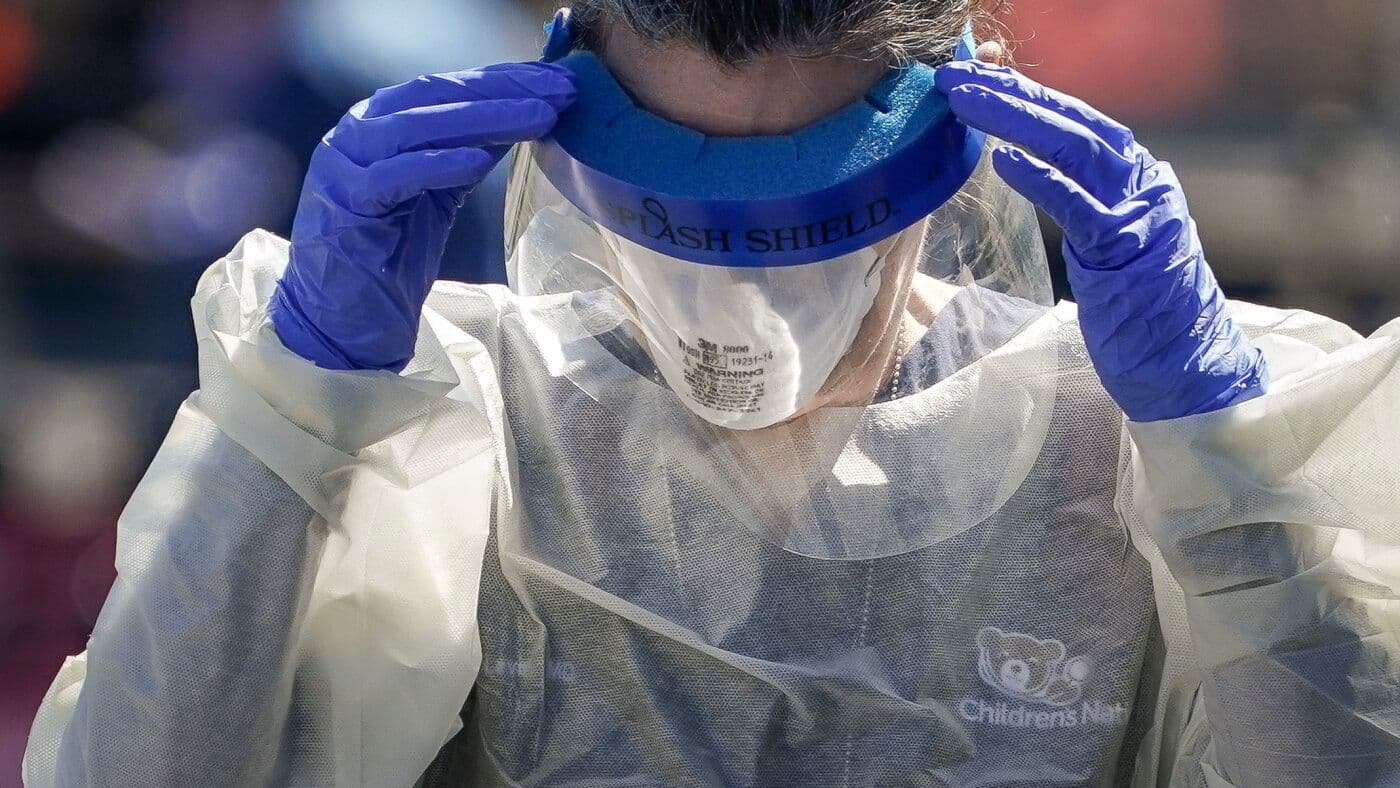
How COVID-19 Trauma Is Fueling Fear Around Ebola and Hantavirus Outbreaks
Recent Ebola and hantavirus headlines are triggering COVID anxiety across America. Experts explain why another pandemic is unlikely.

Why Americans Are Reacting So Strongly to Ebola and Hantavirus
Recent outbreaks of Ebola in the Democratic Republic of Congo and hantavirus aboard a cruise ship have sent waves of anxiety across the United States. Social media platforms are flooded with alarmed reactions, comedic takes, and fearful questions — and public health experts believe they know exactly why.
The COVID-19 pandemic has fundamentally changed the way many Americans process news about infectious diseases. For millions of people who lived through lockdowns, lost loved ones, and watched the world grind to a halt, every new outbreak headline now carries a heavy emotional weight.
The 'COVID PTSD' Effect
Instagram content creator Chandra Harvey captured this sentiment perfectly when her lighthearted video about a potential new pandemic racked up more than 100,000 views. "We're all dealing with PTSD from COVID," she told NPR. For Harvey, whose family members were hospitalized during the pandemic, the emotional scars run deep. "COVID scarred all of us," she said.
This collective trauma is driving heightened reactions online. Search interest in the word "pandemic" has spiked on Google Trends, Reddit threads are filled with anxious questions, and TikTok and Instagram are brimming with both humor and genuine concern.
Dr. Ali S. Khan, dean of the College of Public Health at the University of Nebraska Medical Center, noted that during the early days of COVID-19, people were genuinely terrified of losing the people closest to them. With more than one million Americans dead from the virus, that fear was well-founded — and it hasn't fully faded.
What Experts Actually Think About These Outbreaks
Despite the public's alarm, infectious disease specialists are urging calm. According to Dr. Amesh Adalja, a senior scholar at the Johns Hopkins Center for Health Security, the average American has no reason to fear that Ebola or hantavirus will trigger a repeat of the COVID-19 pandemic.
"Certain diseases spark dread in people," Adalja explained, referring to what he calls the "dread factor" — the psychological phenomenon where exotic-sounding illnesses generate disproportionate fear, even when statistically far less dangerous than common illnesses like influenza.
How These Diseases Actually Spread
One of the most important distinctions between COVID-19 and these current outbreaks lies in how each disease is transmitted:
- COVID-19 spreads through the air, similar to measles, making it exceptionally contagious.
- Ebola typically transmits through direct contact with infected bodily fluids such as blood or vomit.
- Hantavirus most commonly reaches humans through exposure to the urine, feces, or saliva of infected rodents, though one strain has demonstrated limited person-to-person transmission.
These critical biological differences mean neither disease is positioned to spread the way COVID-19 did. "The nuances of the biology of different pathogens, the trajectories of different outbreaks — that all gets lost because what people are worried about is having a disruptive event like COVID upend their entire life again," Adalja said.
Compounding Concerns: Timing and Response Challenges
The fact that news about both Ebola and hantavirus broke within the same month amplified public anxiety considerably. Harvey herself admitted that hearing about two viruses simultaneously felt overwhelming. "It's just too much," she said.
Adding to the complexity, the delayed detection of the current Ebola outbreak has made containment more difficult. Dr. Craig Spencer, an associate professor of public health at Brown University, has pointed to staffing cuts at the Centers for Disease Control and Prevention, reductions to the U.S. Agency for International Development, and the U.S. withdrawal from the World Health Organization as factors affecting the ongoing response in the Democratic Republic of Congo.
The State Department pushed back on those claims, stating that it was "false" to suggest USAID reforms had weakened the country's ability to respond to Ebola, and confirming that funding and support would continue.
Putting Outbreaks in Historical Context
Epidemiologist Caitlin Rivers of Johns Hopkins, author of Crisis Averted: The Hidden Science of Fighting Outbreaks, says she is professionally concerned about the Ebola situation — but is not personally worried about it reaching her community. "I'm not worried as a mom," she clarified, adding that public health officials similarly consider the risk of hantavirus to the general public to be very low.
Experts stress that infectious disease outbreaks are not a new phenomenon. Humanity has battled epidemics for centuries. The 20th century alone saw devastating flu pandemics in 1918, 1957, and 1968. More recently, the world has navigated SARS, H1N1 swine flu, Zika, mpox, measles, and multiple Ebola outbreaks — including the 2014 West Africa outbreak that claimed more than 11,000 lives.
Rivers notes that a major outbreak drawing international attention occurs roughly every two years. "They're a lot more frequent than I think many people appreciate," she said.
"Not everything has the ability to be this disruptive force the way COVID was," Adalja emphasized. "Science, technology, and medicine offer us the ability to master these issues — to make them less impactful and to be proactive."
How to Stay Informed Without Falling Into Panic
Public health experts encourage Americans to replace reflexive fear with targeted, rational questions when new outbreak headlines emerge:
- Ask about transmission: Is this disease spreading through the air the way COVID-19 did?
- Assess personal risk: Are health experts expressing concern about everyday exposure — commuting, going to work, living a normal life?
- Consult reliable sources: Follow updates from local, state, and national health authorities rather than relying on social media reactions.
Dr. Abraar Karan, an infectious disease physician and faculty member at Stanford University, puts it simply: focus on what the science is actually saying about your individual risk before drawing conclusions.
The COVID-19 pandemic changed how Americans relate to infectious disease forever. But experts agree that heightened awareness, when guided by accurate information and historical perspective, is far more valuable than fear.

