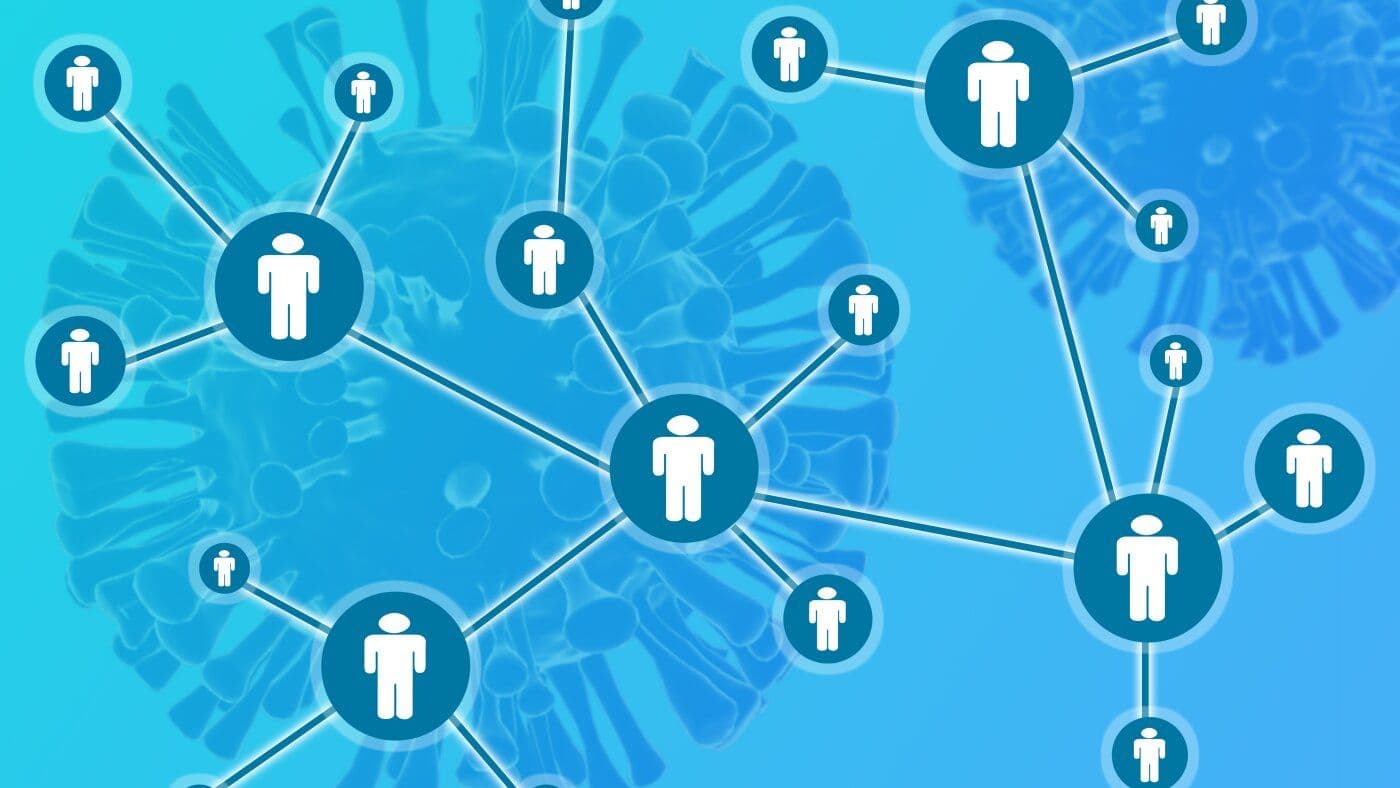
How Contact Tracing Is Being Used to Stop the Hantavirus Outbreak in Its Tracks
As infected cruise ship passengers scatter across the globe, health officials are racing to deploy one of public health's oldest and most powerful tools.

Racing Against the Clock: Contact Tracing and the Hantavirus Outbreak
When more than two dozen passengers stepped off the MV Honius cruise ship on the remote Atlantic island of St. Helena — before anyone knew a hantavirus outbreak was underway — a global race began. Those individuals had already dispersed across continents, some landing in the United States, leaving international health authorities scrambling to track them down before the virus could take hold anywhere else.
The risk of widespread transmission remains relatively low. Hantavirus requires close, prolonged contact with an infected person, and those who carry it appear to be contagious only for a short window of time. Even so, public health officials are leaving nothing to chance.
What Is Contact Tracing and Where Did It Come From?
Contact tracing is one of the most time-tested instruments in the public health arsenal. Its modern roots stretch back to the 1930s, when it was first used as a strategy to curb the spread of syphilis. The principle is straightforward: identify every individual who has had close contact with someone carrying a contagious disease, monitor their health, and intervene before they unknowingly pass the illness on to others.
"By identifying people who are at risk of infection, you try to get ahead when people don't have symptoms yet, with the goal of preventing the infection from continuing to propagate," explains Dr. Preeti Malani, an infectious disease physician at the University of Michigan.
Malani describes the process as managing ripples in a pond — the goal being to stop those outer rings from expanding by isolating individuals and flagging those who may already be harboring the pathogen without knowing it.
"It's the oldest tool in the epidemiologic toolbox," she adds. "We use contact tracing for sexually transmitted infections, for meningitis, for measles — and of course, we thought about it extensively during the COVID-19 pandemic."
How the Process Actually Works
Contact tracing begins by confirming a case — in this situation, a hantavirus infection. From there, epidemiologists work backward and forward through time, mapping out every significant interaction the infected individual may have had. The people most likely to have been exposed are then prioritized.
"You have to stratify by high, intermediate, and low-risk contacts," says Dr. Boghuma Titanji, an infectious diseases specialist at Emory University. "Otherwise, it becomes an impossible web to contain because everyone is connected to everyone."
Once those contacts are identified, public health agencies issue appropriate guidance. This can range from self-monitoring for symptoms to full quarantine, depending on the level of exposure risk. The objective is simple: prevent an exposed individual from becoming an unknowing source of further spread.
The Special Challenge Hantavirus Presents
Hantavirus complicates this process in one significant way — its incubation period. Unlike illnesses that declare themselves within days, hantavirus can take weeks to produce symptoms.
"People take a long time to become symptomatic after they've been exposed," says Titanji. "Some of these primary contacts would have to be monitoring themselves for symptoms for up to 45 days to be at the tail end of that very long incubation period."
This demands extraordinary patience and diligence from both health authorities and the individuals under monitoring.
A Painstaking, Low-Tech Operation
Despite its critical importance, contact tracing is far from a high-tech endeavor. It is meticulous, methodical work — reconstructing the web of interactions a person may have had over days or even weeks.
Consider the complexity aboard a cruise ship alone. An infected passenger shares a meal with someone at dinner. That person returns to a cabin shared with a partner. The partner chats with a fellow traveler on the deck. Each link in that chain represents a potential exposure. Once passengers disembark and fly home, the network of possible contacts expands exponentially.
This is precisely why alarm bells rang when a KLM flight attendant fell ill after working a flight that carried one of the infected cruise ship passengers. The situation was ultimately resolved — the attendant tested negative for hantavirus — but it illustrated just how quickly potential exposure chains can grow.
Reasons for Cautious Optimism
Despite the logistical complexity, health professionals are encouraged by the response so far. "The international collaborative effort has been really robust, and the mechanisms for containment are in place and underway," says Titanji.
WHO Director of Health Emergency Alert and Response, Abdi Mahmoud, echoed that confidence at a recent press briefing. "We can break this chain of transmission," he stated.
History offers solid grounds for that optimism. Contact tracing played a pivotal role in managing COVID-19 and was instrumental in ending the Ebola epidemic in Liberia more than a decade ago — an effort that at times required health workers to trek for hours through dense jungle to reach isolated communities.
Authorities are counting on that same determined, systematic approach to bring the current hantavirus outbreak to a swift and contained conclusion.

