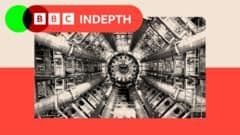
How Budget Cuts Are Threatening to Dismantle Britain's World-Class Physics Research
The UK's Nobel Prize-winning physics legacy is under threat. Sweeping budget cuts could force top scientists overseas and end Britain's role in landmark global research.

Britain's Finest Scientific Hour — And Its Uncertain Future
In October 2013, the global scientific community held its breath as the Nobel Prize in Physics was announced from Stockholm. Among those honoured was Professor Peter Higgs, the British theorist who had spent nearly five decades waiting for the world to catch up with his extraordinary prediction — that an invisible particle was responsible for holding the entire universe together.
The prize followed a landmark moment in 2012, when researchers at CERN finally detected the Higgs boson, validating one of the most celebrated theories in modern physics. It was widely described as the most significant scientific discovery in a generation.
In a statement at the time, Higgs — who has since passed away — expressed his hope that the recognition would "help raise awareness of the value of blue-sky research." It was a quiet but powerful plea for science driven purely by curiosity, with no immediate commercial goal in sight.
What Is Blue-Sky Research and Why Does It Matter?
Blue-sky research is science for science's sake — investigations aimed at understanding the universe rather than building the next consumer product. It is arguably the field in which British scientists have historically excelled most. The discovery of the electron, the unravelling of DNA's double helix, and the creation of the world's first computer all began as purely theoretical pursuits with no obvious practical application.
Yet each of these breakthroughs eventually gave rise to multi-billion pound industries and fundamentally reshaped how humanity lives and works. The economic and social returns, while delayed, proved immeasurable.
Now, that tradition faces a serious threat.
The Cuts That Are Shaking British Physics
Britain is preparing to withdraw its financial contribution to a major upcoming upgrade of the Large Hadron Collider — the same machine that confirmed the existence of the Higgs boson. This is just one of several proposed reductions to the UK's involvement in high-profile international particle physics and astronomy projects. Taken together, these cuts risk significantly diminishing — or even ending entirely — Britain's participation in some of the world's most exciting scientific collaborations.
At the centre of the controversy is a 30% reduction — amounting to £162 million — in funding for particle physics and astronomy, announced earlier this year by the Science and Technology Facilities Council (STFC). The STFC's head, Professor Michele Dougherty, told MPs the cuts were unavoidable, citing what she called "an overabundance of ambition" — referring to projects that had been initiated without sufficient funding already in place. She pointed to inflation and currency volatility as compounding factors.
However, a senior scientist with direct prior involvement in the STFC strongly disputes this account, describing it as a convenient cover story. "We always had the money for these projects," the scientist told BBC News. "I do not understand how we ended up with a 30% cut in the particle physics and astronomy budget unless at some point there must have been a deliberate choice to reduce that aspect of the budget."
Internal Documents Tell a Different Story
That suspicion appears to be backed by the STFC's own internal records. Minutes from the organisation's governing council — not made available to the public — reportedly describe the Council's head of strategy acknowledging "a major shift of funding from curiosity-driven research to priority areas and targeted programmes."
This internal language stands in stark contrast to the public-facing message from the top of UK science funding. Professor Sir Ian Chapman, head of UK Research and Innovation (UKRI), categorically denied that money had been redirected away from blue-sky science. "That is not a UKRI position," he stated. "Across the piece, we are protecting curiosity-driven research." When confronted with the internal council minutes, Chapman dismissed the wording as a "mis-statement."
Science Minister Lord Vallance has similarly insisted that curiosity-driven research is not only protected but growing in real cash terms.
A Funding System Nobody Can Fully Track
The problem for both Chapman and Vallance is that their assurances are nearly impossible to verify. UKRI's accounting structure has long been criticised for its lack of transparency. When Chi Onwurah MP, chair of the House of Commons Science Innovation and Technology Select Committee, pressed Chapman to provide a direct comparison of blue-sky research spending before and after the recent funding reorganisation, he initially said such a comparison was not possible. Only when pushed further did he agree to supply a written breakdown — one that ultimately failed to satisfy the committee.
"The committee was very disappointed to learn that we couldn't actually track how that funding was changing," Onwurah said. "It doesn't give us the level of detail we really need to be able to say, for example, is curiosity-driven research in particle or nuclear physics being cut or not."
The situation is further complicated by the fact that more than 60% of the funding ring-fenced for blue-sky research is distributed directly to universities, which are free to allocate it as they see fit. While a large portion does support fundamental research, universities also use these funds to cover operational shortfalls — staff salaries, public engagement programmes, and the commercialisation of research outputs.
The New 'Bucket' System and Its Implications
Earlier this year, UKRI introduced a new framework dividing research funding into three distinct categories, described informally as "buckets." The first is reserved for curiosity-driven blue-sky research. The second covers government-designated priority areas such as artificial intelligence and quantum computing. The third supports businesses in developing new products and services.
Critics argue that this structure, combined with the STFC's budget cuts, signals a strategic pivot away from foundational science and towards research with faster, more visible economic returns — precisely the kind of shift that scientists like Professor Higgs warned against.
Young Physicists Left Without Jobs
For theoretical physicist Dr Simon Williams of Durham University, the consequences are already personal. His research uses quantum computers to model the behaviour of subatomic particles — work that began as pure scientific inquiry but has since attracted a British technology company as an end user. He is among approximately 30 young physicists who have been unable to secure research grants in the UK this year as a direct result of the funding reductions.
Many of these researchers represent some of the brightest minds in their fields. Faced with no viable path forward in the UK, they may be compelled to seek positions abroad or abandon research careers entirely.
Dr Williams has been vocal in his warnings about the long-term consequences. Appearing before the House of Commons Science Innovation and Technology Select Committee, he delivered a stark analogy: "You're killing the tree by removing the roots."
His concern extends beyond academia. He believes that dismantling the research base will ultimately drive away the industries that depend on it. "If the research is removed from the country," he cautioned, "then I have a strong belief that the industry will be removed from the country."
Government Response: A 'Mistake' and a Defence
Lord Vallance, appearing before the Science Select Committee, acknowledged that the funding gaps affecting researchers like Dr Williams represented a "mistake," and indicated that the government was working urgently to release additional money to address the immediate problem — with a commitment to at least doubling available funding the following year.
Nevertheless, he defended the broader programme of cuts to physics experiments as part of a responsible prioritisation process. "It is not right to portray this as a massive cut to things," Vallance told MPs. "It's about managing a budget responsibly." He also affirmed that the UK would remain the second-largest contributor to particle physics experiments at CERN.
Astronomers Sound the Alarm
Not everyone in the scientific community is reassured. Catherine Heymans, Scotland's Astronomer Royal and a spokesperson for the broader UK astronomy community, delivered one of the most striking assessments to the select committee, describing the proposed cuts as "genuinely catastrophic" and warning they "will be devastating for the UK."
For many scientists, the situation raises a question that cuts to the very heart of how a nation values knowledge: can a country that once gave the world the electron, the structure of DNA, and a Nobel Prize-winning theory about the fabric of the universe afford to turn its back on the research that makes such breakthroughs possible?