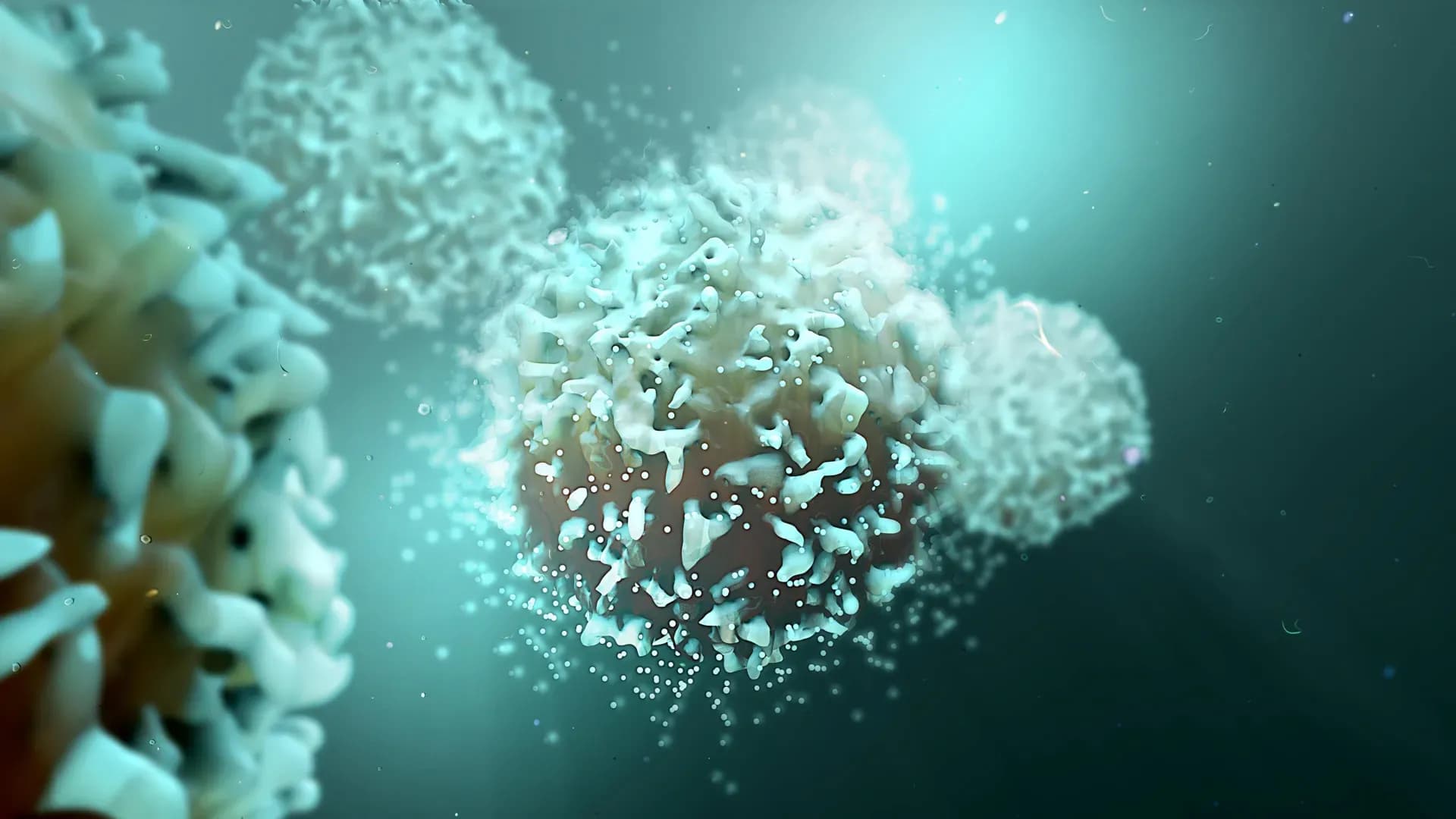
How Blocking One Protein Could Transform the Way We Fight Cancer
Scientists have found that disabling a single protein forces immune cells to rewire their energy, making them dramatically more powerful against cancer.
A Single Protein Could Hold the Key to Supercharged Cancer Immunity
A groundbreaking discovery by an international team of researchers may fundamentally change how we approach cancer treatment. By blocking a single protein called Ant2, scientists have found a way to force the immune system's T cells to completely overhaul how they generate and consume energy — and the results are remarkable. These reprogrammed cells become tougher, more aggressive, and significantly more effective at seeking out and destroying cancer.
The Science Behind the Breakthrough
The research was led by PhD student Omri Yosef and Professor Michael Berger from the Faculty of Medicine at Hebrew University, in collaboration with Professor Magdalena Huber of Philipps University of Marburg and Professor Eyal Gottlieb of the University of Texas MD Anderson Cancer Center. Published in Nature Communications, the study centers on a deceptively simple concept: change how an immune cell powers itself, and you fundamentally change what it is capable of.
T cells are among the immune system's most critical weapons, responsible for identifying and eliminating threats including cancerous cells. When the team disabled the Ant2 protein, these cells were forced to find alternative ways to produce energy — and in doing so, they became far more capable fighters.
"By disabling Ant2, we triggered a complete shift in how T cells produce and use energy," said Prof. Berger. "This reprogramming made them significantly better at recognizing and killing cancer cells."
The Role of Mitochondria
At the heart of this discovery is the mitochondria, the cell's primary energy-producing organelle. By deliberately disrupting a specific energy pathway within T cells, the researchers effectively placed these immune cells in a state of heightened biological readiness. The altered T cells demonstrated greater endurance, reproduced more rapidly, and attacked tumors with increased precision — all qualities that are critical in the battle against cancer.
From Laboratory Findings to Real-World Treatments
Perhaps the most exciting aspect of this research is its therapeutic potential. The team found that this metabolic transformation does not require genetic modification alone — it can also be induced using drugs. This opens the door to developing pharmaceutical treatments that replicate the effect, making it far more accessible as a clinical therapy.
This work sits within the rapidly evolving field of cancer immunotherapy, which is shifting its focus from simply directing the immune system toward fundamentally upgrading how it operates. Rather than introducing foreign agents to fight cancer, this approach enhances the body's own natural defenses, offering a more targeted and potentially safer treatment pathway.
A New Frontier in Immune Therapy
While clinical trials and additional research will be necessary before this approach reaches patients, the implications are significant. The study reinforces a growing understanding that metabolism and immune function are deeply intertwined — and that manipulating one can profoundly influence the other.
"This work highlights how deeply interconnected metabolism and immunity truly are," Prof. Berger noted. "By learning how to control the power source of our immune cells, we may be able to unlock therapies that are both more natural and more effective."
For patients and researchers alike, the prospect of treatments that work with the body rather than against it represents a meaningful step forward in the long fight against cancer.