How Artemis II Astronauts Stay Fit in Space — And What It Means for the Rest of Us
The Artemis II crew relies on a shoebox-sized flywheel to combat rapid muscle loss in space. Here's why this tiny device could change how we all exercise.

Staying Strong Beyond Earth's Gravity
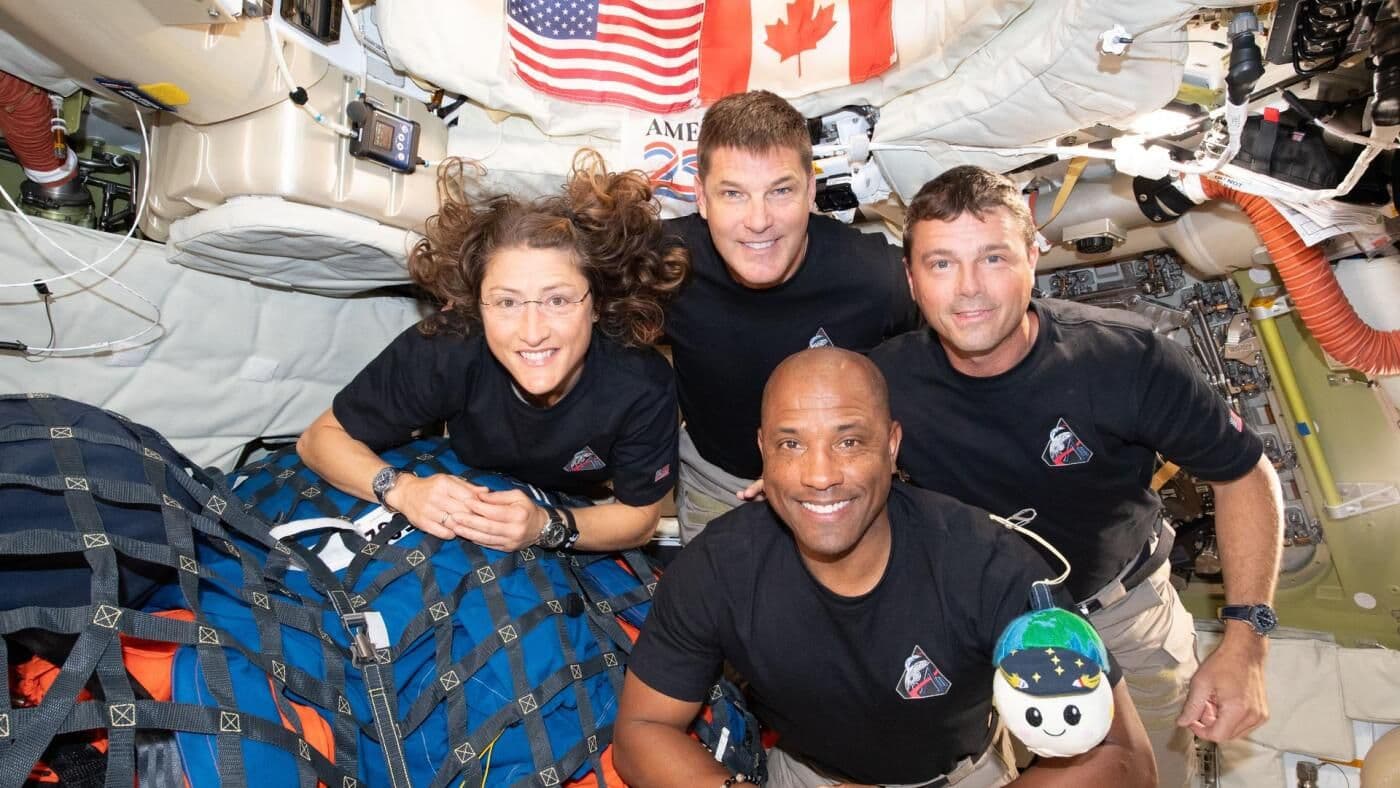
Spending even a short amount of time in space takes a serious toll on the human body. Without gravity constantly working against muscles and bones, the body begins to deteriorate surprisingly fast. To counter this, the four astronauts aboard NASA's Orion spacecraft on the Artemis II mission are relying on a compact but remarkably powerful piece of equipment — the flywheel.
What Exactly Is the Flywheel?
At first glance, the flywheel looks unassuming — roughly the size of an extra-large shoebox. But don't let its modest appearance fool you. This small, cable-based device is engineered to deliver both cardiovascular training and resistance workouts capable of simulating up to 400 pounds of force.
Canadian astronaut Jeremy Hansen described it as similar to a rowing machine, noting that it functions like a cardio session where you pull at a fast pace against varying resistance. Users strap their feet onto a small platform and pull a handle attached to a cable, which spins the flywheel. Much like a yo-yo, the device generates resistance proportional to the force the astronaut applies — the harder you pull, the harder it pushes back.
Beyond aerobic training, the flywheel supports classic strength movements including squats, deadlifts, and curls — all within the Orion spacecraft's cramped 316-cubic-foot interior, roughly equivalent to a small bedroom.
Years of Research Behind a Compact Device
The flywheel didn't emerge overnight. Exercise physiologist Jessica Scott, based at Memorial Sloan Kettering Cancer Center, spent years developing early prototypes for NASA. Her primary concern was the alarming speed at which muscles deteriorate in the absence of regular physical activity.
Scott draws a direct comparison between time in space and extended bed rest. "You would feel very weak and your muscles start to lose size very quickly," she explains, adding that the heart is particularly susceptible to this kind of decline.
The 'Pillownauts' Experiment
To test early flywheel designs, researchers needed volunteers willing to spend 70 consecutive days on bed rest. Scott and her team were uncertain whether they'd find enough participants. They were stunned by the response.
"We had over 10,000 people apply for 30 positions," Scott recalls.
These enthusiastic volunteers proudly dubbed themselves the "pillownauts." Participants were divided into groups — some remained sedentary throughout the study, others exercised using conventional gym equipment, and a third group used the flywheel exclusively. The objective wasn't to build fitness, but simply to prevent the body from losing what it already had.
The results were striking. The flywheel proved just as effective at halting physical decline as a full suite of traditional gym equipment. "What was really exciting was that the small device could prevent the declines, the same amount that a full gym could do," said Scott.
Implications for Aging and Bone Health
The benefits of this research extend well beyond space exploration. Thomas Lang, a radiologist who specializes in bone and muscle deterioration and has collaborated with NASA on exercise science, points out the broader relevance for aging populations.
Bone density typically peaks in a person's late twenties to early thirties, Lang explains. From there, hormonal shifts — especially during menopause in women — can trigger significant bone loss. "That's a big whopping decline," he says plainly. Men are not immune either, particularly as they age into their seventies and eighties.
Understanding how to preserve muscle and bone through efficient, low-footprint exercise could have major implications for elderly care, rehabilitation, and long-term health management.
A Fitness Tool for Everyone?
Scott believes the flywheel's potential reaches far beyond NASA's astronaut corps. Most people face real-world constraints — limited time, limited space, limited budgets — when it comes to maintaining a regular fitness routine. A device small enough to slide under a desk or tuck into an office corner could be a genuine game-changer.
"One day we could all be having our own flywheel," she says optimistically.
Astronaut Reid Wiseman seemed to agree after completing his first 30-minute aerobic session with the device. He reported not only a satisfying workout but also noted that the flywheel operated quietly enough that none of his crewmates needed earplugs. "It is a really good piece of gear and we can actually get a nice workout," Wiseman said. "I look forward to the next time I get to try a resistance workout."
The Bigger Picture
The Artemis II mission is pushing the boundaries of human exploration, but some of its most meaningful contributions may land much closer to home. The flywheel is a testament to what thoughtful engineering and rigorous science can achieve — proving that effective fitness doesn't require a large space, an expensive gym membership, or the latest high-tech equipment. Sometimes, the most powerful solutions come in the smallest packages.