How AI Wealth Is Sending San Francisco Home Prices Into Uncharted Territory
San Francisco's luxury housing market is shattering records at a stunning pace, fueled by tech wealth and AI company windfalls that are rewriting the rules of real estate.

San Francisco's Housing Market Is Rewriting the Rules
San Francisco has long been synonymous with sky-high real estate prices, but even by this city's lofty standards, what's happening right now in the luxury housing sector is remarkable. Sales figures that would have seemed absurd just a few years ago are now becoming routine, and industry insiders say the most dramatic chapter may not have even begun yet.
Sales That Defy Belief
The numbers tell a story that's difficult to ignore. A six-bedroom, 5,700-square-foot residence in the sought-after Cow Hollow neighborhood was recently listed at $7.95 million — already a figure that commands attention. It sold for $15 million. The sellers had originally purchased the property for $7.8 million during the summer of 2020, when the pandemic was driving people away from major urban centers. In under six years, they nearly doubled their investment.
Real estate agent Rohin Dhar brought the deal to wider attention by posting about it on X, where the reaction from market observers ranged from stunned to incredulous.
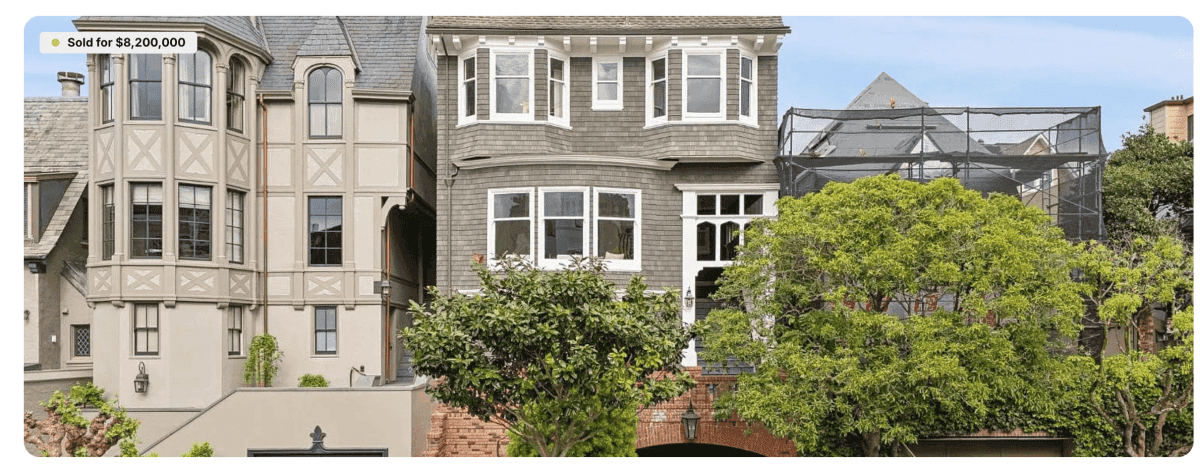
A separate property in Presidio Heights — one of the city's most prestigious zip codes — offers an equally striking example. The 4,100-square-foot home was listed in late April for $4.4 million. It sold within a week for $8.2 million, nearly twice the asking price. Venture capitalist Nichole Wischoff, who toured the home before it went under contract, was candid about her assessment. She described it as a "mediocre house" with a good location, and noted that the patio view looked out onto a neighboring property that appeared to have suffered fire damage. "Someone just bought this for $8.2M," she wrote on X. "If you like to see cash lit on fire, come tour real estate in SF."
The Frenzy Isn't Limited to Eight-Figure Homes
While the eye-catching sales at the ultra-high end grab headlines, the market heat extends well beyond that rarified tier. A 2,300-square-foot home in Bernal Heights recently sold for $4 million — a full million dollars above its asking price. The same owners had attempted to sell the property just two years earlier for $2.95 million and couldn't find a buyer. The contrast is striking and speaks to just how dramatically the market has shifted.
Across multiple price points, buyers are submitting aggressive offers, with homes regularly closing at $1 million or more over their listed price.
What the Data Reveals
The anecdotes are compelling, but the broader data confirms the trend. According to new figures from Redfin, luxury home sales in San Francisco surged 22% year-over-year in March. The median time for a luxury property to go under contract dropped to just 12 days, compared to 28 days during the same period a year prior. Nearly two-thirds of high-end listings were snapped up within two weeks of hitting the market.
By comparison, the non-luxury segment of the market looks almost sluggish. Sales in that tier rose less than 4%, with prices remaining largely flat. The divergence makes it clear that the upper end of San Francisco real estate is operating by an entirely different set of rules.
The Tech Economy Is the Engine
Anyone following San Francisco's technology sector won't be surprised by the driving force behind these numbers. The city is home to some of the most valuable private companies on earth, and their employees have been quietly building — and in growing numbers, cashing in — extraordinary wealth.
Artificial intelligence powerhouses OpenAI and Anthropic have both facilitated secondary market transactions in recent years, allowing employees to sell portions of their equity holdings. That liquidity has placed enormous sums of money into the hands of people who, in many cases, already live and work in San Francisco and are looking to upgrade their living situations. The result is a direct and powerful injection of capital into an already competitive housing market.
The Bigger Wave May Still Be Coming
As remarkable as the current moment is, many analysts believe it could pale in comparison to what lies ahead. Companies including SpaceX, OpenAI, and Anthropic have yet to go public. When initial public offerings do materialize — and prevailing wisdom suggests at least some of these companies will make their market debuts in the not-too-distant future — the scale of wealth unlocked could be staggering.
Thousands of employees holding equity stakes in companies valued in the hundreds of billions of dollars would see their net worth become dramatically more liquid almost overnight. What that influx of capital would mean for a housing market already producing $15 million sales within days of listing is genuinely difficult to predict.
San Francisco has spent the better part of several decades as a cautionary tale about housing affordability. If current trends continue, the possibility exists that today's record-breaking sales prices could eventually look like entry-level figures — a prospect that is, to say the least, difficult to fully wrap one's mind around.

