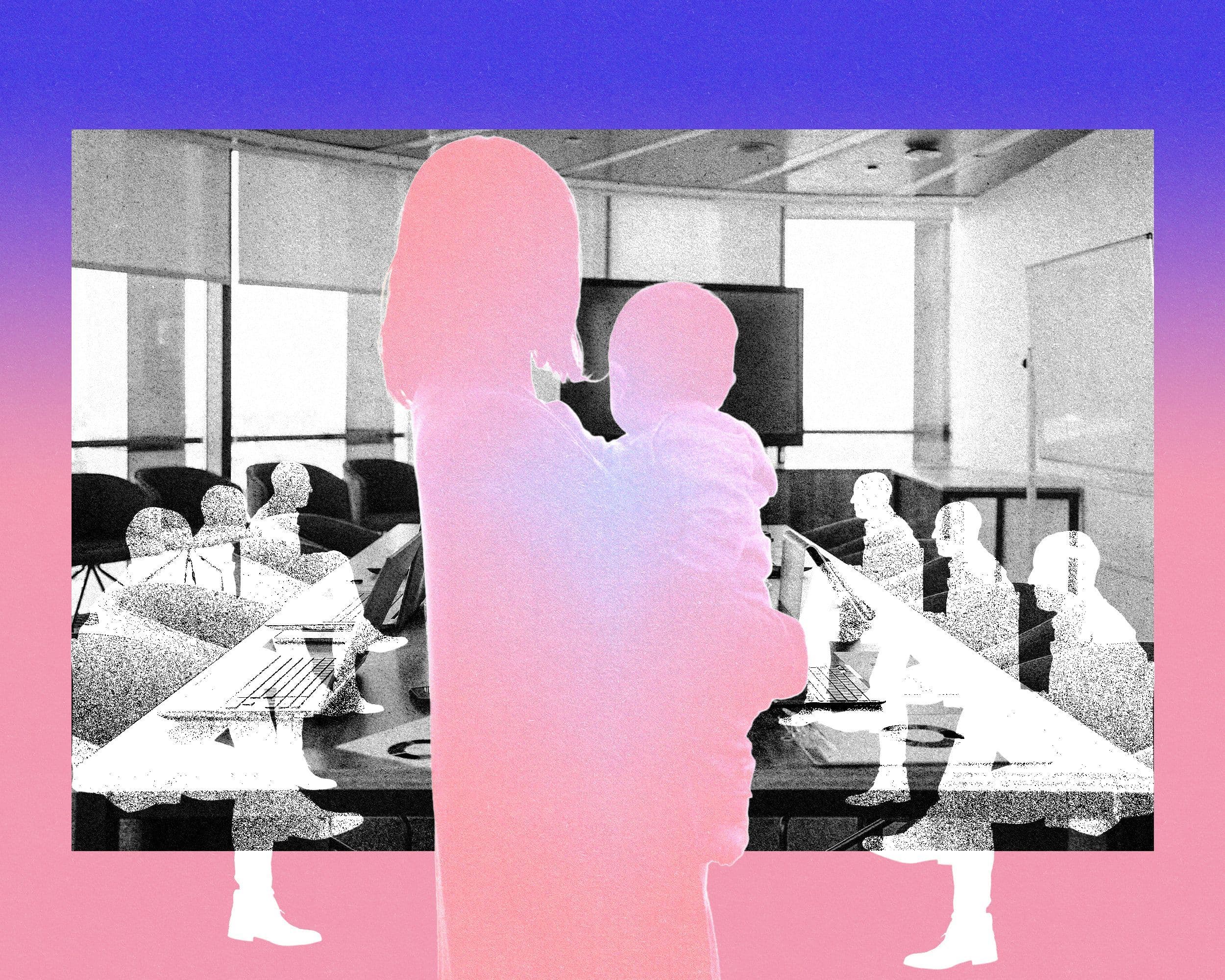
How AI Is Blindsiding Mothers Returning to Careers in Software Development
New mothers stepping back into tech roles are discovering an industry transformed beyond recognition — and AI is the reason why.

Returning to a Job That No Longer Exists
When Danielle stepped away from her career as a software developer at a Portland, Oregon automotive company in mid-2024, the idea of using artificial intelligence to write code was little more than a novelty. By the time she was ready to re-enter the workforce roughly a year later, it had become a baseline expectation.
Danielle, who asked to be identified only by her first name to protect her employment prospects, had originally chosen software development for its stability. That sense of security has since evaporated. "The skills that I had learned — rote development skills — we are now expected to outsource to AI," she says. "The kind of work I was doing before, I would like to do again. I think I was good at it. But I recognize that job will never exist again."
Her situation is far from unique. Across the software industry, new mothers who happened to be on maternity leave during one of the most disruptive periods in tech history are now facing a steep and unwelcome climb back to relevance.
The AI Takeover of Software Engineering
The speed at which artificial intelligence has reshaped software development is staggering. In April 2025, Meta CEO Mark Zuckerberg predicted that AI would be responsible for writing the majority of his company's code within the next 18 months. OpenAI CEO Sam Altman told WIRED he believes AI-driven coding will become "one of these rare multitrillion-dollar markets."
With the launch of advanced coding automation tools from Anthropic and OpenAI in May 2025, the professional landscape shifted dramatically. Software engineering — once defined by composition, problem-solving, and technical craftsmanship — began to resemble something closer to quality control. Engineers are increasingly expected to supervise and correct AI-generated code rather than write it themselves.
This transformation has rippled across the entire tech sector. But for women who were away from their desks during the pivot, the disruption has been especially disorienting.
Maternity Leave Becomes a Skills Gap
A UK-based project manager currently on maternity leave described feeling deeply unsettled after her manager encouraged her to spend her time off brushing up on AI tools. "It made me feel very vulnerable," she told WIRED, asking to remain anonymous over concerns about employer retaliation. Before her leave began, AI at her development agency was used occasionally for minor tasks such as auto-completing code. Now, the agency is pushing for a far more prominent role for the technology.
"The likelihood of me spending my statutory maternity pay on an AI course is slim to none," she says. "This is not something I should be spending my maternity leave doing." Yet she remains anxious that failing to keep pace could make her a target when layoffs come.
Returning Workers Adapt — With Mixed Results
Not every returning mother has had a negative experience with AI integration. Mary McCreary, a data engineer at a US health tech company, says her employer provided support when she came back, helping her get comfortable with new tools. Despite early skepticism, she grew to appreciate how AI could break down and explain colleagues' code. "The thing that I hate most about being an engineer is having to review other people's code," she admits.
However, the shift has reshaped her daily experience in unexpected ways. "The downside is that I don't get any time to do tedious tasks that would be not a lot of effort for my brain," says McCreary. "I'm always looking at hard problems, because I've offloaded all of the tedium."
A software engineer based in Minnesota, who works for a marketing software company, found that AI tools actually helped her navigate the postpartum haze when she returned in September 2024. "I definitely was not ready to return," she says, speaking anonymously to discuss her company's internal practices candidly. "Your body is filled with all these hormones and your brain changes to the point that all you can fixate on is that child." Delegating mentally taxing work like debugging to AI, she says, "was incredibly helpful."
When Helpful Becomes Threatening
Over time, however, the Minnesota engineer watched AI's role expand from useful assistant to dominant force. Her company began tracking and ranking employees by how heavily they used AI tools — a shift she describes with unease. "It's like, instead of being a software engineer, I'm more like a puppet master," she says.
By November 2025, with the release of Claude Opus 4.5 — the latest version of Anthropic's flagship model — the technology had leaped forward again. "Opus was, like, holy shit," she recalls. "I did a quarter's worth of work just by myself. It was quick and dirty, but it got the job done." That capability, once thrilling, now feels like a threat to her livelihood.
A Job Market Rewired by AI
For mothers actively searching for new roles, the job hunt itself has become a maze. Three months before giving birth, Danielle was laid off. When she began applying for software engineering positions, she found that most listings referenced AI competency as a requirement — but rarely explained what that meant in practice. "The ambiguity was nerve-wracking," she says. "I didn't know how to investigate what skill I was missing."
Of the 40 applications Danielle submitted, only one led to an interview.
Experts say women returning after extended maternity leave already face significant structural headwinds: employer skepticism about their commitment, inflexibility around caregiving responsibilities, and systemic biases. AI has added another layer to these challenges. "The system treats it as an exit, not a pause. It's a design failure," says Daniela Gulie, who heads the German branch of the nonprofit Bring Women Back to Work.
Rachel Grocott, CEO of UK-based think tank Pregnant Then Screwed, is blunter in her assessment. "It's yet another way in which women are being screwed over. You're layering disadvantage on inequality."
The Minnesota engineer echoes that sentiment, describing a saturated job market where highly skilled candidates are competing for entry and mid-level positions. "There's this huge, huge pool of incredibly smart and talented people that you don't want to be a part of."
Rethinking the Future — Careers, Families, and What Comes Next
For some women, the anxiety extends beyond their current jobs and into decisions about their futures. The Minnesota engineer says she is wrestling with whether to have a second child, torn between her career ambitions and her desire to be fully present as a parent. "I'm scared to have one," she admits. "It's very complicated."
Danielle, meanwhile, is trying to stay competitive by working on small personal coding projects that incorporate AI. But she is uncertain whether the investment is worth it. "Every day, I am getting even further removed," she says. "It's really a terrifying moment to feel like I don't understand the future of this industry."
Having entered tech for its job security, she is now contemplating a complete career change. Landscape architecture has caught her attention — a field that keeps her away from screens and further from automation. "I don't derive meaning from training artificial intelligence, or just fixing code generated by artificial intelligence," she says. "If that is the future of this industry, is that a job I want?"

